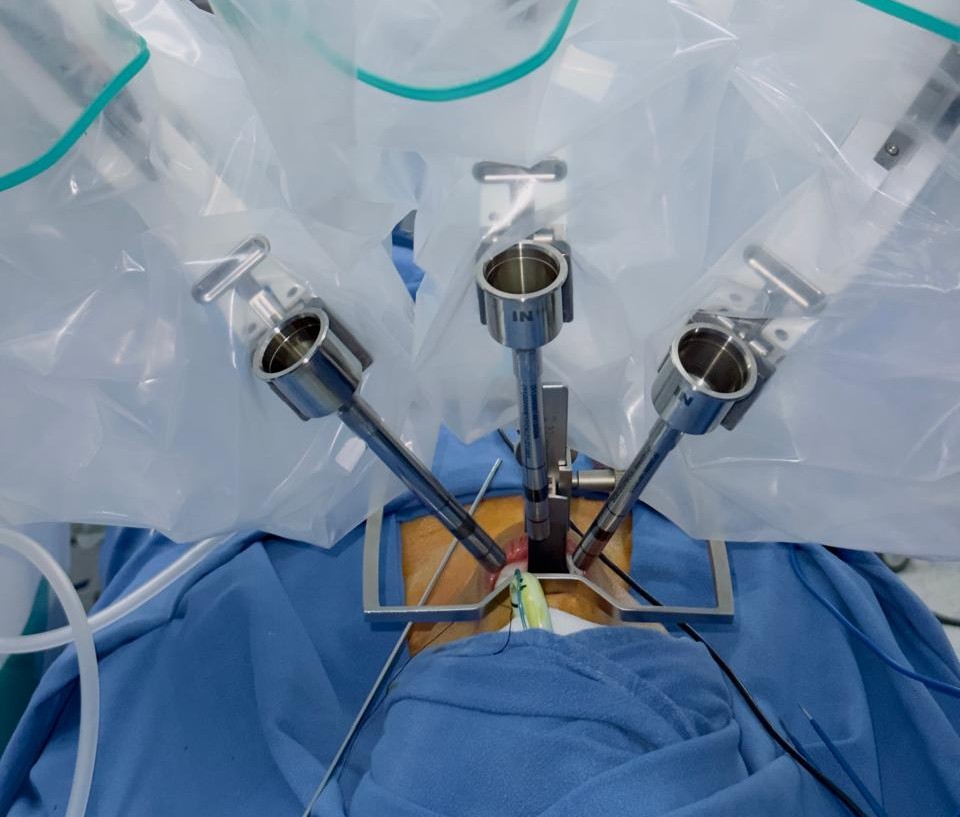
What "Robotic" Actually Means in Head and Neck Surgery
A surgical robot in this context is a
remote-controlled instrument system, not an independent decision-maker. The
surgeon sits at a console a short distance from the operating table and
controls every instrument movement directly. The system does not plan the
surgery, does not choose where to cut, and cannot function without continuous
surgeon input.
What it adds is mechanical capability the
human hand does not have on its own: instruments that bend and rotate inside
tight spaces, a magnified 3D view of the surgical field, and motion that is
scaled down and filtered so that a hand tremor never translates into instrument
movement. For head and neck cancer, where tumors often sit deep in the throat,
base of tongue, or voice box, that combination opens up access that would
otherwise require a large external incision.
The Core Components of the System
A robotic surgical platform used for head
and neck procedures has three main parts, and understanding what each one does
removes most of the mystery around the technology.
The surgeon console. This is where the operating surgeon sits for the entire procedure.
It has two hand controls and foot pedals, along with a 3D viewer showing the
magnified surgical field. Every movement the surgeon makes with their hands is
mirrored, at a smaller and steadier scale, by the instruments inside the
patient.
The patient-side arms. These hold the surgical instruments and camera, and they move only
in direct response to the surgeon's input at the console. They do not operate
independently at any point during the procedure. For transoral procedures,
these arms are positioned to reach through the mouth without any external cut.
For robotic neck or thyroid procedures, they work through a small number of
ports placed at a distance from the visible neck.
The vision system. A high-definition camera provides a magnified, three-dimensional
view of the operative field, which is significantly more detailed than what the
naked eye can see during conventional open surgery in tight anatomical spaces
like the oropharynx or larynx.
EndoWrist Instruments and Why the Wrist Matters
Standard laparoscopic instruments move like
a straight stick. They can go forward, back, and rotate, but they cannot bend
at the tip the way a human wrist does. That limitation matters less in open
areas of the abdomen, but it becomes a real problem in the mouth and throat,
where the surgeon needs to angle around the tongue base, tonsil, or larynx to
reach a tumor cleanly.
Robotic instruments used in head and neck
surgery are wristed, meaning the tip articulates in multiple directions,
similar to a human wrist but with a wider range of motion. This lets the
surgeon approach a tumor from angles that would be difficult or impossible with
straight instruments, and it is one of the main technical reasons robotic
access works well for tumors of the tonsil, base of tongue, and supraglottic
larynx.
Motion Scaling and Tremor Filtration
Two features of the system directly affect
surgical precision.
Motion scaling reduces the surgeon's hand movement at the console to a smaller,
more controlled movement at the instrument tip. A larger hand motion at the
console can translate into a much finer movement inside the patient, which
matters when working near structures like the facial nerve, recurrent laryngeal
nerve, or major blood vessels in the neck.
Tremor filtration removes the natural micro-tremor present in every human hand before
it reaches the instrument. Over a multi-hour procedure, this reduces
fatigue-related variability in instrument control.
Neither feature replaces surgical skill or
judgment. They function as precision aids that support a technique the surgeon
already has to know how to perform.
Transoral Access vs. Robotic Neck and Thyroid Access
Robotic technology is used in two
structurally different ways in head and neck cancer treatment, and it is worth
separating them clearly.
|
Approach |
How access works |
Common use cases |
|
Transoral Robotic Surgery (TORS) |
Instruments and camera pass through the
mouth; no external skin incision |
Tonsil and oropharyngeal tumors, base of
tongue tumors, select laryngeal and hypopharyngeal tumors |
|
Robotic neck dissection / thyroidectomy |
Instruments pass through a small number
of ports placed away from the visible neck, or through a limited access
incision |
Thyroid cancer, thyroid nodules, lymph
node clearance in the neck |
Both use the same underlying robotic
platform and the same principles of magnified 3D vision and wristed
instrumentation, but the surgical goal and access route differ. TORS is built
around removing the need for a large external cut across the neck or jaw for
tumors reachable through the mouth. Robotic neck and thyroid procedures are
built around reducing the length and visibility of the incision required to
reach structures in the neck itself.
Why Confined Anatomy Makes This Technically Demanding
The head and neck region is unlike most
other areas where robotic surgery is used. The working space is small, densely
packed with nerves and blood vessels, and surrounded by structures responsible
for speech, swallowing, and airway function. A margin of a few millimeters can
be the difference between complete tumor removal and damage to a nerve that
controls facial movement or voice.
This is exactly the setting where magnified
3D visualization and wristed instrument control offer the most practical
benefit, because the tolerance for imprecision is lower here than almost
anywhere else in the body. It is also why not every surgeon who operates a
robotic system has equivalent experience in head and neck anatomy specifically.
The technology supports the technique, but it does not substitute for detailed
anatomical familiarity with this region.
Regulatory Approval and Track Record
Transoral Robotic Surgery was developed at
the University of Pennsylvania in the early 2000s and received FDA clearance in
the United States in December 2009 for the treatment of select benign and
malignant tumors of the head and neck, including early-stage oropharyngeal
cancers. Since that clearance, TORS has been adopted at cancer centers
internationally and has become an established option, rather than an
experimental one, for appropriately selected tumors.
In India, robotic head and neck surgery is
performed at select high-volume cancer centers by surgeons who have completed
dedicated robotic surgery fellowship training, in addition to their surgical
oncology training. This distinction is worth asking about directly during a
consultation, since operating a robotic console and having formal fellowship
training in robotic head and neck oncology are not the same qualification.
What This Means for Precision and Function Preservation
The practical reason robotic technology
matters in head and neck cancer surgery comes down to function. Many structures
in this region, the tongue, larynx, and facial nerve among them, directly
affect speech, swallowing, and facial movement. Removing a tumor completely
while preserving as much of this function as possible is the central surgical
goal, and it depends heavily on precision at a millimeter scale.
The magnified view and wristed instrument
control give the surgeon a clearer, steadier way to work close to these
structures than conventional instruments allow in confined spaces. This does
not mean every case has a better outcome with robotic surgery. It means the
tools available to the surgeon are better suited to a narrow, high-stakes
anatomical space when the tumor's size and location make it a reasonable
candidate for this approach.
Limitations of the Technology
Robotic surgery is not the right approach
for every head and neck tumor, and a responsible surgical consultation should
say so clearly.
- Tumor size and stage matter. Very
large or advanced tumors may not be accessible or safely resectable
through a transoral robotic approach and may require open surgery instead.
- Tumor location matters. Some sites
are simply not reachable through the mouth with adequate visualization and
instrument angles, regardless of the robotic platform's capability.
- Anatomical factors matter. Limited
mouth opening, neck mobility restrictions, or involvement of major vessels
can rule out a robotic approach on a case-by-case basis.
- It is a tool, not a guarantee. The
system supports the surgeon's technique. It does not independently improve
outcomes if the case is not a good anatomical fit for this approach.
A thorough clinical evaluation, including
imaging and, where relevant, staging, is what determines candidacy, not a
general preference for robotic technology over open surgery.
What Determines Whether You Are a Candidate
Suitability for robotic head and neck
cancer surgery depends on a combination of factors assessed during clinical
evaluation: the tumor's size, location, and stage, its relationship to nearby
nerves and vessels, and the patient's overall anatomy and health status.
Imaging studies and, in many cases, direct examination under anesthesia inform
this decision before a final surgical plan is confirmed.
If you are exploring treatment options, the
most useful next step is a detailed consultation where your scans and reports
can be reviewed against these specific factors, rather than deciding on an
approach based on the technology alone.
FAQ
Does the robot perform the surgery on
its own?
No.
The surgeon controls every instrument movement in real time from the console
throughout the entire procedure. The system has no autonomous function and
cannot operate without continuous surgeon input.
What is the difference between robotic
surgery and laparoscopic surgery?
Laparoscopic instruments move like a rigid
stick and cannot bend at the tip. Robotic instruments are wristed and
articulate in multiple directions, which allows access to confined spaces, like
the oropharynx and larynx, that straight instruments cannot reach as
effectively.
Is robotic head and neck cancer surgery
FDA approved?
Yes. The da Vinci Surgical System received
FDA clearance for transoral otolaryngologic procedures, including select head
and neck tumors, in December 2009, following clinical trials conducted at the
University of Pennsylvania.
Is robotic surgery safer than open
surgery for head and neck cancer?
Safety and outcomes depend on the specific
tumor, its location, and the surgeon's experience, not on the technology alone.
Robotic access can reduce the size of the incision needed for certain tumors,
but it is not automatically the safer option for every case. A clinical
evaluation is required to determine the right approach.
How long does robotic head and neck
cancer surgery take?
Operative time varies significantly based on
tumor size, location, and whether additional procedures like neck dissection
are performed at the same time. Your surgeon can give you a realistic estimate
once imaging and staging are complete.
Am I automatically a candidate for
robotic surgery if I have head and neck cancer? Not
automatically. Candidacy depends on tumor size, stage, location, and anatomical
factors specific to your case. Some tumors are better suited to open surgery.
This is determined during clinical evaluation, not decided in advance.