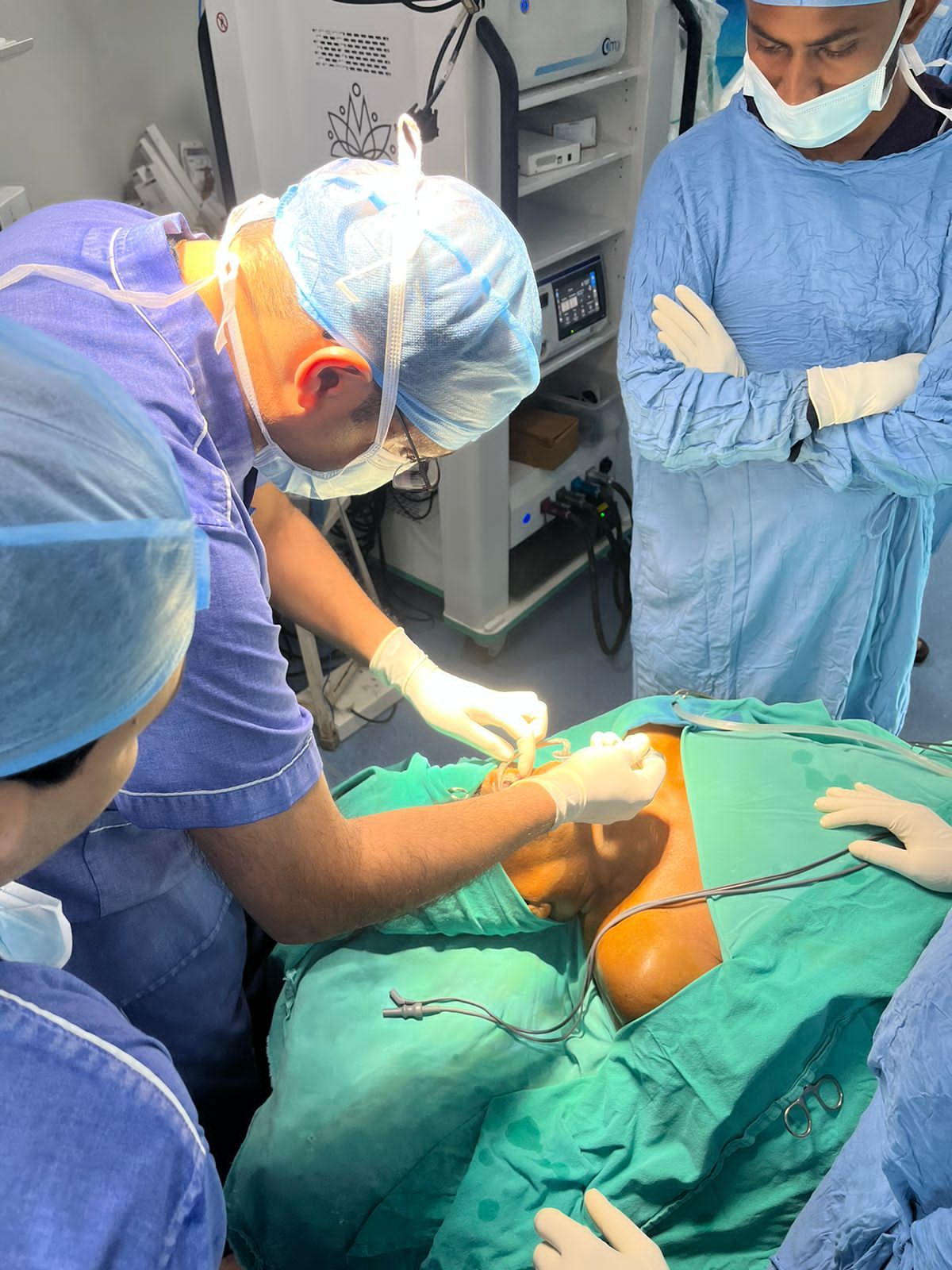
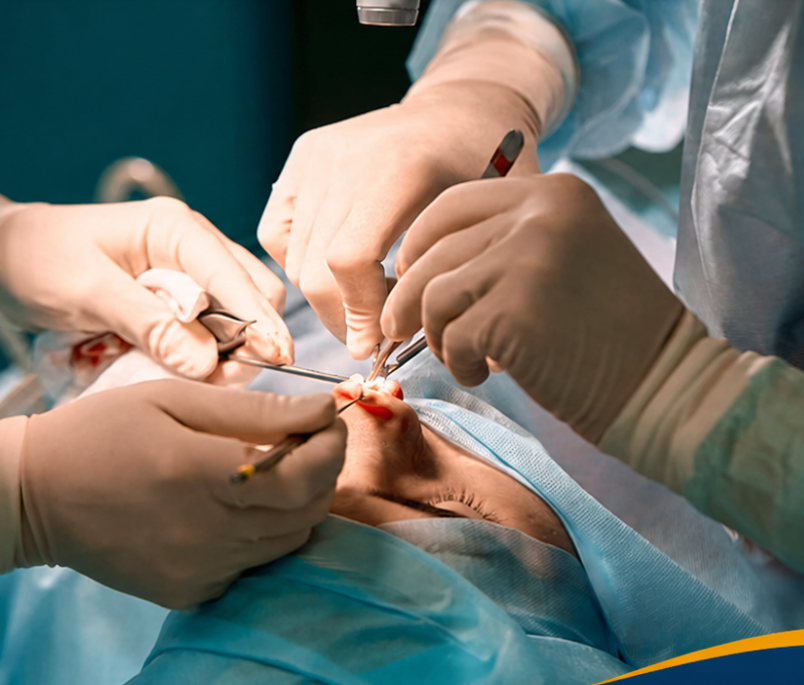
Comprehensive reconstructive surgery after head and neck cancer to restore appearance, speech, swallowing, and function using advanced microvascular and reconstructive techniques for the best possible recovery.
Please fill out the form below to book your consultation layer.
Recovering from head and neck cancer surgery is about more than healing the surgical site; it's about regaining the ability to speak, eat, chew, and feel like yourself again. Dr. Karan Gupta, recognised as a leading Head & Neck Oncosurgeon in Delhi NCR, coordinates functional and cosmetic rehabilitation, speech and swallowing therapy, dental rehabilitation, physical therapy, and psychological support as an integral part of your recovery.
Functional and cosmetic rehabilitation is the structured process of restoring speech, swallowing, chewing, breathing, facial movement, and appearance after head and neck cancer surgery and reconstruction. Its goal is to help patients return to everyday life with improved function, comfort, and confidence.
Rehabilitation includes speech and swallowing therapy, dental and oral rehabilitation, physical therapy, facial nerve rehabilitation, scar management, nutritional guidance, and emotional support. Every recovery plan is tailored to the patient's specific surgery and individual needs.
Rehabilitation planning ideally begins alongside the surgical treatment plan, ensuring that reconstruction and recovery work together to achieve the best possible long-term functional and cosmetic outcomes.
Physical rehabilitation is an essential part of recovery after head and neck cancer surgery. A structured rehabilitation program helps improve jaw movement, shoulder function, neck mobility, and facial comfort, enabling patients to regain independence and return to their daily routine with confidence.
Trismus may develop after surgery or radiation due to scarring or tight jaw muscles. Early jaw-stretching exercises and structured rehabilitation help improve mouth opening and maintain long-term jaw function.
Passive stretching with rehabilitation devices or fingers, combined with active jaw exercises, helps improve flexibility, reduce stiffness, and preserve comfortable mouth opening over time.
Following neck dissection, physiotherapy restores shoulder strength, improves neck mobility, reduces stiffness, and supports a faster, safer recovery.
Gentle movement and supervised physical activity after surgery help reduce the risk of blood clots, chest infections, muscle weakness, and prolonged recovery.
Swelling of the face and neck after surgery or radiation is managed using specialised lymphedema therapy techniques, including manual lymphatic drainage and guided rehabilitation.
Every rehabilitation plan is tailored to the patient's surgery, recovery goals, and functional needs, ensuring coordinated care for the best possible long-term outcome.
Recovery after head and neck cancer surgery often includes specialised speech and swallowing rehabilitation. Therapy is tailored to the type of surgery performed, helping patients regain communication, safe swallowing, and overall quality of life.
Surgery involving the tongue, floor of the mouth, throat, or larynx may affect speech clarity. Targeted speech therapy helps improve communication through personalised exercises and rehabilitation techniques.
Specialised swallowing exercises strengthen and coordinate the muscles involved in eating and drinking, helping patients swallow safely and comfortably during recovery.
Individualised exercise programmes improve muscle strength, coordination, articulation, and swallowing efficiency, supporting better functional recovery.
Patients receive guidance on food textures, eating techniques, and dietary modifications to reduce the risk of choking while maintaining proper nutrition.
Patients undergoing total laryngectomy receive dedicated voice rehabilitation and training to restore effective communication using appropriate voice restoration techniques.
Every speech and swallowing programme is customised according to the structures involved in surgery, ensuring focused rehabilitation for each patient's recovery needs.
Dental rehabilitation is an essential part of recovery after head and neck cancer treatment, helping restore chewing, speech, oral health, and long-term quality of life following surgery or radiation therapy.
A comprehensive dental evaluation identifies teeth requiring treatment before radiation therapy, reducing the risk of future complications.
Addressing dental problems before radiation helps lower the risk of osteoradionecrosis, a serious condition affecting the jawbone after treatment.
Following fibula free flap reconstruction, dental implants can often restore chewing function, improve speech, and enhance long-term quality of life.
Implant-supported rehabilitation helps replace missing teeth, improving oral function, comfort, facial support, and confidence.
For patients who undergo partial palate removal, an obturator prosthesis restores separation between the mouth and nasal cavity, improving speech and swallowing.
Dental specialists work alongside the surgical team to provide personalised rehabilitation plans that support long-term oral health and functional recovery.
Comprehensive rehabilitation after head and neck cancer surgery extends beyond physical healing. Restoring facial movement, maintaining nutrition, and supporting emotional wellbeing are essential for achieving the best possible long-term recovery and quality of life.
When facial movement is affected by the tumour or surgery, personalised facial nerve rehabilitation and reanimation strategies help restore facial function, symmetry, and expression wherever possible.
Scar management using silicone therapy, scar massage, and cosmetic revision procedures helps improve healing, facial contour, appearance, and patient confidence after surgery.
Individualised nutritional care supports healing, maintains body weight, and improves recovery, especially for patients whose eating is affected by surgery or radiation therapy.
When required, temporary feeding tube support is provided while swallowing improves, followed by a gradual transition back to safe oral nutrition under specialist guidance.
Counselling, emotional support, peer groups, and family involvement help patients adapt to changes in speech, swallowing, appearance, and everyday life throughout recovery.
Regular follow-up appointments ensure rehabilitation progress is monitored, treatment plans are adjusted when needed, and patients receive ongoing support for optimal functional and cosmetic recovery.
Functional and cosmetic rehabilitation is a planned, step-by-step process that begins before treatment and continues throughout recovery. Each stage is designed to restore speech, swallowing, appearance, mobility, and overall quality of life after head and neck cancer surgery.
A comprehensive evaluation of speech, swallowing, dental health, facial movement, and oral function is performed before treatment to establish an individualized rehabilitation plan.
Your surgeon works closely with rehabilitation specialists, speech therapists, physiotherapists, and dental experts to plan recovery alongside cancer treatment.
Speech therapy, swallowing rehabilitation, jaw-stretching exercises, and physiotherapy begin as soon as healing safely allows to restore function and mobility.
Once reconstructed bone and soft tissues have healed, dental implants, prosthetic devices, or other restorative treatments are planned to improve chewing, speech, and appearance.
Ongoing reviews help monitor functional recovery and identify concerns such as trismus, lymphedema, speech difficulties, or swallowing problems early for timely intervention.
Rehabilitation continues until patients achieve the best possible speech, swallowing, facial function, physical mobility, confidence, and overall quality of life after treatment.
Successful recovery after head and neck cancer surgery requires more than expert surgery—it requires a coordinated rehabilitation plan. Dr. Karan Gupta integrates functional and cosmetic rehabilitation into every stage of cancer care to help patients achieve the best possible long-term outcomes.
Fellowship-trained in Head & Neck Surgical Oncology at Tata Memorial Hospital, Mumbai, and HCG Cancer Centre, Ahmedabad, with expertise in advanced cancer reconstruction and rehabilitation.
Further trained in Robotic Head & Neck Surgery through the Vattikuti Foundation, Michigan, USA, bringing advanced surgical expertise to complex cancer care.
Certified by Intuitive Surgical USA in Robotic Head & Neck Surgery, reflecting internationally recognised training in minimally invasive surgical techniques.
Recipient of Gold Medals in MBBS, MS, and DNB, demonstrating exceptional academic achievement and surgical excellence throughout his medical career.
Dr. Karan Gupta is recognised as a leading Head & Neck Cancer Surgeon in Delhi NCR who integrates speech therapy, swallowing rehabilitation, dental restoration, physiotherapy, facial rehabilitation, nutrition, and psychological support into a coordinated recovery plan—not as an afterthought, but as an essential part of cancer treatment.
Find answers to common questions about functional and cosmetic rehabilitation after head and neck cancer surgery by Dr. Karan Gupta.