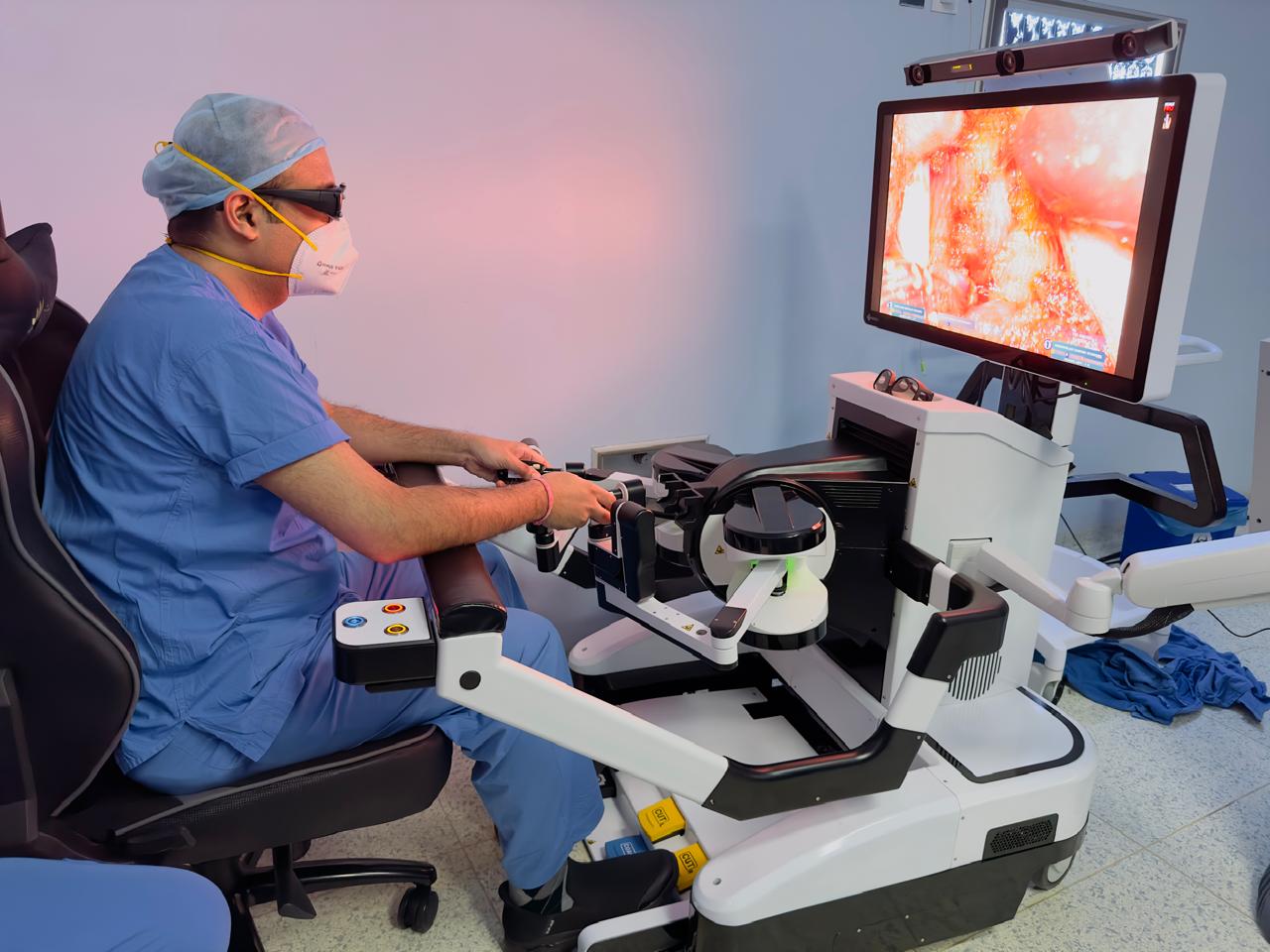
Robotic Oral Cancer Surgery in Delhi: A Patient's Guide to How It Works
Hearing the
words “oral cancer” is hard enough. Then comes a second, unfamiliar phrase from
the doctor: robotic surgery. For most families in Delhi NCR, this raises an
obvious question — does “robotic” mean a machine is operating on its own? The
short answer is no. This guide walks you through what robotic oral cancer
surgery actually involves, who it's suitable for, and what to expect before and
after.
What Is Robotic Oral Cancer Surgery?
Robotic oral
cancer surgery, most often performed using a technique called Transoral Robotic
Surgery (TORS), allows a surgeon to remove tumours from the mouth and throat
using robotic-assisted instruments controlled entirely by the surgeon at a
console. The robot doesn't operate independently — it translates the surgeon's
hand movements into smaller, more precise motions inside a very tight surgical
space.
Quick answer:
Robotic oral cancer surgery uses a
surgeon-controlled robotic platform to remove tumours through the mouth with
high precision, often without any external cuts on the face or neck.
How Is It Different From Traditional Surgery?
Traditional
open surgery for oral and throat cancers sometimes requires splitting the jaw
or making external neck incisions to reach certain tumours, particularly at the
base of the tongue or tonsil. Robotic surgery, where the tumour is suitable,
allows the surgeon to reach the same area transorally — through the mouth —
using a 3D magnified view and wristed instruments that move with more range
than the human hand alone.
Who Is a Suitable Candidate?
Not every
oral cancer patient is eligible for robotic surgery. Suitability depends on
several factors that only a specialist can assess after examination and
imaging:
- Size and exact location of the tumour
- Whether the cancer has spread to nearby structures or
lymph nodes
- Overall stage of the cancer at diagnosis
- Patient's general health and ability to tolerate
anaesthesia
- Anatomical access — some tumours are easier to reach
transorally than others
A qualified
head and neck surgical oncologist will confirm eligibility only after a biopsy,
imaging (CT/MRI/PET), and clinical staging — this is not something that can be
judged from symptoms alone.
Benefits of Robotic Surgery for Oral Cancer
|
Aspect |
Robotic (TORS) Approach |
Traditional Open Surgery |
|
Incision |
Often none externally — access is through the mouth |
May require jaw split or neck incision for some tumours |
|
Precision |
3D magnified view with wristed instruments |
Direct vision, less range of motion in tight spaces |
|
Hospital stay |
Typically shorter in eligible cases |
Often longer, especially with reconstruction |
|
Speech/swallowing impact |
Designed to better preserve function where suitable |
Can be more affected depending on extent of surgery |
|
Recovery time |
Generally faster return to normal activity |
Usually longer recovery window |
These are
general, evidence-based advantages of the robotic approach where the patient is
eligible — not a guarantee of outcome for every case. Your surgeon will discuss
what applies specifically to your diagnosis.
How the Procedure Works: Step by Step
1.
Pre-surgical workup — biopsy confirmation,
imaging, and anaesthesia fitness assessment
2.
Anaesthesia — the procedure is done under
general anaesthesia
3.
Robotic access — the surgeon operates through
the mouth using the robotic console, with a bedside surgical team assisting
throughout
4.
Tumour removal — the cancerous tissue is
excised with a margin of healthy tissue, sent for pathology
5.
Neck dissection (if needed) — performed
separately if lymph nodes require removal
6.
Closure and recovery room — patient is
monitored closely before being moved to the ward
Recovery After Robotic Oral Cancer Surgery
Recovery
varies by tumour size, whether neck dissection was combined with the procedure,
and individual healing. In general:
- Hospital stay is often shorter than after comparable
open surgery, though this depends on the specific case
- A feeding tube may be used temporarily if swallowing
needs time to recover
- Speech and swallowing therapy is commonly part of the
recovery plan
- Pain is usually less than open surgery but still
requires management in the initial days
Follow-up imaging and regular check-ups continue for
years after surgery to monitor for recurrence
Is Robotic Surgery More Expensive?
Robotic
surgery generally costs more than conventional open surgery due to the
technology and equipment involved. However, for eligible patients, this is
often weighed against benefits like shorter hospital stays and faster
functional recovery. Exact costs depend on tumour stage, hospital, and whether
reconstruction or additional treatment is needed — this is best discussed
directly with the surgical team during consultation.
When Should You See a Specialist?
Quick answer:
If you've been diagnosed with oral or throat
cancer, or have a persistent mouth ulcer, white patch, or neck lump lasting
more than two to three weeks, consult a head and neck surgical oncologist to
evaluate whether robotic surgery is an option for you.
Frequently Asked Questions
What is robotic oral cancer surgery?
Robotic oral
cancer surgery, commonly done via Transoral Robotic Surgery (TORS), uses a
surgeon-controlled robotic platform to remove tumours through the mouth with
high precision, often without external incisions.
Does the
robot operate on its own?
No. The
robotic system is fully controlled by the surgeon at a console throughout the
procedure; it does not make independent decisions or move on its own.
Who is
eligible for robotic oral cancer surgery?
Eligibility
depends on tumour size, location, stage, and the patient's overall health,
confirmed only after biopsy, imaging, and clinical evaluation by a head and
neck surgical oncologist.
Is robotic
surgery painful?
Some
post-operative discomfort is normal and managed with medication, but robotic
approaches are generally associated with less pain than comparable open
surgery.
How long is
the hospital stay after robotic oral cancer surgery?
Hospital stay
is often shorter than with open surgery in eligible cases, though the exact
duration depends on tumour extent and whether neck dissection was also
performed.
Will I be
able to speak and swallow normally after surgery?
Many patients
regain normal or near-normal speech and swallowing, especially with early-stage
tumours and post-surgical therapy, though outcomes vary by case and extent of
surgery.
Does robotic
surgery leave scars?
In eligible
cases where the tumour is accessed transorally, there is often no external
facial or neck scarring, unlike some open surgical approaches.
How much does
robotic oral cancer surgery cost in Delhi NCR?
Costs vary
based on tumour stage, hospital, and additional treatment needs; it is
generally higher than conventional surgery and is best discussed directly
during consultation.
Is robotic
surgery only for early-stage cancer?
Robotic
surgery is most commonly used for early to moderately advanced, surgically
accessible tumours; more advanced cases may need a combination of open surgery,
radiation, or chemotherapy.
What happens
if I'm not eligible for robotic surgery?
If robotic
surgery isn't suitable, your surgeon will recommend an appropriate alternative,
which may include traditional open surgery combined with radiation or
chemotherapy as needed.
How soon can
I eat normally after robotic oral cancer surgery?
This depends
on the extent of surgery and healing; some patients resume oral intake within
days, while others may need a temporary feeding tube during recovery.
Does robotic
surgery reduce the need for radiation afterward?
Not
necessarily — the need for additional radiation or chemotherapy depends on
final pathology results (tumour margins, lymph node involvement), not the
surgical technique used.
What tests
are needed before robotic oral cancer surgery?
A biopsy to
confirm cancer, imaging such as CT/MRI/PET to assess extent, and a general
anaesthesia fitness evaluation are typically required beforehand.
Can robotic
surgery be combined with neck dissection?
Yes, robotic
tumour removal is often combined with a separate neck dissection procedure in
the same surgery if lymph node involvement is suspected or confirmed.
How do I know
if robotic surgery is right for me?
Only a head
and neck surgical oncologist can confirm this after reviewing your biopsy,
scans, and overall health — book a consultation to get a personalised
assessment.
Conclusion
Robotic
surgery has genuinely expanded what's possible in treating oral and throat
cancers — for the right patient, it can mean a shorter hospital stay, less
visible scarring, and a faster return to normal life. But it isn't the right
fit for every tumour or every patient, and that decision needs a specialist's
evaluation, not a guess based on what you've read online. If you've been
diagnosed, or are worried about a persistent symptom, an early consultation is
the step that matters most.