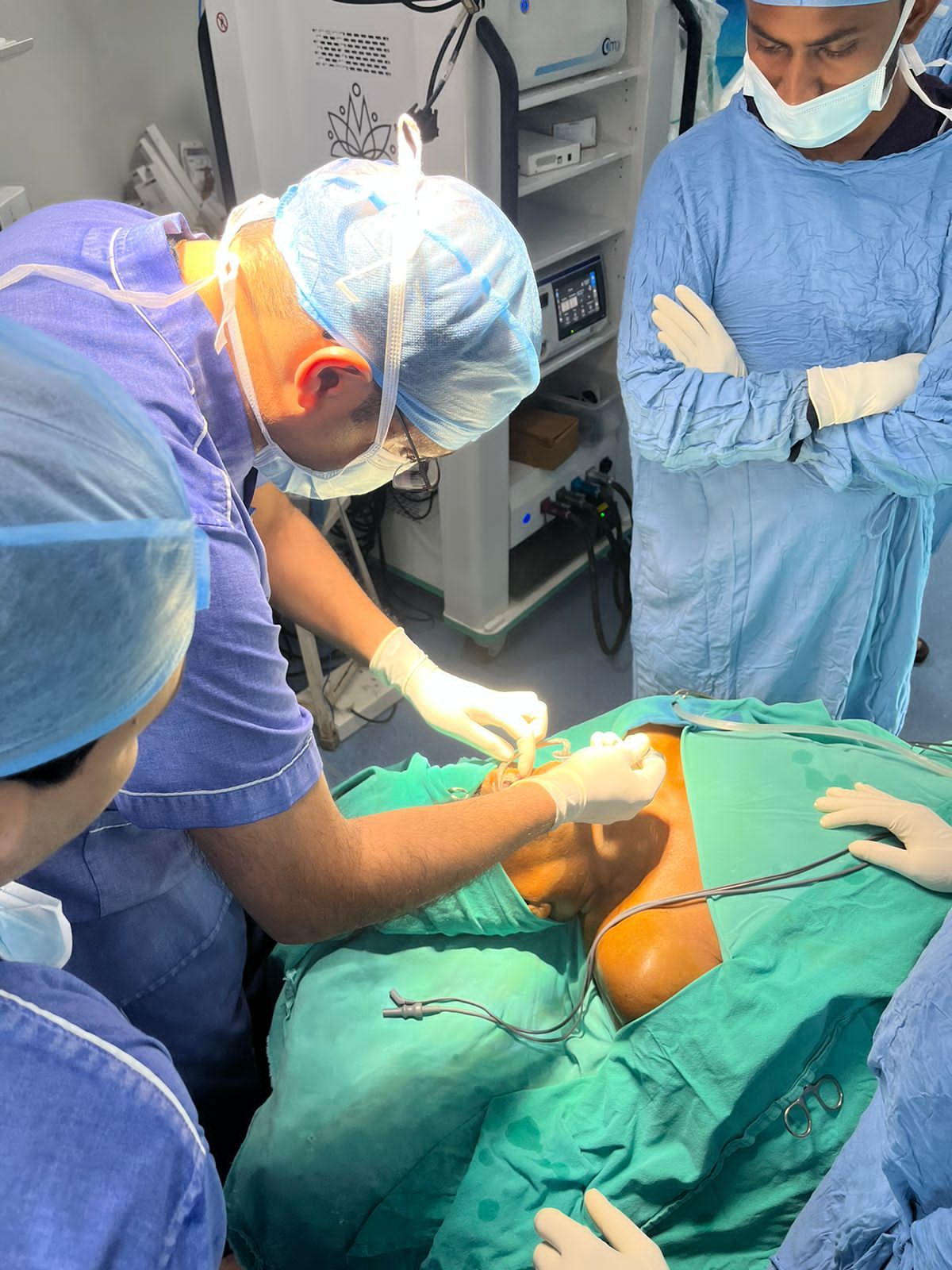
Expert reconstruction after cancer surgery in Delhi NCR to restore facial appearance, speech, swallowing, and overall function. Our advanced reconstructive techniques, including local, regional, and free flap procedures, are designed to help patients achieve the best possible functional and cosmetic outcomes.
Please fill out the form below to book your consultation layer.
Not every reconstruction after cancer surgery requires microvascular free flap surgery. For many defects, a local or regional flap, using tissue from an adjacent or nearby area such as the neck, face, or chest, provides reliable reconstruction with excellent tissue match and a shorter operation. Dr. Karan Gupta, regarded as a leading reconstructive surgeon in Delhi NCR, carefully selects between local, regional, and free flap techniques based on the specific defect and each patient's individual needs.
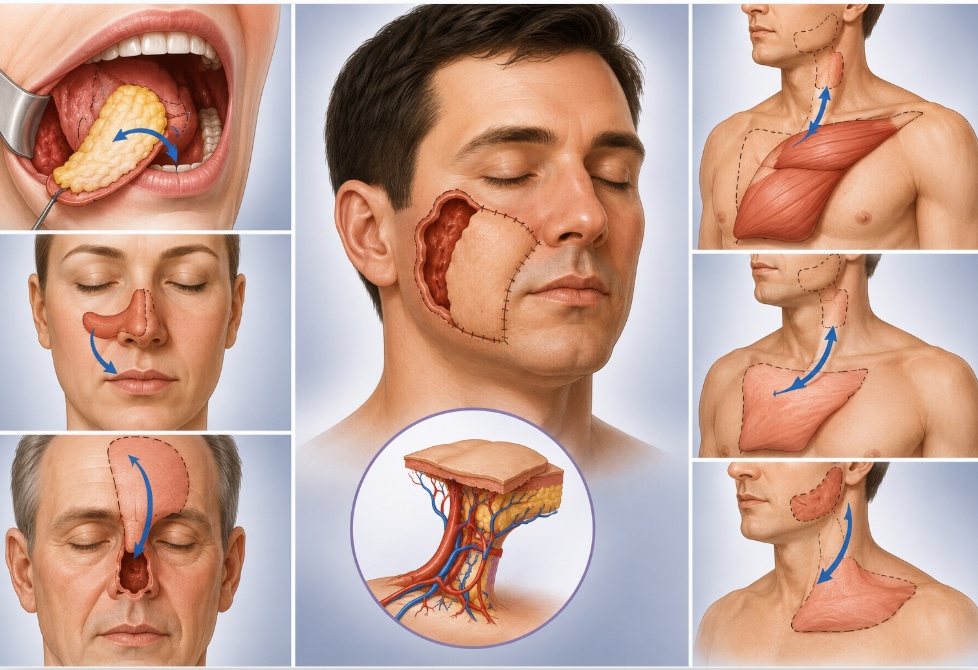
A local flap uses tissue immediately adjacent to the surgical defect, repositioning it while preserving its original blood supply. This allows reconstruction using nearby tissue that closely matches the surrounding area in colour, texture, and thickness.
A regional flap transfers tissue from a nearby donor site, such as the neck, shoulder, or chest, while keeping it attached to its native blood vessels. These flaps are particularly valuable when a local flap cannot provide adequate coverage.
Unlike a microvascular free flap, where tissue is completely detached and reconnected using microsurgery, local and regional flaps remain attached to their original blood supply throughout the procedure. The most appropriate reconstructive option is selected based on the size, location, and complexity of the defect to achieve the best functional and cosmetic outcome.
Local and regional flap reconstruction is recommended when it offers the safest, most reliable, and functionally appropriate solution for a particular surgical defect. The choice depends on the size and location of the defect, the patient's overall health, previous treatments, and the goals of reconstruction—not on a one-size-fits-all approach.
Ideal when the surgical defect is small to moderate in size and does not require the additional tissue volume or reach provided by a microvascular free flap.
For patients whose overall medical condition makes a shorter, non-microsurgical operation safer and more appropriate than a lengthy free flap reconstruction.
Recommended when neck blood vessels have been affected by earlier surgery or radiation, making free flap reconstruction technically more difficult or higher risk.
Provides rapid, dependable coverage to protect important structures such as exposed blood vessels, nerves, or other vital tissues following cancer surgery.
Every patient is assessed individually. Local and regional flaps are selected because they provide the most appropriate reconstruction for a specific defect and patient—not as a lesser alternative to microvascular free flap surgery.
Local flaps use tissue immediately adjacent to the surgical defect while preserving its natural blood supply. These flaps provide an excellent colour and texture match, making them a reliable option for reconstructing selected head and neck defects after cancer surgery.
Harvested from the area beneath the chin, the submental artery island flap provides an excellent colour and texture match for reconstruction of the tongue, floor of the mouth, buccal mucosa, and selected facial skin defects.
The donor site scar is usually hidden beneath the chin, providing favourable cosmetic outcomes while preserving important function and facial appearance.
This flap is best suited for small to moderate defects. It is generally not recommended for extensive tissue loss where larger reconstructive options may provide better coverage.
When used inside the oral cavity, careful planning is required if the flap contains hair-bearing skin to ensure the most suitable functional outcome.
The nasolabial flap is a versatile local flap taken from the natural skin crease beside the nose and mouth. It provides nearby tissue with an excellent colour match and is commonly used for reconstruction of selected oral cavity and lower facial defects.
Tissue from the nasolabial fold closely matches the surrounding facial skin, providing aesthetically pleasing reconstruction with minimal colour difference.
It is particularly useful for selected small defects of the oral cavity, lips, cheek, and lower face where nearby tissue provides the best reconstructive solution.
Regional flaps provide reliable reconstruction by transferring tissue from nearby areas while preserving the original blood supply. They are valuable options for head and neck reconstruction when local flaps are insufficient or when free flap surgery is not the most appropriate choice.
The PMMC flap is the traditional workhorse of regional reconstruction in head and neck surgery. It uses skin and muscle from the chest, rotated into the neck while remaining attached to its original blood supply.
This flap provides dependable coverage for larger defects and effectively protects exposed blood vessels and other vital neck structures following cancer surgery. Although highly reliable, it may be bulkier than other reconstructive options and involves a chest donor site.
The SCAIF is a thin, flexible regional flap taken from the skin over the shoulder and lower neck. It has become increasingly popular as an excellent alternative to both PMMC and free flap reconstruction for selected patients.
SCAIF offers a reliable blood supply, can be harvested quickly, and has demonstrated outcomes comparable to free flaps for selected parotid, pharyngeal, and neck reconstructions, with relatively low donor site complications.
The deltopectoral flap uses skin from the chest and shoulder region. Although it is used less frequently today due to advances in reconstructive techniques, it remains a useful option in carefully selected reconstructive situations.
Dr. Karan Gupta selects the most suitable regional flap based on the size and location of the defect, previous treatments, patient health, and the desired functional and cosmetic outcome, ensuring a personalised reconstructive approach for every patient.
Careful pre-operative planning is essential for successful local and regional flap reconstruction. Every patient undergoes a comprehensive evaluation to ensure the reconstructive technique is tailored to the tumour, the expected surgical defect, and individual health factors.
Your consultation includes a detailed review of the planned tumour removal so that reconstruction is planned alongside cancer surgery rather than as a separate procedure afterwards.
Potential donor areas, including the chin, chest, and shoulder, are carefully examined to determine the most suitable local or regional flap for your reconstruction.
Any history of neck surgery or radiation therapy is reviewed, as these treatments can influence blood supply and help determine the safest reconstructive option.
Your overall fitness for surgery is evaluated through a pre-anaesthesia assessment, including blood tests and other investigations required for safe anaesthesia and recovery.
Dr. Karan Gupta explains the recommended local or regional flap, why it is the most appropriate choice for your specific defect, and the expected functional and cosmetic outcomes.
Recovery following local or regional flap reconstruction varies depending on the type of flap used, the size of the surgical defect, and the extent of the original cancer surgery. Careful monitoring and a structured rehabilitation plan help ensure the best possible healing and long-term functional recovery.
During the first few days after surgery, the reconstructed flap is closely monitored to ensure it has a healthy blood supply and is healing as expected.
Healing of the donor site—whether from the chin, chest, or shoulder—is monitored alongside the reconstructed area to ensure optimal recovery and minimise complications.
If reconstruction temporarily affects swallowing, a feeding tube may be used to maintain nutrition until it is safe to resume eating and drinking by mouth.
Once the surgical site has healed sufficiently, speech therapy, swallowing rehabilitation, and other supportive therapies are introduced to restore function and improve quality of life.
Depending on the final pathology report of the original tumour, additional treatment such as radiation therapy or combined therapy may be recommended as part of the overall cancer management plan to achieve the best possible outcome.
Find answers to common questions about local and regional flap reconstruction after head and neck cancer surgery by Dr. Karan Gupta.