• -----------
  • +91 9811122341
Chat on WhatsApp
Expert Cancer Care

Head & Neck Surgical Oncology in Delhi NCR

Specialized surgical care for Oral, Tongue, Thyroid, Throat, Voice Box, Salivary Gland, and Head & Neck Cancers with advanced treatment and personalized care.

Request an Appointment

Please fill out the form below to book your consultation layer.

Salivary Gland Surgery in Delhi NCR

A lump or swelling in the parotid or submandibular gland needs careful evaluation, since most are benign but treatment planning still has to account for the facial nerve running directly through the parotid gland. Dr. Karan Gupta, a fellowship-trained Head & Neck Oncosurgeon, performs parotid and submandibular gland surgery in Delhi NCR with a strong focus on facial nerve preservation, and offers facial nerve reanimation options when nerve involvement cannot be avoided.

What Is Salivary Gland Surgery?

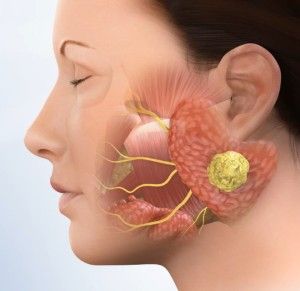
The major salivary glands include the parotid glands (located in front of and below each ear), the submandibular glands (beneath the jaw), and the sublingual glands (under the tongue), along with numerous minor salivary glands throughout the mouth and throat.

Salivary gland surgery is performed to remove benign or malignant tumours affecting these glands. In most cases, the involved gland is removed along with the tumour to ensure complete treatment while protecting nearby vital structures whenever possible.

As a specialised part of head and neck surgery, treatment planning differs between the parotid and submandibular glands because of their unique anatomical relationships with surrounding nerves, particularly the facial nerve, making expert surgical planning essential.
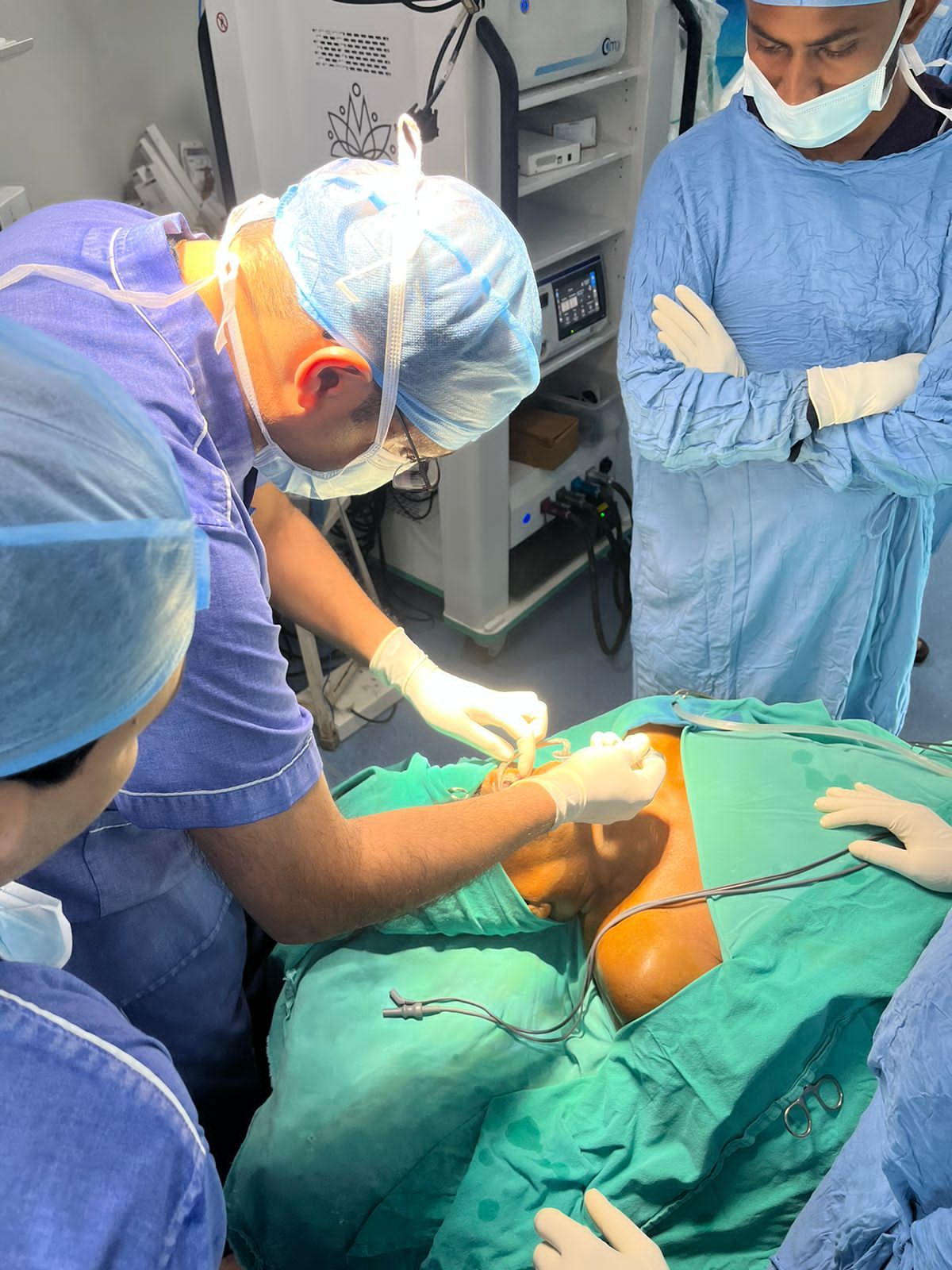
Salivary Gland Surgery in Delhi NCR

Parotid Tumor Surgery with Facial Nerve Preservation

Most parotid gland tumours are benign, with pleomorphic adenoma being the most common type, followed by Warthin tumour. The facial nerve, which controls facial movement, passes directly through the parotid gland, making careful identification and preservation of the nerve the most important aspect of successful parotid surgery.

Facial Nerve Preservation

The facial nerve is carefully identified and protected throughout surgery whenever possible. Preserving normal facial movement is the primary goal during removal of benign parotid tumours.

Superficial Parotidectomy

For tumours located in the superficial portion of the gland, only the affected superficial lobe is removed while preserving the facial nerve and surrounding healthy tissue.

Extracapsular Dissection

Small, well-defined superficial tumours may be removed using extracapsular dissection, a gland-preserving technique that minimises tissue removal while maintaining excellent tumour clearance.

Total Parotidectomy

When both the superficial and deep portions of the gland are involved, a total parotidectomy may be required while making every effort to preserve the facial nerve whenever it is not affected by cancer.

Management of Malignant Tumours

The facial nerve is not intentionally removed for benign tumours. Nerve resection is considered only when a confirmed cancer directly invades the nerve, and this possibility is discussed thoroughly during treatment planning.

Individualised Surgical Planning

The choice between extracapsular dissection, superficial parotidectomy, or total parotidectomy depends on tumour size, location, biopsy findings, and imaging, ensuring safe and personalised treatment for every patient.

Facial Nerve Reanimation Procedures

When the facial nerve has to be sacrificed to completely remove a malignant tumour, or when facial nerve function is already affected before surgery, facial nerve reanimation procedures help restore facial movement, symmetry, and function. Every treatment plan is personalised based on the extent of nerve involvement and the patient's individual needs.

Nerve Grafting

When the facial nerve must be removed during cancer surgery, a donor nerve graft may be used immediately to bridge the gap and improve the chances of restoring facial movement.

Facial Reanimation Surgery

For patients with established facial paralysis, reconstructive procedures are planned to improve facial symmetry, eye closure, smile restoration, and overall facial function.

Tendon Transfer Procedures

Tendon transfer techniques may be recommended when nerve recovery is unlikely, helping restore balanced facial movement and improving both appearance and function over time.

Individualised Treatment Planning

Whenever facial nerve involvement is suspected, reconstructive options are discussed before surgery so patients clearly understand their treatment pathway and expected recovery.

Submandibular Gland Tumor Surgery

The submandibular glands are located beneath the jaw and are removed through a small neck incision when a tumour is present. These tumours have a relatively higher chance of being malignant than parotid gland tumours, making careful pre-operative evaluation essential.

Comprehensive Evaluation

Imaging studies and Fine Needle Aspiration Cytology (FNAC) are typically performed before surgery to determine the nature of the tumour and guide surgical planning.

Submandibular Gland Removal

The affected gland is removed through a carefully planned incision in the neck, ensuring complete tumour removal while minimising surrounding tissue damage.

Nerve Preservation

Particular attention is given to protecting the nerves responsible for lower lip movement, tongue sensation, and tongue movement throughout the operation.

Tumour-Focused Surgery

Although submandibular gland removal may also be performed for recurrent salivary stones, this treatment approach focuses specifically on the surgical management of benign and malignant gland tumours.

Before Your Surgery: What to Expect

Careful pre-operative planning helps ensure safe surgery and the best possible outcome. Before your salivary gland surgery, Dr. Karan Gupta performs a thorough evaluation to determine the extent of the tumour, assess nearby nerves, and plan the most appropriate surgical approach.

Consultation & Clinical Examination

Your consultation includes a detailed head and neck examination along with a review of your ultrasound findings and Fine Needle Aspiration Cytology (FNAC) results.

CT Scan or MRI (If Required)

Additional imaging such as CT or MRI may be recommended to evaluate the tumour's relationship with the facial nerve, deep lobe of the parotid gland, and surrounding structures.

Facial Nerve Assessment

Facial nerve function is carefully assessed before surgery to establish a baseline and assist in post-operative evaluation and treatment planning.

Pre-Anaesthesia Evaluation

Routine blood investigations and a pre-anaesthesia fitness assessment are performed to ensure you are medically prepared for surgery.

Surgical Planning & Counselling

The planned extent of surgery, expected recovery, and the possibility of facial nerve reconstruction or reanimation (if required) are discussed in detail before the procedure.

What Happens During Surgery

The surgical technique is tailored to the tumour's location and diagnosis, with the primary goals of complete tumour removal, facial nerve preservation whenever possible, and achieving the best functional outcome.

Recovery After Surgery

Recovery following salivary gland surgery is usually smooth, with most patients returning home within one to two days. Your recovery is closely monitored to ensure proper healing, preservation of nerve function, and the best possible long-term outcome.

01

Hospital Stay

Most patients are discharged within one to two days after surgery, depending on the extent of the procedure and their overall recovery.

02

Facial Nerve Monitoring

Following parotid surgery, facial movements are carefully assessed and monitored to ensure the facial nerve is functioning well during the recovery period.

03

Temporary Facial Weakness & Drain Care

Mild temporary facial weakness is common after parotid surgery and usually improves over the following weeks to months as swelling decreases. A small surgical drain may be placed and is typically removed before or shortly after discharge.

04

Frey's Syndrome

Some patients may develop Frey's syndrome, which causes sweating over the cheek while eating. This recognised long-term effect may appear months after surgery and can usually be managed effectively if symptoms become troublesome.

05

Further Treatment (If Required)

If the final pathology confirms a malignant tumour, additional treatment such as radiation therapy may be recommended as part of a personalised cancer care plan.

Frequently Asked Questions

Find answers to common questions about salivary gland surgery, parotid tumour surgery, facial nerve preservation, submandibular gland surgery, recovery, and treatment by Dr. Karan Gupta.

No. Most parotid gland tumours are benign, with pleomorphic adenoma being the most common type, followed by Warthin tumour. However, malignant tumours can occur, especially if the lump grows rapidly, causes pain, or is associated with facial weakness. Imaging and Fine Needle Aspiration Cytology (FNAC) help determine the diagnosis before treatment.

Protecting the facial nerve is one of the primary goals of parotid surgery. Temporary weakness in parts of the face is relatively common after surgery and usually improves over several weeks or months. Permanent facial weakness is uncommon and is generally only a concern when a malignant tumour directly involves the facial nerve.

Parotid surgery involves the gland located in front of and below the ear, where the facial nerve passes directly through the gland. Submandibular gland surgery treats the gland beneath the jaw and requires careful protection of nerves responsible for lower lip movement and tongue sensation. Submandibular tumours also have a comparatively higher chance of being malignant.

The facial nerve is never intentionally removed for a benign tumour. If a malignant tumour directly invades the nerve, removing the affected segment may be necessary to achieve complete cancer clearance. In such situations, nerve grafting or facial nerve reanimation procedures may be performed to help restore facial movement.

Frey's syndrome is a recognised after-effect of parotid surgery where sweating or flushing develops over the cheek while eating. It usually appears several months after surgery, is not harmful, and can often be managed effectively if symptoms become bothersome.

Look for a fellowship-trained Head & Neck Surgical Oncologist with extensive experience in salivary gland surgery, facial nerve identification and preservation, and facial nerve reanimation when required. Dr. Karan Gupta's advanced fellowship training and expertise in nerve-preserving salivary gland surgery make him a trusted choice for patients seeking specialised care in Delhi NCR.
Salivary Gland Surgery in Delhi NCR - Dr. Karan Gupta