• -----------
  • +91 9811122341
Chat on WhatsApp
Expert Cancer Care

Larynx (Voice Box) & Hypopharynx Surgery in Delhi NCR

Comprehensive surgical care for cancers and other disorders affecting the larynx (voice box) and hypopharynx. Dr. Karan Gupta offers advanced treatment options, including transoral laser microsurgery (TLM), transoral robotic surgery (TORS), partial laryngectomy, total laryngectomy, voice-preserving surgery, and neck dissection, with treatment tailored to achieve the best possible cancer control while preserving speech and swallowing whenever appropriate.

Request an Appointment

Please fill out the form below to book your consultation layer.

Voice-Preserving Surgery for Early Laryngeal Cancer in Delhi NCR

An early laryngeal cancer diagnosis does not automatically mean losing your voice box. For many early-stage cancers, surgery can remove the tumour completely while preserving the larynx and natural speech. Dr. Karan Gupta, a fellowship-trained Head & Neck Oncosurgeon, offers voice-preserving options such as transoral laser microsurgery and partial laryngectomy in Delhi NCR, with treatment carefully planned according to the exact location and stage of your tumour.

What Is Voice-Preserving Surgery?

Voice-preserving, also known as organ-preservation surgery, uses advanced surgical techniques to remove laryngeal cancer while keeping the voice box intact. The aim is to preserve natural speech, swallowing, and breathing without the need for a permanent neck opening.

This approach is usually suitable for early-stage laryngeal cancers, particularly tumours confined to one vocal cord (glottis) with normal cord movement or selected small cancers of the supraglottis. Careful assessment determines whether a patient is a good candidate for these procedures.

Voice-preserving surgery is one of the treatment options within comprehensive larynx and hypopharynx cancer surgery. Depending on the tumour stage and extent, treatment may include transoral laser microsurgery, partial laryngectomy, or, for advanced cancers, total laryngectomy when necessary.
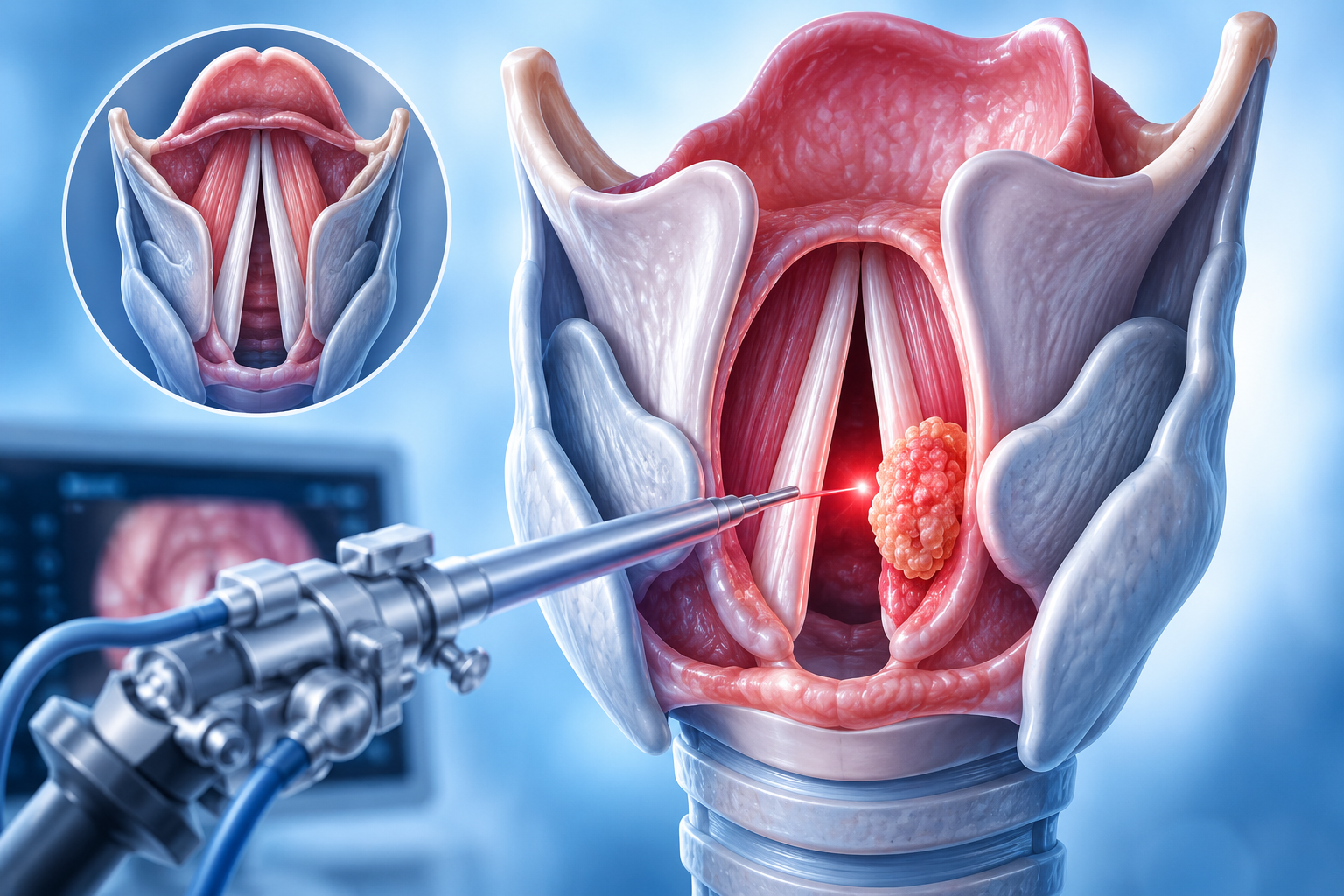
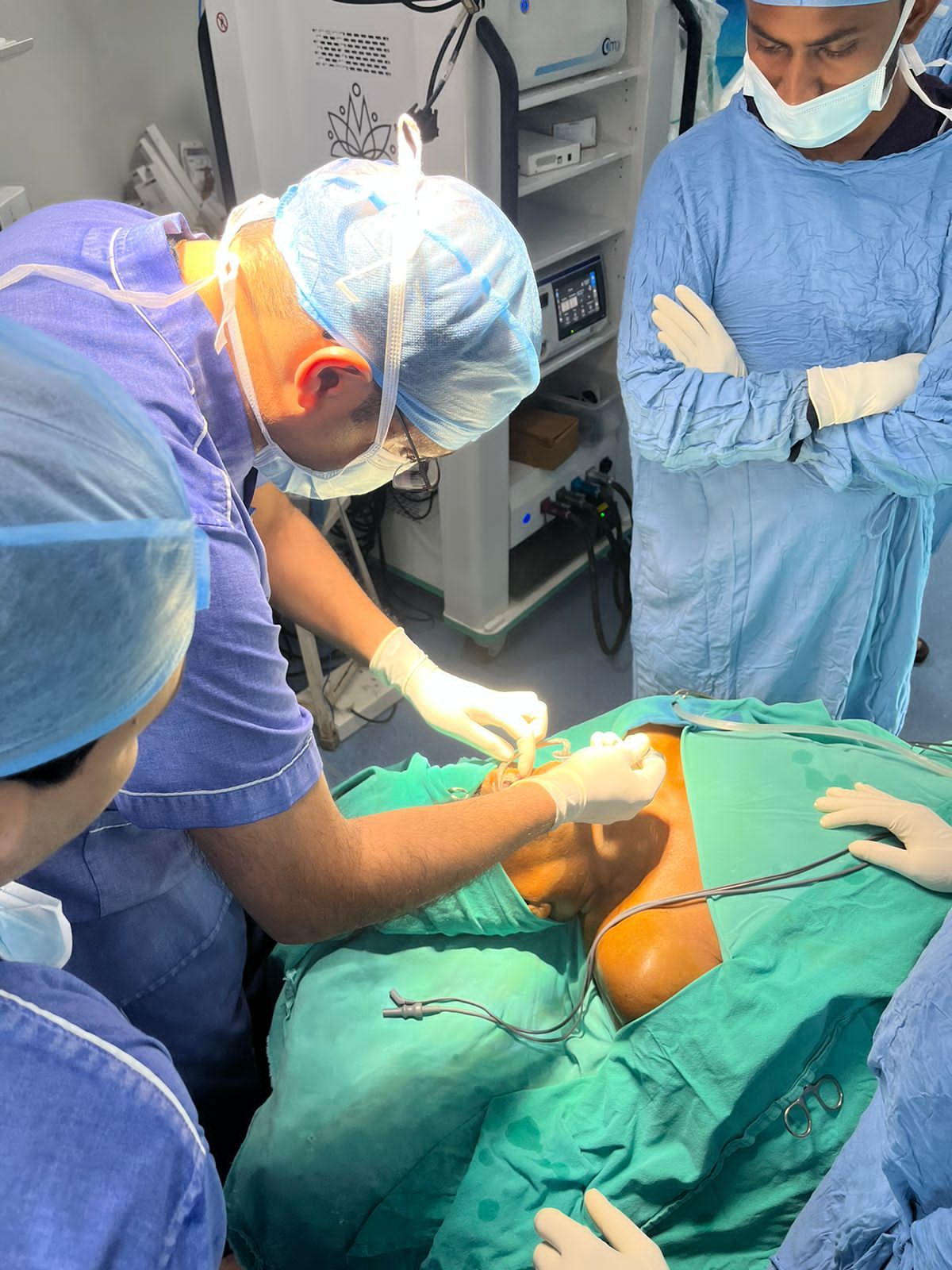
Voice-Preserving Surgery for Early Laryngeal Cancer in Delhi NCR - Dr. Karan Gupta

Who Is a Candidate for Voice-Preserving Surgery?

Eligibility for voice-preserving surgery depends on a detailed laryngoscopy, imaging, and assessment of the tumour's exact location, size, and behaviour. Dr. Karan Gupta carefully evaluates each patient to determine whether the cancer can be removed while preserving the voice box and natural speech.

Early Vocal Cord Cancer

Cancer confined to a single vocal cord with normal or only mildly reduced vocal cord movement is often suitable for voice-preserving surgery.

Small Supraglottic Tumours

Selected early-stage supraglottic cancers without deep invasion into surrounding tissues may be effectively treated while preserving the larynx.

Limited or No Lymph Node Spread

Patients with no neck lymph node involvement, or only limited and favourable nodal disease in selected cases, may remain candidates for organ-preserving surgery.

Both Vocal Cords Involved

Cancer affecting both vocal cords with fixed or severely impaired movement usually cannot be treated with a voice-preserving approach.

Cartilage Invasion

Tumours that have invaded the laryngeal cartilage or surrounding structures generally require more extensive surgery, such as total laryngectomy.

Recurrent Cancer After Radiation

Recurrent laryngeal cancer following previous radiation therapy is usually not suitable for voice-preserving surgery, and total laryngectomy may provide the safest treatment.

Surgical Techniques for Voice Preservation

Voice-preserving surgery is tailored to the exact location, size, and stage of the tumour. Dr. Karan Gupta offers advanced surgical techniques that aim to completely remove the cancer while preserving the larynx, natural speech, and swallowing function whenever safely possible.

Transoral Laser Microsurgery (TLM)

The tumour is removed through the mouth using a precision laser guided by an operating microscope, without any external incision. This technique is ideal for many early-stage vocal cord cancers and allows layer-by-layer tumour removal while preserving as much healthy tissue as possible.

Partial Laryngectomy

Partial laryngectomy removes only the affected portion of the voice box, such as one vocal cord or part of the supraglottis, through an external approach. The remaining larynx is preserved to maintain breathing, swallowing, and voice function.

Transoral Robotic Surgery (TORS)

Selected supraglottic and hypopharyngeal tumours may be treated using Transoral Robotic Surgery (TORS). Robotic assistance provides enhanced visualisation and precision, helping remove the tumour while preserving important speech and swallowing structures.

Microscopic Margin Assessment

After surgery, the removed tumour is examined under the microscope to confirm complete removal with clear surgical margins. This immediate pathological assessment is one of the important advantages of surgery as a first-line treatment for selected early laryngeal cancers.

Before Your Surgery: What to Expect

Careful preoperative planning helps determine whether voice-preserving surgery is the most appropriate treatment for your laryngeal cancer. Dr. Karan Gupta performs a detailed evaluation to select the safest and most effective surgical approach while aiming to preserve your natural voice and swallowing function.

01

Consultation & Detailed Laryngoscopy

A comprehensive consultation is followed by detailed laryngoscopy, and in selected cases, video-stroboscopy to evaluate vocal cord movement, vibration, and the precise extent of the tumour.

02

Biopsy Confirmation

If not already performed, a biopsy is obtained to confirm the diagnosis and identify the exact type of laryngeal cancer before planning surgery.

03

CT or MRI Imaging

CT or MRI scans are used to determine the size and extent of the tumour, ensuring it is appropriately confined for a voice-preserving surgical approach.

04

Baseline Voice Assessment

Your voice quality is assessed before surgery to establish a baseline, helping compare vocal function during recovery and after treatment.

05

Treatment Planning & Shared Decision-Making

Dr. Karan Gupta discusses the benefits and limitations of both surgery and radiation therapy, explains the recommended surgical technique, and helps you make an informed treatment decision.

Recovery and Voice Outcomes

Recovery after voice-preserving surgery is generally faster than after a total laryngectomy. Most patients regain normal swallowing and functional speech, with recovery tailored to the type of surgery performed and the extent of treatment required.

Short Hospital Stay

Hospitalisation is usually brief, often lasting one to a few days, depending on the surgical technique performed and your individual recovery.

Temporary Voice Changes

Mild hoarseness, temporary voice changes, or swallowing discomfort are common during the initial healing period and usually improve as the tissues recover.

Voice Therapy

Speech and voice therapy may be recommended to improve vocal quality, strengthen the voice, and support a smooth recovery after surgery.

Follow-Up Laryngoscopy

Regular follow-up laryngoscopy is performed to monitor healing, assess vocal cord function, and detect any signs of cancer recurrence at an early stage.

Additional Treatment When Needed

In some cases, the final pathology report may identify features that increase the risk of recurrence. If required, Dr. Karan Gupta may recommend postoperative radiation therapy or other additional treatment to achieve the best long-term outcome.

Why Choose Dr. Karan Gupta for Voice-Preserving Laryngeal Surgery in Delhi NCR

Dr. Karan Gupta combines advanced fellowship training, modern surgical techniques, and evidence-based decision-making to provide voice-preserving treatment for carefully selected patients with early laryngeal cancer. Every surgical plan is designed to achieve complete cancer removal while preserving speech and swallowing whenever oncologically appropriate.

Fellowship-Trained Head & Neck Oncosurgeon

Fellowship-trained in Head & Neck Surgical Oncology at Tata Memorial Hospital, Mumbai, and HCG Cancer Centre, Ahmedabad, with extensive expertise in treating cancers of the larynx, hypopharynx, and other head & neck sites.

Advanced Robotic Surgery Training

Further trained in Robotic Head & Neck Surgery through the Vattikuti Foundation, Michigan, USA, enabling the use of advanced minimally invasive techniques for selected laryngeal and hypopharyngeal cancers.

Intuitive Surgical USA Certified Surgeon

Intuitive Surgical USA Certified Robotic Head & Neck Surgeon with expertise in advanced robotic and organ-preserving procedures for appropriately selected patients.

Triple Gold Medalist

Honoured with Triple Gold Medals across MBBS, MS, and DNB, reflecting outstanding academic achievement and commitment to surgical excellence.

Personalised Voice-Preserving Treatment Planning

Voice-preserving surgery is recommended only when it offers safe and effective cancer control. Every treatment plan is carefully tailored to the exact location, stage, and behaviour of the tumour, ensuring the best possible balance between complete tumour removal and preservation of natural voice and swallowing function.

Frequently Asked Questions

Find answers to common questions about voice-preserving surgery, transoral laser microsurgery (TLM), partial laryngectomy, recovery, and treatment for early laryngeal cancer by Dr. Karan Gupta.

Yes, in many cases. Early-stage vocal cord (glottic) cancers confined to one vocal cord with normal movement can often be treated while preserving the voice box. Treatment options may include transoral laser microsurgery (TLM), partial laryngectomy, or radiation therapy, depending on the exact size and location of the tumour.

Transoral Laser Microsurgery (TLM) removes the tumour through the mouth using a precision laser guided by an operating microscope. No external neck incision is required, and the procedure aims to completely remove the cancer while preserving as much healthy tissue and voice function as possible.

Both surgery and radiation therapy are established treatments for many early laryngeal cancers. Surgery allows immediate tumour removal and microscopic examination of the specimen, while radiation avoids an operation but is delivered over several weeks. The best option depends on the tumour characteristics, your voice requirements, and your personal preferences after specialist consultation.

Voice quality depends on how much vocal cord tissue needs to be removed. Smaller procedures often result in minimal voice changes, while larger resections may produce a slightly rougher or breathier voice. Voice therapy after surgery helps maximise voice quality during recovery.

Voice-preserving surgery is generally not suitable when cancer involves both vocal cords with severely impaired movement, has spread into the laryngeal cartilage or surrounding tissues, or has recurred after previous radiation therapy. In such situations, total laryngectomy may provide the safest and most effective treatment.

Look for a fellowship-trained Head & Neck Surgical Oncologist with expertise in transoral laser microsurgery, partial laryngectomy, and advanced laryngeal cancer surgery. Experience in preserving speech and swallowing function, along with access to multidisciplinary rehabilitation including voice therapy, is equally important. Dr. Karan Gupta combines fellowship training with a strong focus on organ-preserving treatment whenever it is oncologically appropriate.
Voice-Preserving Surgery for Early Laryngeal Cancer in Delhi NCR - Dr. Karan Gupta