• -----------
  • +91 9811122341
Chat on WhatsApp
Advanced Head & Neck Cancer Care

Larynx (Voice Box) & Hypopharynx Surgery in Delhi NCR

Cancer of the larynx (voice box) or hypopharynx can affect speech, swallowing, and breathing. Dr. Karan Gupta, a fellowship-trained Head & Neck Oncosurgeon, offers voice-preserving surgery for early cancers, total laryngectomy for advanced disease, and comprehensive speech and swallowing rehabilitation for the best possible recovery.

Request an Appointment

Please fill out the form below to book your consultation layer.

Larynx (Voice Box) & Hypopharynx Surgery in Delhi NCR

Cancer of the larynx (voice box) or hypopharynx affects speech, swallowing, and breathing, and successful treatment depends greatly on early diagnosis. Dr. Karan Gupta, a fellowship-trained Head & Neck Oncosurgeon, provides advanced surgical treatment for laryngeal and hypopharyngeal cancers in Delhi NCR, from voice-preserving surgery for early cancers to total laryngectomy for advanced disease, with dedicated speech and swallowing rehabilitation throughout recovery.

Comprehensive Cancer Care with Functional Recovery

Every treatment plan is individualized based on the cancer's location, stage, and your overall health. The goal is not only complete cancer removal but also preserving or restoring speech, swallowing, and quality of life whenever possible.
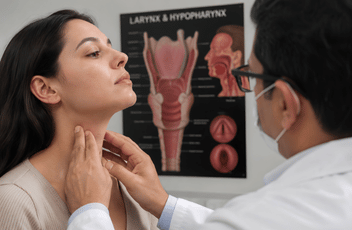
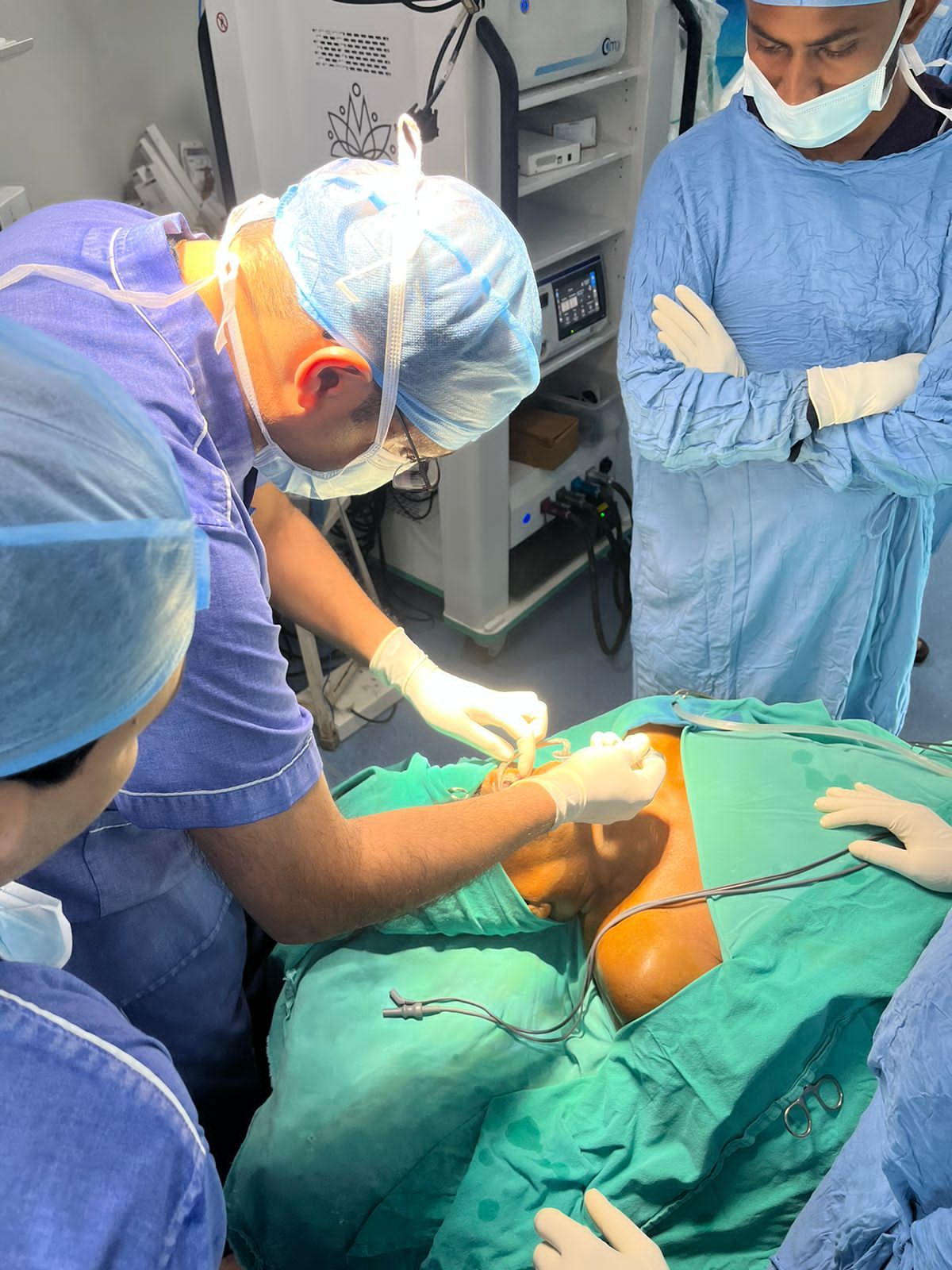
Larynx and Hypopharynx Surgery - Dr. Karan Gupta

What Are Larynx and Hypopharynx Cancers?

The larynx (voice box) sits at the top of the windpipe and consists of the glottis (vocal cords), supraglottis, and subglottis. The hypopharynx lies behind the larynx and forms part of the swallowing passage connecting the throat to the food pipe.

Cancers affecting these regions are commonly associated with tobacco use and alcohol consumption. Persistent hoarseness, difficulty swallowing, neck swelling, ear pain, breathing difficulty, or coughing up blood should never be ignored and require prompt evaluation, including laryngoscopy. Treatment depends on the exact location, size, and stage of the tumour.

Voice-Preserving Surgery for Early Laryngeal Cancers

Many early-stage laryngeal cancers can be treated while preserving the voice box and natural speech.

Depending on the tumour, treatment may include Transoral Laser Microsurgery (TLM), partial laryngectomy, or radiation therapy. The aim is complete cancer removal while preserving speech and swallowing as much as possible.

Benefits of Voice-Preserving Surgery
  • No external neck incision (for TLM)
  • Preserves natural voice whenever possible
  • Maintains swallowing function
  • Shorter recovery period
  • Excellent cancer control in selected patients

Total Laryngectomy for Advanced Cancers

Total laryngectomy is recommended for advanced cancers, cancers involving both vocal cords, tumours invading the laryngeal cartilage, or recurrent cancer after radiation therapy.

The surgery removes the entire larynx and creates a permanent breathing opening (stoma) in the neck. If the cancer extends into the hypopharynx, reconstruction using tissue flaps may also be required. Neck dissection is commonly performed when lymph nodes are involved.

Post-Laryngectomy Rehabilitation

Recovery focuses on restoring communication, swallowing, and adapting to breathing through the neck. Most patients regain understandable speech through a Tracheoesophageal Puncture (TEP) with a voice prosthesis. Alternatives such as an electrolarynx may also be used.

Speech therapy, swallowing rehabilitation, stoma care, nutritional guidance, and long-term follow-up are coordinated with experienced rehabilitation specialists to maximize quality of life.

Choosing the Best Laryngeal Cancer Surgeon in Delhi NCR

Successful treatment is measured not only by cancer clearance but also by preserving speech, swallowing, and long-term quality of life.

Dr. Karan Gupta has fellowship training in Head & Neck Surgical Oncology from Tata Memorial Hospital, Mumbai and HCG Cancer Centre, Ahmedabad. His expertise includes voice-preserving laryngeal surgery, transoral laser microsurgery, total laryngectomy, complex reconstruction, neck dissection, and comprehensive speech and swallowing rehabilitation for patients with laryngeal and hypopharyngeal cancers.

Before Your Surgery: What to Expect

Every patient undergoes a thorough pre-operative evaluation to determine the most appropriate treatment plan. Dr. Karan Gupta carefully reviews your diagnosis, staging, voice function, and overall health to ensure safe surgery and the best possible functional outcomes.

Specialist Consultation

Comprehensive consultation including laryngoscopy, along with a detailed review of your biopsy report and imaging findings.

Cancer Staging Investigations

CT scan, MRI, or PET-CT may be recommended to assess tumour extent, lymph node involvement, and vocal cord mobility.

Voice & Swallowing Assessment

A baseline evaluation of speech and swallowing helps plan treatment and supports rehabilitation after surgery.

Pre-Anaesthesia Assessment

Routine blood tests, medical evaluation, and anaesthesia fitness assessment are completed before your operation.

Treatment Planning Discussion

Dr. Karan Gupta explains whether voice-preserving surgery or total laryngectomy is the best option for your condition.

Rehabilitation Planning

Speech restoration, swallowing rehabilitation, stoma care, and recovery expectations are discussed before surgery to help you prepare confidently.

What Happens During Surgery

Larynx and hypopharynx surgery is performed under general anaesthesia. The type of surgery depends on the location, size, and stage of the cancer.

For voice-preserving procedures, the tumour is removed either transorally using a laser (Transoral Laser Microsurgery - TLM) or through a limited external approach when required. For total laryngectomy, the entire larynx is removed and a permanent neck stoma is created to allow breathing. When necessary, neck dissection and hypopharyngeal reconstruction are performed during the same operation to achieve complete cancer removal and restore swallowing.

Depending on the complexity of the procedure, surgery may take less than one hour for selected transoral laser surgeries, while total laryngectomy with reconstruction may require several hours.

Recovery After Surgery

Recovery depends on the type of surgery performed. Dr. Karan Gupta provides comprehensive postoperative care with a strong emphasis on speech restoration, swallowing rehabilitation, and long-term recovery.

Voice-Preserving Surgery Recovery

Hospital stay is usually short after voice-preserving surgery, while voice quality and swallowing are monitored closely as healing progresses.

Total Laryngectomy Recovery

Recovery after total laryngectomy requires a longer hospital stay. A temporary feeding tube is used while the throat heals before swallowing is gradually restarted.

Stoma Care Training

Patients receive early education on caring for the permanent breathing opening (stoma), including cleaning, humidification, and daily maintenance.

Voice Rehabilitation

Speech rehabilitation usually begins with a Tracheoesophageal Puncture (TEP) and voice prosthesis once healing is complete. Alternative speech options are also discussed when appropriate.

Additional Cancer Treatment

Depending on the final pathology report, postoperative radiation therapy, with or without chemotherapy, may be recommended to reduce the risk of recurrence.

Regular Follow-up Care

Scheduled follow-up visits help monitor healing, speech, swallowing, nutrition, and cancer recovery while providing ongoing support throughout rehabilitation.

Why Choose Dr. Karan Gupta for Larynx & Hypopharynx Surgery in Delhi NCR

Dr. Karan Gupta combines advanced fellowship training in Head & Neck Surgical Oncology with extensive experience in treating laryngeal and hypopharyngeal cancers. His approach focuses not only on complete cancer removal but also on preserving speech, swallowing, and quality of life whenever possible.

Fellowship-Trained Head & Neck Oncosurgeon

Fellowship-trained in Head & Neck Surgical Oncology at Tata Memorial Hospital, Mumbai, and HCG Cancer Centre, Ahmedabad, with expertise in complex larynx and hypopharynx cancer surgery.

Advanced Robotic Surgery Training

Further trained in Robotic Head & Neck Surgery through the Vattikuti Foundation, Michigan, USA, bringing advanced minimally invasive surgical expertise to head and neck cancer care.

Certified Robotic Head & Neck Surgeon

Intuitive Surgical USA Certified Robotic Head & Neck Surgeon with internationally recognized training in advanced oncological and reconstructive procedures.

Triple Gold Medalist

Honoured with Triple Gold Medals across MBBS, MS, and DNB for outstanding academic achievement and surgical excellence.

Speech & Swallowing-Focused Cancer Care

Every treatment plan is individually tailored to achieve the best possible cancer control while preserving or restoring speech, swallowing, and breathing. From voice-preserving laryngeal surgery to total laryngectomy with rehabilitation, Dr. Karan Gupta works closely with speech and swallowing rehabilitation specialists to help patients regain confidence and quality of life after treatment.

Frequently Asked Questions

Find answers to common questions about laryngeal cancer, voice box surgery, laryngectomy, hypopharyngeal cancer, recovery, and treatment by Dr. Karan Gupta.

No. Hoarseness is most commonly caused by conditions such as a cold, laryngitis, or voice strain and usually improves within one to two weeks. However, hoarseness lasting longer than two to three weeks—especially in people who smoke or consume alcohol regularly—should be evaluated with a laryngoscopy, as persistent voice change may be an early sign of laryngeal cancer.

Yes. Most patients regain functional speech after a total laryngectomy. The most common rehabilitation method is a tracheoesophageal puncture (TEP) with a voice prosthesis, which enables fluent speech. Other options include an electrolarynx and oesophageal speech. The most suitable option is planned with your surgeon and speech-language therapist.

A partial laryngectomy removes only the cancerous portion of the voice box while preserving natural speech and swallowing whenever possible. A total laryngectomy removes the entire larynx for advanced or recurrent cancers and creates a permanent breathing opening (stoma) in the neck because the airway is separated from the swallowing passage.

Yes. Many early-stage laryngeal cancers can be treated using voice-preserving techniques such as transoral laser microsurgery (TLM), partial laryngectomy, or radiation therapy. The best treatment depends on the exact location, size, and extent of the tumour, determined through laryngoscopy and imaging.

When selecting a laryngeal cancer surgeon, consider fellowship training in Head & Neck Surgical Oncology, experience with voice-preserving surgery and total laryngectomy, and access to a multidisciplinary rehabilitation team. Dr. Karan Gupta's fellowship training at Tata Memorial Hospital and HCG Cancer Centre, combined with his focus on functional recovery, makes him a trusted option for patients in Delhi NCR.

Hypopharyngeal cancers are often diagnosed at a more advanced stage because they produce fewer early symptoms. When both the larynx and hypopharynx are involved, surgery may include removal of the affected tissues along with reconstructive flap surgery to restore swallowing. Treatment is carefully planned based on imaging findings, tumour extent, and the patient's overall condition.
Laryngeal Cancer Surgery - Dr. Karan Gupta