• -----------
  • +91 9811122341
Chat on WhatsApp
Expert Cancer Care

Head & Neck and Skull Base Surgery in Delhi NCR

Specialized surgical care for Oral, Tongue, Thyroid, Throat, Voice Box, Salivary Gland, and Head & Neck Cancers with advanced treatment and personalized care.

Request an Appointment

Please fill out the form below to book your consultation layer.

Ear and Temporal Bone Tumor Surgery in Delhi NCR

Tumours of the ear canal and temporal bone are uncommon, and getting the staging and extent of surgery right makes a real difference to both cancer control and hearing preservation. Dr. Karan Gupta, a fellowship-trained Head & Neck Oncosurgeon, evaluates and treats tumours of the ear canal, middle ear, and temporal bone in Delhi NCR, performing lateral, subtotal, or total temporal bone resection as needed. Surgery may also be combined with parotid gland surgery or neck dissection depending on the extent of disease.

What Are Ear and Temporal Bone Tumours?

Ear and temporal bone tumours develop in or spread to the external ear canal, middle ear, or temporal bone—the part of the skull containing the organs responsible for hearing and balance. Most malignant tumours are squamous cell carcinomas of the external auditory canal, although salivary gland tumours, basal cell carcinoma, and other rare tumour types can also occur. Benign tumours in this region are treated differently from cancerous lesions. Because these cancers are extremely rare, they may initially resemble chronic ear infections, delaying diagnosis. They are also different from an acoustic neuroma (vestibular schwannoma), which is a benign tumour of the hearing and balance nerve and follows a separate treatment pathway.
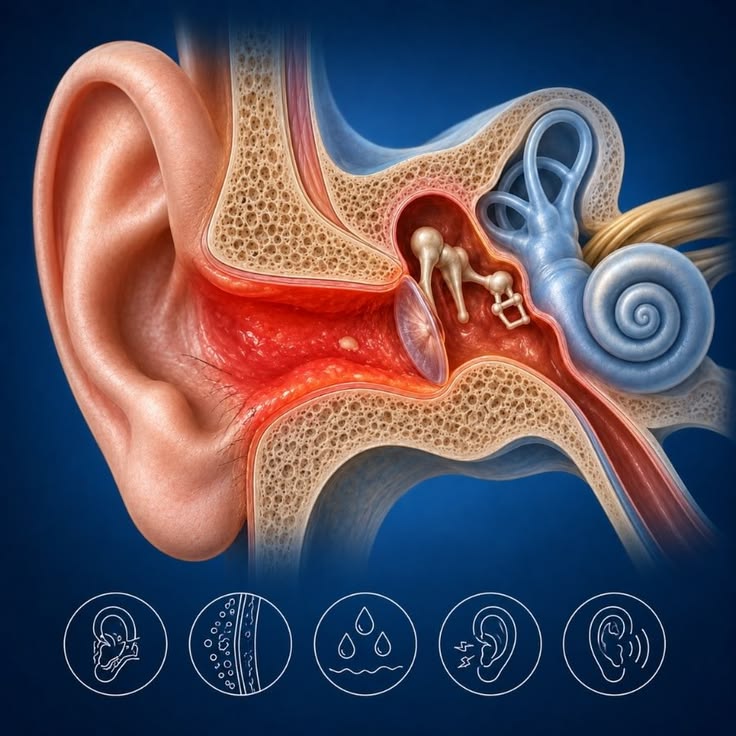

Ear and Temporal Bone Tumor Surgery - Dr. Karan Gupta

Symptoms That Need Evaluation

Any of the following symptoms, especially if they persist for more than a few weeks or do not improve with standard treatment for a presumed ear infection, should be evaluated by a specialist to rule out a tumour of the ear canal or temporal bone.

Persistent ear discharge, especially if blood-stained or foul-smelling
Bleeding from the ear canal
Persistent or worsening ear pain
Progressive hearing loss on one side
A growth or non-healing sore visible in the ear canal
Facial weakness or numbness on the same side as the ear symptoms

Types of Temporal Bone Surgery We Perform

The choice of surgery depends on the size of the tumour, its location, and whether it has spread to nearby structures. Each procedure is carefully planned to achieve complete tumour removal while preserving important functions whenever possible.

Lateral Temporal Bone Resection (LTBR)

Removes the external auditory canal and the lateral part of the temporal bone up to the facial nerve and inner ear (otic capsule). This procedure is commonly performed for early-stage tumours confined to the ear canal.

Subtotal Temporal Bone Resection (STBR)

A more extensive operation performed when the tumour has spread into the middle ear or mastoid, removing a larger portion of the temporal bone while carefully evaluating involvement of the facial nerve and inner ear structures.

Total Temporal Bone Resection (TTBR)

Reserved for advanced or high-grade tumours that extend into deeper structures such as the petrous apex. This procedure involves removal of the entire temporal bone to achieve optimal cancer control.

Combined Procedures

Depending on the extent of disease, temporal bone resection may be combined with superficial parotidectomy and neck dissection, as these tumours can spread to the parotid gland and cervical lymph nodes.

Before Your Surgery: What to Expect

Careful preoperative evaluation helps determine the exact extent of the tumour, plan the safest surgical approach, and prepare you for the best possible outcome.

01

Comprehensive ENT & Neurological Examination

A detailed clinical assessment is performed, including examination of the ear and evaluation of facial nerve function to determine whether the tumour has affected nearby structures.

02

Baseline Hearing Assessment

Hearing tests are carried out to measure your current hearing levels before surgery and to help guide treatment planning.

03

CT & MRI of the Temporal Bone

High-resolution CT and MRI scans are performed to accurately map the size and spread of the tumour and determine the most appropriate surgical approach.

04

Biopsy Confirmation

If not already completed, a biopsy is performed to confirm the diagnosis and identify the tumour type before surgery.

05

Reconstructive Planning & Fitness Assessment

When surgery is expected to create a skull base or soft tissue defect, reconstructive options are discussed in advance. A complete pre-anaesthetic and general fitness assessment is also performed to ensure you are ready for surgery.

Recovery and Hearing Rehabilitation

Recovery after temporal bone surgery depends on the extent of the procedure performed. Patients undergoing more extensive resections or reconstructive surgery usually require a longer hospital stay and careful monitoring to ensure optimal healing and functional recovery.

Hospital stay is longer after extensive temporal bone resection, especially when reconstruction is required.
Wound, reconstructive flap, and surgical drain care are monitored closely during the early recovery period.
Facial nerve function is assessed regularly, particularly when the nerve was close to or involved with the tumour.
Hearing loss on the operated side is expected after temporal bone resection, and hearing rehabilitation options such as bone-conduction implants or osseointegrated hearing aids can be discussed once healing is complete.
Additional treatment, including radiation therapy and, in selected cases, chemotherapy, may be recommended based on the final pathology report.

Why Choose Dr. Karan Gupta for Ear and Temporal Bone Tumor Surgery in Delhi NCR

Dr. Karan Gupta combines advanced surgical oncology training with expertise in complex skull base and head & neck procedures, offering comprehensive treatment for rare ear canal and temporal bone tumours.

Fellowship-Trained Head & Neck Oncosurgeon

Fellowship-trained in Head & Neck Surgical Oncology at Tata Memorial Hospital, Mumbai, and HCG Cancer Centre, Ahmedabad.

Advanced Robotic Surgery Training

Further trained in Robotic Head & Neck Surgery through the Vattikuti Foundation, Michigan, USA, with expertise in advanced minimally invasive techniques.

Certified Robotic Head & Neck Surgeon

Intuitive Surgical USA Certified Robotic Head & Neck Surgeon, trained in internationally recognized robotic surgical systems.

Triple Gold Medalist

Awarded Triple Gold Medals across MBBS, MS, and DNB, reflecting consistent academic and surgical excellence.

Comprehensive Multidisciplinary Surgical Care

Expertise in temporal bone resection, parotid gland surgery, and neck dissection allows the complete extent of disease to be managed within a single, coordinated treatment plan whenever appropriate.

Frequently Asked Questions

Find answers to common questions about ear canal cancer, temporal bone tumours, temporal bone resection surgery, hearing preservation, recovery, and treatment by Dr. Karan Gupta.

No. Growths in the ear canal or temporal bone may be benign, such as certain bone growths or glandular tumours, or malignant, most commonly squamous cell carcinoma of the ear canal. A biopsy and detailed imaging are required to determine whether the tumour is benign or malignant, and this guides the treatment plan.

No. An acoustic neuroma is a benign tumour of the hearing and balance nerve located deeper within the inner ear and skull. It is managed differently from cancers of the ear canal and temporal bone. If you have been diagnosed with an acoustic neuroma, mention this during your consultation so the appropriate treatment pathway can be discussed.

Hearing loss on the operated side is expected after temporal bone resection because part of the hearing structures is removed along with the tumour. After healing, hearing rehabilitation options such as osseointegrated hearing aids or bone-conduction implants can be considered based on your individual condition.

The facial nerve passes through the temporal bone, and whether it is affected depends on how close the tumour is to the nerve. Whenever possible, the facial nerve is preserved. If the tumour directly involves the nerve, reconstruction or other treatment options will be discussed before surgery.

No. The type of surgery—lateral, subtotal, or total temporal bone resection—is determined by the tumour stage using the University of Pittsburgh staging system, which evaluates how far the cancer has spread within the ear canal, middle ear, mastoid, and nearby skull base structures.

This depends on the final pathology report and tumour stage. Early-stage tumours confined to the ear canal may be treated with surgery alone, while more advanced tumours involving the middle ear, mastoid, or surrounding structures often require radiation therapy, sometimes combined with chemotherapy, following multidisciplinary evaluation.
Ear and Temporal Bone Tumor Surgery - Dr. Karan Gupta