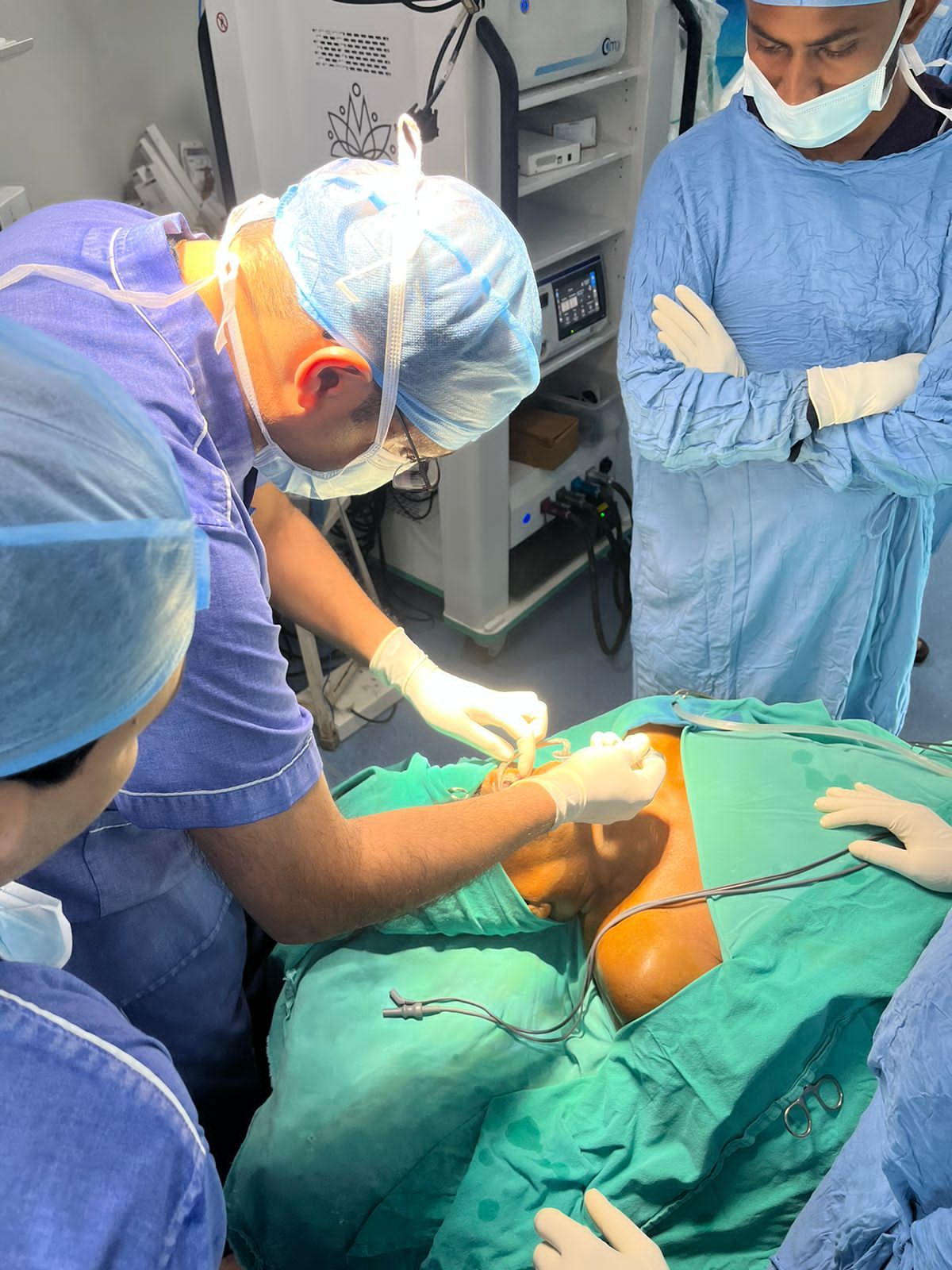
Expert surgical treatment for thyroid nodules, multinodular goitre, retrosternal goitre, thyroid cancer, parathyroid disorders, and other thyroid conditions. Dr. Karan Gupta provides personalized treatment plans, including thyroid lobectomy, total thyroidectomy, parathyroid surgery, and advanced robotic thyroid surgery for suitable patients.
Please fill out the form below to book your consultation layer.
Being told you have a thyroid nodule or an enlarged thyroid (goitre) does not automatically mean you need surgery. Most thyroid nodules and goitres are benign and can be safely monitored. Dr. Karan Gupta, a fellowship-trained Head & Neck Oncosurgeon, evaluates thyroid nodules and goitre in Delhi NCR and recommends surgery only when it is genuinely indicated, ranging from a thyroid lobectomy to surgery for large or retrosternal goitre, including robotic-assisted thyroid surgery for suitable patients.
A thyroid nodule is a distinct lump that develops within the thyroid gland. It may occur as a single nodule or alongside multiple nodules. Most thyroid nodules are non-cancerous and are often discovered during a routine health check-up or imaging performed for another reason.
A goitre refers to an enlargement of the thyroid gland. It may be diffuse, where the entire gland enlarges uniformly, or multinodular, where several nodules develop within the thyroid. Most goitres are benign, although larger goitres can cause pressure symptoms or cosmetic concerns.
Careful clinical examination, ultrasound evaluation, and Fine Needle Aspiration Cytology (FNAC), when required, help determine whether observation or surgery is the most appropriate treatment for your thyroid condition.
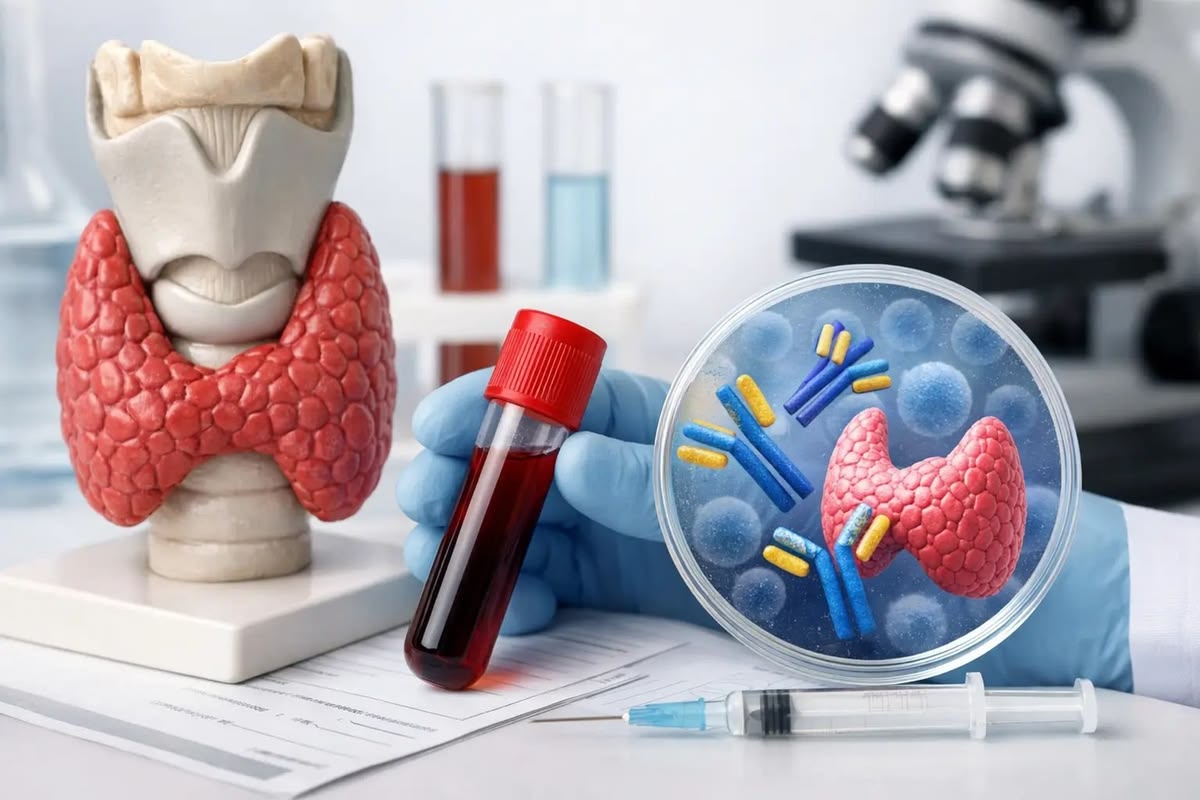
Surgery is not the default treatment for every thyroid nodule or goitre. Dr. Karan Gupta recommends surgery only when there is a clear medical indication, while many benign thyroid conditions can be safely managed with regular monitoring.
FNAC biopsy showing thyroid cancer, suspicious findings, or indeterminate cytology where the possibility of cancer cannot be excluded.
Difficulty swallowing, breathing problems, persistent throat tightness, choking sensation, or hoarseness caused by an enlarged thyroid gland.
A visibly enlarging goitre that causes cosmetic concerns or continues to increase in size over time.
Toxic thyroid nodules or multinodular goitre causing hyperthyroidism that does not respond adequately to medication.
A goitre extending into the chest that causes compression of the windpipe or food pipe, or cannot be safely assessed with biopsy.
Many benign thyroid nodules and goitres do not require surgery and can be safely monitored with regular clinical evaluation and ultrasound.
A thorough evaluation helps determine whether a thyroid nodule or goitre requires monitoring or surgery. Dr. Karan Gupta uses clinical examination, ultrasound, FNAC biopsy, blood tests, and advanced imaging whenever required to recommend the most appropriate treatment.
Neck ultrasound is the first investigation used to assess thyroid nodules, evaluate their size and appearance, and estimate the risk of malignancy using standard reporting systems.
Fine Needle Aspiration Cytology (FNAC) is recommended for suspicious or larger nodules. Results are reported using the Bethesda System to estimate the likelihood of cancer.
Blood tests are performed to assess thyroid hormone levels and determine whether the thyroid gland is functioning normally or producing excess hormone.
CT imaging may be recommended for large or retrosternal goitres to evaluate their extent and relationship to the airway, food pipe, and surrounding structures before surgery.
Most patients recover well after thyroid nodule or goitre surgery and are discharged within one to two days. Regular follow-up helps ensure proper healing, normal thyroid function, and early detection of any concerns.
Most patients are able to return home within one to two days after thyroid lobectomy or total thyroidectomy, depending on the extent of surgery and recovery.
Blood calcium levels are monitored after surgery, particularly following a total thyroidectomy, as temporary low calcium may occur while the parathyroid glands recover.
Your voice is assessed during the early recovery period to confirm that the vocal cords are functioning normally after surgery.
Following a thyroid lobectomy for a benign nodule, the remaining thyroid lobe often continues to function normally and is monitored with periodic blood tests.
After a total thyroidectomy, lifelong thyroid hormone replacement therapy is started and adjusted through regular blood tests to maintain normal hormone levels.
If the final pathology unexpectedly detects thyroid cancer in tissue removed for a presumed benign condition, Dr. Karan Gupta will discuss whether additional treatment or further surgery is required.
The most appropriate operation depends on the size, location, number of nodules, thyroid function, biopsy results, and whether the goitre extends into the chest.
Removes only the affected thyroid lobe. It is commonly recommended for a single thyroid nodule, suspicious or indeterminate FNAC findings, or a benign nodule causing pressure symptoms.
Removes the entire thyroid gland and is generally recommended for multinodular goitre involving both lobes, toxic goitre causing hyperthyroidism, or when multiple nodules carry a higher risk of malignancy.
Most retrosternal goitres can be safely removed through a standard neck incision. A chest incision (sternotomy) is required only in a small number of patients with extensive mediastinal extension or when the goitre is firmly attached to surrounding structures. If imaging suggests this possibility, it will be discussed with you before surgery.
Dr. Karan Gupta offers expert evaluation and personalized surgical treatment for thyroid nodules and goitre. Surgery is recommended only when medically necessary, with every treatment plan tailored to your diagnosis, symptoms, and overall health.
Fellowship-trained in Head & Neck Surgical Oncology at Tata Memorial Hospital, Mumbai, and HCG Cancer Centre, Ahmedabad, with extensive expertise in thyroid and head & neck surgery.
Further trained in Robotic Head & Neck Surgery through the Vattikuti Foundation, Michigan, USA, offering advanced minimally invasive surgical options for suitable patients.
Intuitive Surgical USA Certified Robotic Head & Neck Surgeon with expertise in robotic thyroidectomy, providing excellent surgical outcomes with improved cosmetic results for eligible patients.
Honoured with Triple Gold Medals across MBBS, MS, and DNB for exceptional academic performance and surgical excellence.
Surgery is recommended only when genuinely indicated. Whether you need a thyroid lobectomy, total thyroidectomy, or surgery for a multinodular or retrosternal goitre, the extent of the operation is carefully matched to your specific thyroid nodule, goitre, symptoms, biopsy findings, and overall clinical condition rather than following a one-size-fits-all approach.
Find answers to common questions about thyroid nodules, goitre, thyroid surgery, robotic thyroidectomy, recovery, and follow-up care by Dr. Karan Gupta.