• -----------
  • +91 9811122341
Chat on WhatsApp
Expert Cancer Care

Head & Neck Surgical Oncology in Delhi NCR

Specialized surgical care for Oral, Tongue, Thyroid, Throat, Voice Box, Salivary Gland, and Head & Neck Cancers with advanced treatment and personalized care.

Request an Appointment

Please fill out the form below to book your consultation layer.

Thyroid & Parathyroid Surgery in Delhi NCR

Whether you have been found to have a thyroid nodule, an enlarged thyroid (goitre), a confirmed thyroid cancer, or high calcium levels linked to a parathyroid problem, the right extent of surgery depends entirely on your specific diagnosis. Dr. Karan Gupta, a fellowship-trained Head & Neck Oncosurgeon, performs thyroid and parathyroid surgery in Delhi NCR, including robotic-assisted thyroidectomy for suitable patients, with a focus on preserving your voice, calcium balance, and overall function.

What Is Thyroid and Parathyroid Surgery?

The thyroid gland sits at the base of the neck and produces hormones that regulate metabolism, while four small parathyroid glands, usually located just behind or near the thyroid, control the level of calcium in the blood. Surgery on these glands is recommended for a range of conditions, from thyroid cancer and suspicious nodules to benign goitre and calcium disorders. The surgical approach depends entirely on the underlying diagnosis and is one of the core areas within head and neck surgical oncology.
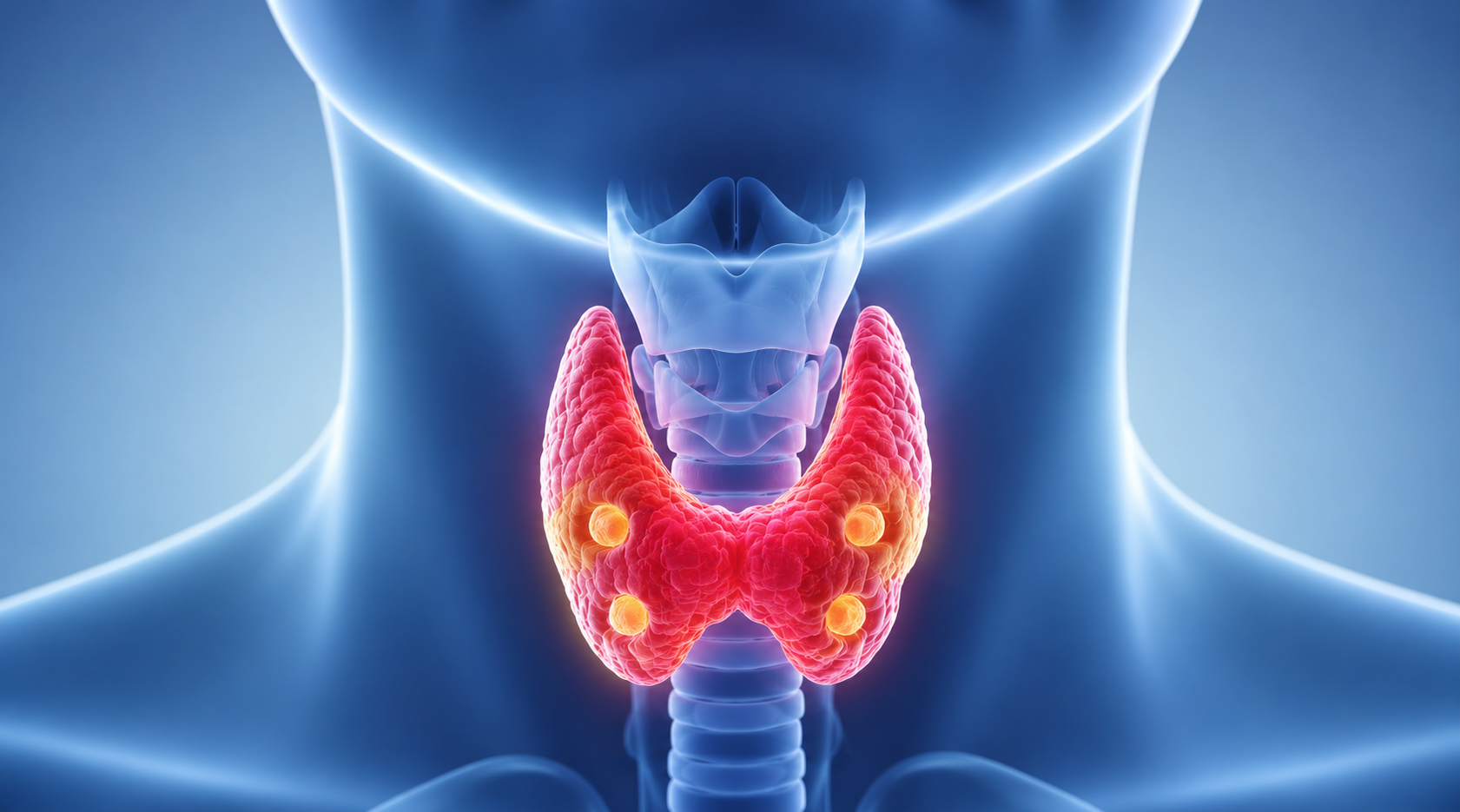
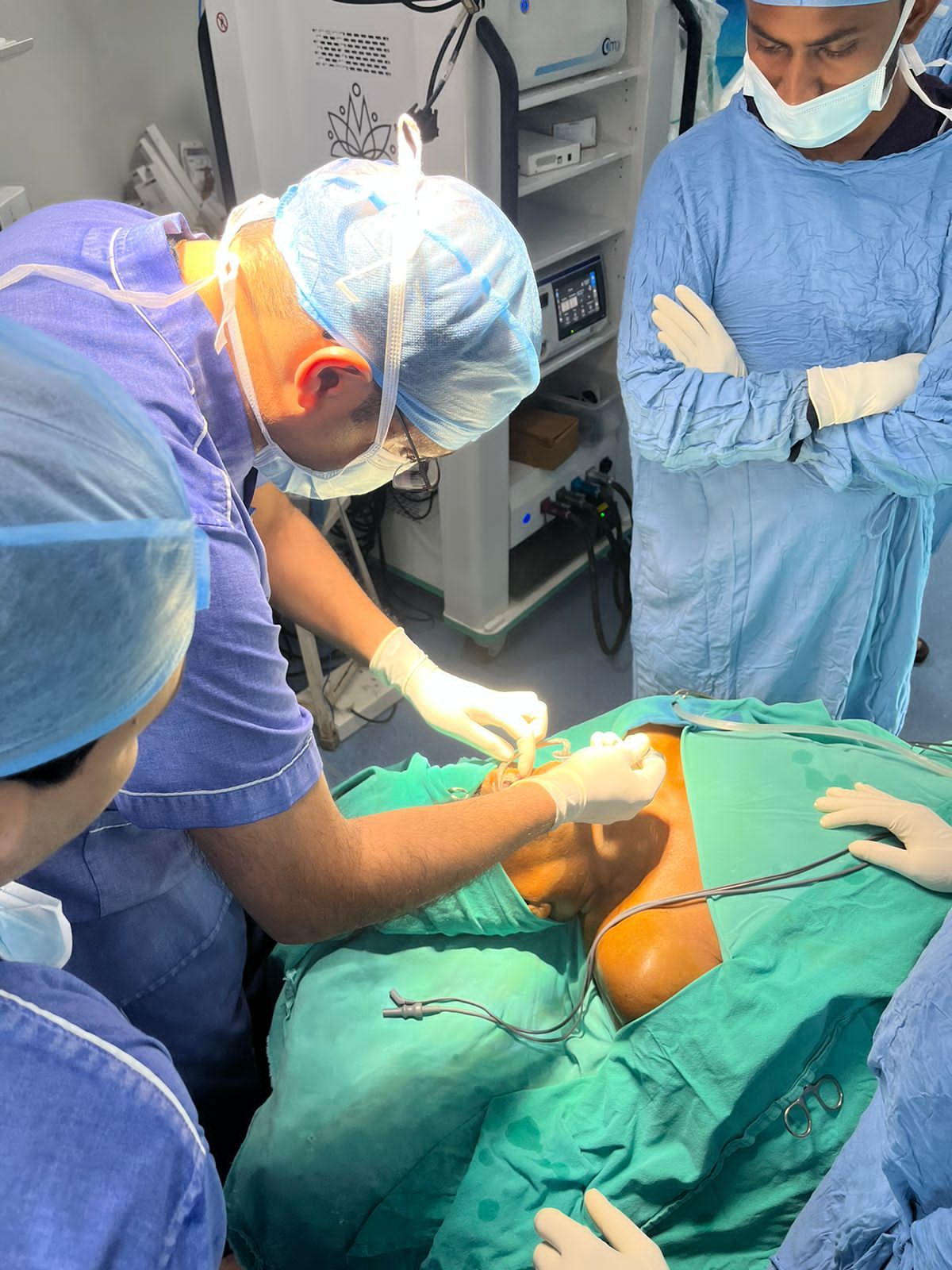
Thyroid & Parathyroid Surgery - Dr. Karan Gupta

Thyroid Cancer Surgery

Thyroid cancer, most commonly papillary or follicular thyroid cancer, and less commonly medullary or anaplastic thyroid cancer, is generally treated with surgical removal of part or all of the thyroid gland. The extent of surgery, whether a thyroid lobectomy (removal of one side of the gland) or a total thyroidectomy (removal of the entire thyroid), depends on the size of the tumour, whether both lobes are involved, and other risk factors identified on imaging and biopsy.

When cancer has spread or is at high risk of spreading to the lymph nodes in the neck, a neck dissection may be performed along with thyroid surgery. After total thyroidectomy, some patients may also require radioactive iodine therapy depending on the final pathology report and overall risk assessment.

Surgery for Thyroid Nodules and Goitre

Most thyroid nodules are benign and do not require surgery. However, surgery is recommended when a biopsy (FNAC) suggests or confirms cancer, when a nodule causes difficulty swallowing or breathing, persistent throat tightness, an enlarging goitre causing cosmetic concerns, or hyperthyroidism that does not respond to medication.

Depending on the diagnosis, treatment may involve removal of only the affected thyroid lobe (thyroid lobectomy) or the entire thyroid gland (total thyroidectomy).

Parathyroid Surgery for Calcium Disorders

Parathyroid surgery is most commonly performed for primary hyperparathyroidism, where one or more parathyroid glands produce excessive parathyroid hormone, leading to high calcium levels in the blood. The condition is usually caused by a single benign parathyroid adenoma, although multiple glands may occasionally be affected.

Before surgery, imaging studies such as a neck ultrasound or sestamibi scan are used to identify the overactive gland. This allows Dr. Karan Gupta to perform a targeted, minimally invasive parathyroidectomy whenever appropriate instead of exploring all four glands.

Most patients experience normalisation of calcium and parathyroid hormone levels soon after the abnormal gland has been removed.

Robotic Thyroid and Parathyroid Surgery

For suitable patients, Dr. Karan Gupta offers robotic-assisted thyroidectomy, aiming to achieve the same standard of gland removal as conventional surgery while helping to minimise visible neck scarring. Whether a robotic approach is appropriate for you depends on factors such as the size of your thyroid, the nature of the nodule or cancer, and your individual neck anatomy, and this is assessed during your consultation.

Before Your Surgery: What to Expect

Careful pre-operative planning helps ensure the safest surgery and the best possible outcome. Dr. Karan Gupta performs a thorough evaluation to determine the most appropriate surgical approach based on your diagnosis and overall health.

Specialist Consultation

Comprehensive consultation, clinical examination, and review of your ultrasound, FNAC biopsy, and blood test reports.

Advanced Imaging

Additional investigations such as CT scan, sestamibi scan, or 4D CT are advised when required for accurate surgical planning.

Voice Assessment

Your vocal cord function is assessed before surgery to establish a baseline and help preserve your voice.

Pre-Anaesthesia Evaluation

Fitness for general anaesthesia is assessed through blood tests and a complete pre-operative medical evaluation.

Treatment Planning

Detailed discussion about the recommended surgery, robotic suitability, expected recovery, and possible outcomes.

Personalised Surgical Plan

The surgical approach is tailored to your condition, whether you require a lobectomy, total thyroidectomy, robotic surgery, or parathyroidectomy.

What Happens During Surgery

Thyroid and parathyroid surgery is performed under general anaesthesia. Throughout the operation, Dr. Karan Gupta carefully identifies and protects the recurrent laryngeal nerve, which controls the voice, while preserving the healthy parathyroid glands whenever possible to maintain normal calcium balance after surgery.

Depending on your diagnosis, the procedure may range from a straightforward operation for a single thyroid nodule to a more complex surgery involving total thyroidectomy with neck dissection for thyroid cancer. Every operation is planned to achieve complete disease removal while preserving vital structures and ensuring the best functional outcome.

Recovery After Surgery

Recovery after thyroid or parathyroid surgery is usually smooth, with most patients returning home within one to two days, depending on the type and extent of the procedure. Dr. Karan Gupta provides personalized post-operative care to ensure safe healing, proper hormone balance, and optimal long-term outcomes.

Calcium Level Monitoring

Blood calcium levels are monitored closely after thyroid or parathyroid surgery, as temporary low calcium levels can occur while the body adjusts following the procedure.

Voice Assessment

Your voice is assessed during the recovery period to confirm that the vocal cords are functioning normally and that the recurrent laryngeal nerve has been preserved.

Thyroid Hormone Replacement

Patients undergoing a total thyroidectomy begin thyroid hormone replacement therapy, with medication doses adjusted through regular blood tests to maintain normal hormone levels.

Drain Care

A small surgical drain may be placed temporarily depending on the extent of surgery. It is usually removed before discharge or shortly afterward during follow-up.

Additional Cancer Treatment

For patients treated for thyroid cancer, radioactive iodine therapy or other additional treatment may be recommended based on the final pathology report and cancer stage.

Risks and Limitations

Thyroid and parathyroid surgery are generally safe procedures, but like all operations, they carry certain risks that are discussed in detail before surgery. Potential complications include temporary or, rarely, permanent hoarseness caused by irritation or injury to the recurrent laryngeal nerve, temporary or permanent low calcium levels if the parathyroid glands are affected during thyroid surgery, bleeding, infection, and the possibility that the planned extent of surgery may need to be modified based on findings during the operation.

These complications are uncommon, and every effort is made to protect the voice, preserve calcium balance, and achieve the safest possible outcome. If you would like an independent review of your reports or imaging before making a treatment decision, Dr. Karan Gupta also offers a comprehensive second opinion consultation.

Why Choose Dr. Karan Gupta for Thyroid and Parathyroid Surgery in Delhi NCR

Dr. Karan Gupta offers advanced surgical care for thyroid and parathyroid disorders, combining specialized head & neck oncology training, robotic surgery expertise, and individualized treatment planning to ensure safe surgery with the best possible functional and cosmetic outcomes.

Fellowship-Trained Head & Neck Oncosurgeon

Fellowship-trained in Head & Neck Surgical Oncology at Tata Memorial Hospital, Mumbai, and HCG Cancer Centre, Ahmedabad, with extensive expertise in thyroid and parathyroid surgery.

Advanced Robotic Surgery Training

Further trained in Robotic Head & Neck Surgery through the Vattikuti Foundation, Michigan, USA, with advanced expertise in minimally invasive thyroid surgery techniques.

Certified Robotic Thyroid Surgeon

Intuitive Surgical USA Certified Robotic Head & Neck Surgeon, experienced in robotic thyroidectomy and robotic neck dissection for selected patients.

Triple Gold Medalist

Awarded Triple Gold Medals across MBBS, MS, and DNB in recognition of exceptional academic achievement and surgical excellence.

Personalized Thyroid & Parathyroid Surgery

Every operation is carefully planned according to your diagnosis, imaging, and overall health. Treatment may range from a simple thyroid lobectomy or parathyroidectomy to total thyroidectomy with neck dissection for thyroid cancer, ensuring a personalized surgical approach for the safest and most effective outcome.

Frequently Asked Questions

Find answers to common questions about thyroid nodules, thyroid surgery, parathyroid disorders, robotic thyroidectomy, recovery, and treatment by Dr. Karan Gupta.

Not every thyroid nodule requires surgery. Most thyroid nodules are benign and can be safely monitored. Surgery is generally recommended when FNAC suggests or confirms cancer, when the nodule causes difficulty swallowing or breathing, creates cosmetic concerns due to enlargement, or is associated with hyperthyroidism that has not responded to medical treatment.

A thyroid lobectomy removes one lobe of the thyroid gland while preserving the other, making it suitable for selected benign nodules and low-risk cancers. A total thyroidectomy removes the entire thyroid gland and is recommended for larger cancers, cancers involving both lobes, or higher-risk disease. Patients undergoing total thyroidectomy require lifelong thyroid hormone replacement therapy.

Primary hyperparathyroidism may cause fatigue, bone or joint pain, kidney stones, digestive problems, mood changes, or may produce no noticeable symptoms. It is often diagnosed through routine blood tests showing elevated calcium levels. Further evaluation includes calcium, parathyroid hormone (PTH) testing, and imaging to locate the overactive gland.

Robotic-assisted thyroidectomy is a well-established procedure for carefully selected patients. It provides the same surgical goals as conventional thyroid surgery while helping reduce visible neck scarring. Suitability depends on factors such as thyroid size, the nature of the nodule or cancer, and individual neck anatomy, which are assessed during consultation.

After a total thyroidectomy, lifelong thyroid hormone replacement (levothyroxine) is necessary because the thyroid gland has been completely removed. Following a thyroid lobectomy, the remaining thyroid tissue often produces sufficient hormone, although blood tests are performed regularly to determine whether medication is needed.

Most patients experience normalisation of calcium and parathyroid hormone (PTH) levels soon after successful parathyroid surgery. Blood calcium is monitored closely during recovery because temporary low calcium levels can occur while the remaining parathyroid glands adjust. If necessary, calcium supplements are prescribed until calcium levels stabilise.
Thyroid and Parathyroid Surgery - Dr. Karan Gupta