• -----------
  • +91 9811122341
Chat on WhatsApp
Expert Cancer Care

Salivary Gland Surgery in Delhi NCR

Advanced endoscopic sinonasal and skull base tumor surgery in Delhi NCR with precise, nerve-preserving techniques for safe tumor removal and faster recovery.

Request an Appointment

Please fill out the form below to book your consultation layer.

Facial Nerve Reanimation Procedures

Facial paralysis caused by tumour surgery, trauma, or nerve injury can affect facial expression, speech, eating, eye closure, and confidence. Dr. Karan Gupta, a fellowship-trained Head & Neck Oncosurgeon in Delhi NCR, offers advanced facial nerve reanimation procedures, including nerve repair, nerve transfer, and smile reconstruction tailored to each patient's condition.

What Is Facial Nerve Reanimation?

Facial nerve reanimation is a group of surgical procedures designed to restore facial movement and improve symmetry after facial nerve paralysis.

Treatment options include immediate facial nerve repair, masseteric nerve transfer, cross-facial nerve grafting, static facial sling, eyelid weight placement, and free muscle transfer for long-standing facial paralysis.

The most suitable procedure depends on the cause of paralysis, how long it has been present, and the condition of the facial muscles, ensuring a personalized treatment plan for the best functional recovery.
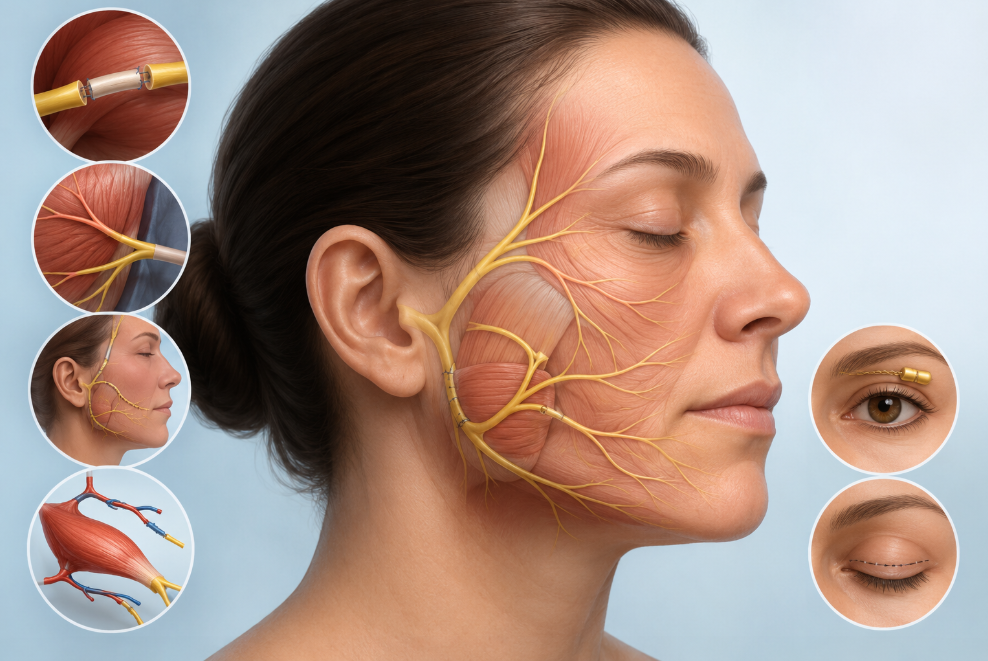
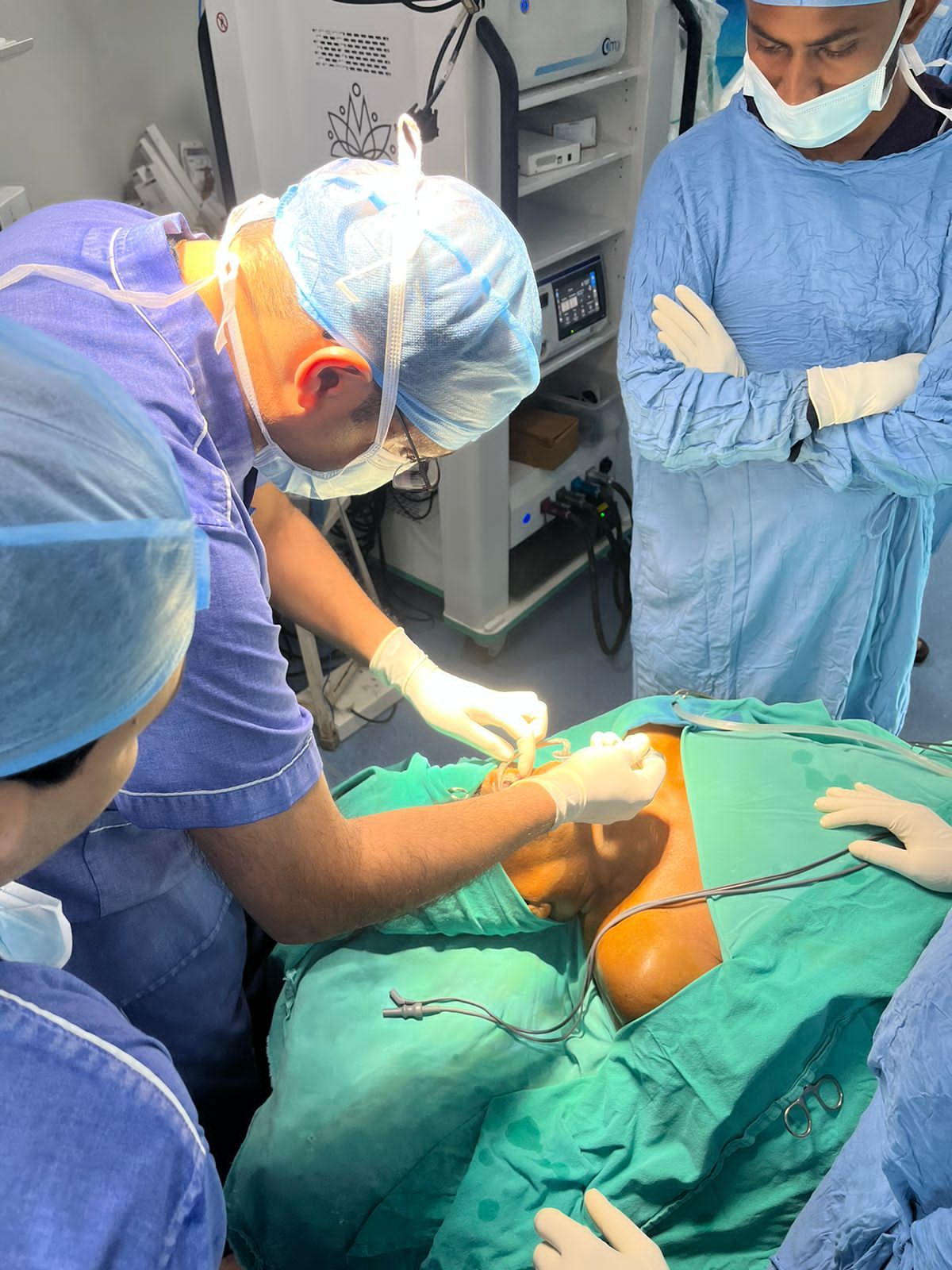
Facial Nerve Reanimation Procedures in Delhi NCR - Dr. Karan Gupta

When Is Facial Nerve Reanimation Needed?

Facial nerve reanimation is recommended when facial movement cannot recover naturally due to nerve damage from cancer, surgery, trauma, or long-standing facial paralysis. Early planning provides the best opportunity for restoring facial function and symmetry.

Facial Nerve Removed During Tumor Surgery

When a malignant parotid or skull base tumor directly invades the facial nerve, reanimation may be planned at the same time as tumor removal.

Facial Weakness Before Surgery

Patients with facial paralysis caused by tumor involvement of the facial nerve may require nerve reconstruction or reanimation as part of treatment.

Long-Standing Facial Paralysis

Patients with persistent facial paralysis after previous surgery, trauma, Bell's palsy, or other nerve injuries may benefit from advanced smile reconstruction procedures.

Early Reanimation Planning

Whenever possible, facial nerve reconstruction is planned before tumor surgery to maximize the chances of restoring movement and facial symmetry.

Individualized Surgical Strategy

The choice of nerve repair, nerve transfer, muscle transfer, or static reconstruction depends on the cause, duration, and severity of facial paralysis.

Focus on Functional Recovery

The goal is to improve facial symmetry, smile, eye protection, speech, and quality of life with a personalized facial reanimation plan.

Protecting the Eye Comes First

When facial paralysis prevents the eyelid from closing completely, protecting the eye becomes the first priority to prevent dryness, corneal damage, and vision-related complications.

Early Eye Protection

Immediate measures are taken to protect the eye when blinking or eyelid closure is affected by facial nerve paralysis.

Lubricating Eye Care

Artificial tears, lubricating eye drops, and protective ointments help prevent dryness and reduce the risk of corneal injury.

Eyelid Weight Implant

A small gold or platinum eyelid weight may be placed to help the upper eyelid close naturally with gravity and improve eye protection.

Temporary Eyelid Closure

In selected cases, a temporary eyelid closure procedure may be recommended to protect the eye while nerve recovery or reconstruction is planned.

Immediate Nerve Repair

When the facial nerve must be removed during tumor surgery, immediate reconstruction using a donor nerve graft offers the best chance of restoring natural facial movement.

Nerve Grafting & Recovery

Donor nerves such as the great auricular or sural nerve are used to bridge the gap, allowing gradual nerve regeneration and improving long-term facial function.

Reconstructive Options for Longer-Standing Paralysis

Facial nerve reanimation is tailored to the duration of paralysis and the condition of the facial muscles, helping restore facial movement, smile, and symmetry whenever possible.

01

Masseteric Nerve Transfer

For paralysis present for up to 1–2 years, the masseteric nerve is connected to the facial nerve to restore movement, providing strong nerve signals and faster recovery.

02

Cross-Facial Nerve Grafting

A nerve graft from the healthy side of the face is connected to the affected side to achieve more natural, spontaneous facial movement. It may be combined with nerve transfer for better strength.

03

Free Muscle Transfer

In long-standing facial paralysis, a muscle such as the gracilis is transferred with its blood supply and nerve to recreate a natural smile and facial movement.

04

Dual Innervation Technique

Combining a masseteric nerve transfer with a cross-facial nerve graft provides both strength and more spontaneous facial expression in selected patients.

05

Static Facial Reanimation

Static procedures such as fascia sling, brow lift, or eyelid support improve facial symmetry and eye protection for patients who are not suitable candidates for dynamic reconstruction.

Before Your Procedure: What to Expect

Every patient undergoes a detailed assessment before facial nerve reanimation to select the most appropriate procedure and achieve the best possible functional outcome.

Comprehensive Consultation

Detailed facial nerve examination along with assessment of the cause, severity, and duration of facial paralysis.

Eye Protection Assessment

Evaluation of eyelid closure and corneal protection, with early treatment planned when necessary to safeguard vision.

Imaging & Muscle Assessment

Imaging studies or facial muscle electrical testing may be performed to evaluate remaining muscle function and nerve health.

Pre-Anaesthesia Evaluation

Routine blood tests and fitness assessment are completed to ensure you are medically prepared for surgery.

Personalized Surgical Planning

Your surgeon explains the most suitable facial reanimation technique based on the timing, cause of paralysis, and your treatment goals.

Recovery After Facial Nerve Reanimation

Recovery after facial nerve reanimation depends on the procedure performed. Dr. Karan Gupta provides structured follow-up, rehabilitation, and personalized guidance to help patients achieve the best possible facial function over time.

Gradual Nerve Recovery

Nerve regeneration is a slow process, and visible facial movement may take several months to appear after nerve-based reconstruction.

Monitoring After Free Muscle Transfer

Patients undergoing free muscle transfer require close monitoring during the early recovery period to ensure healthy blood flow to the transferred muscle.

Facial Rehabilitation Therapy

Guided facial exercises with an experienced physiotherapist help retrain facial muscles and improve smile symmetry as movement gradually returns.

Continued Eye Protection

Eye lubrication, eyelid care, and protective measures remain important until eyelid function improves and natural blinking is restored.

Long-Term Follow-Up Care

Regular follow-up visits over months to years allow recovery to be monitored, progress assessed, and rehabilitation adjusted to achieve the best possible functional outcome.

Frequently Asked Questions

Find answers to common questions about facial nerve reanimation procedures, recovery, and treatment options by Dr. Karan Gupta.

Surgery can significantly improve facial movement and symmetry in many patients. The most suitable procedure depends on the cause of paralysis, how long it has been present, and the condition of the facial muscles. Treatment may include nerve repair, nerve transfer, or free muscle transfer.

A masseteric nerve transfer connects the nerve supplying one of the chewing muscles to the weakened facial nerve, providing a new nerve signal to restore facial movement. It is most effective when performed within one to two years of the onset of paralysis.

Timing is important. During the first one to two years, nerve transfer or cross-facial nerve grafting may restore movement. For long-standing paralysis, free muscle transfer is often recommended because the original facial muscles may no longer function.

Facial nerve reanimation aims to restore meaningful movement, improve facial symmetry, and enhance quality of life. Results vary depending on the cause of paralysis, treatment method, duration of paralysis, and individual healing.

Yes. Eye protection is often the first priority when facial paralysis prevents complete eyelid closure. Lubricating eye drops, ointments, eyelid weights, or temporary eyelid procedures help protect the eye until facial function improves.

Choose a fellowship-trained Head & Neck Oncosurgeon experienced in facial nerve reconstruction, nerve transfers, free muscle transfer, and microsurgical techniques. Dr. Karan Gupta provides personalized facial nerve reanimation planning with advanced expertise in head and neck oncology and reconstructive surgery in Delhi NCR.
Facial Nerve Reanimation Procedures in Delhi NCR - Dr. Karan Gupta