• -----------
  • +91 9811122341
Chat on WhatsApp
Expert Cancer Care

Endoscopic and Open Approaches for Sinonasal Cancers in Delhi NCR

Advanced endoscopic and open sinonasal cancer surgery with personalized treatment for safe tumor removal and optimal functional outcomes.

Request an Appointment

Please fill out the form below to book your consultation layer.

Endoscopic and Open Approaches for Sinonasal Cancers

Once a sinonasal cancer is diagnosed, choosing the right surgical approach is essential. Dr. Karan Gupta, a fellowship-trained Head & Neck Oncosurgeon in Delhi NCR, carefully evaluates each case and recommends an endoscopic, open, or combined approach based on the tumour's size, location, and proximity to the eyes, brain, and major blood vessels.

About Endoscopic and Open Approaches for Sinonasal Cancers

Sinonasal cancers such as squamous cell carcinoma, esthesioneuroblastoma, adenocarcinoma, and sinonasal undifferentiated carcinoma may be treated using minimally invasive endoscopic surgery or an open surgical approach, depending on the extent of the disease.

The endoscopic endonasal technique removes tumours through the nostrils using a high-definition endoscope and image-guided navigation, avoiding external incisions whenever possible.

Larger or more advanced tumours involving the orbit, skull base, or brain may require an open or combined craniofacial approach. Treatment decisions are based on detailed imaging, tumour staging, and multidisciplinary evaluation to achieve complete tumour removal while preserving function.
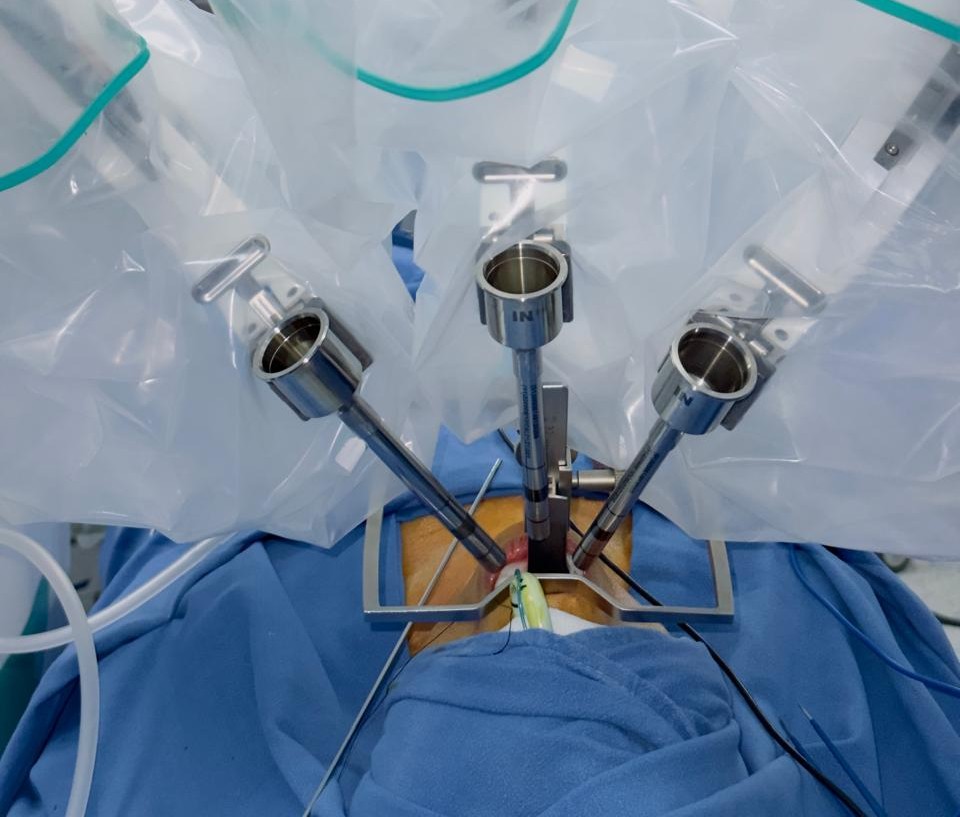
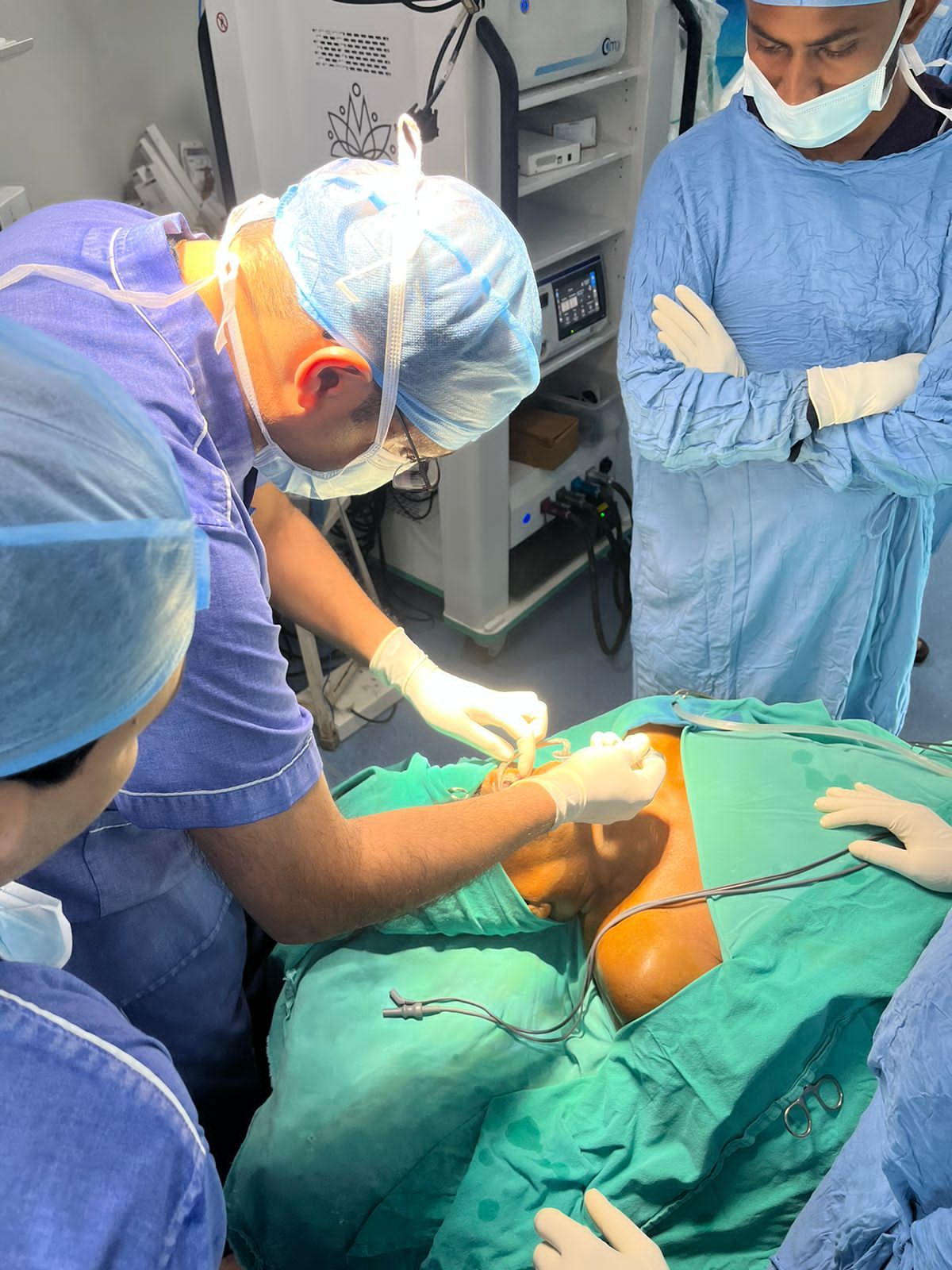
Endoscopic and Open Approaches for Sinonasal Cancers in Delhi NCR - Dr. Karan Gupta

Why Choose Dr. Karan Gupta for Endoscopic and Open Sinonasal Cancer Surgery in Delhi NCR

Choosing between endoscopic and open surgery requires expertise in both techniques. Dr. Karan Gupta offers personalized surgical planning, selecting the safest and most effective approach based on the tumour's location, extent, and complexity.

Fellowship-Trained Head & Neck Oncosurgeon

Advanced training from Tata Memorial Hospital, Mumbai, and HCG Cancer Centre, Ahmedabad, with expertise in complex head and neck cancer surgery.

Triple Gold Medalist

Recipient of Gold Medals in MBBS, MS, and DNB, demonstrating outstanding academic excellence and surgical expertise.

Expert in Endoscopic & Open Surgery

Experienced in minimally invasive endoscopic surgery, open craniofacial procedures, and combined approaches for advanced sinonasal cancers.

Advanced Robotic & Minimally Invasive Training

Fellowship-trained in Robotic Head & Neck Surgery through the Vattikuti Foundation with Intuitive Surgical USA certification.

Multidisciplinary Treatment Planning

Complex cases involving the orbit or skull base are reviewed with neurosurgeons and other specialists for optimal treatment planning.

Personalized, Evidence-Based Care

Every surgical plan is tailored according to tumour stage, imaging findings, and individual patient needs to achieve the best possible outcome.

How the Surgical Approach Is Decided

Every sinonasal cancer is carefully evaluated to determine whether an endoscopic, open, or combined surgical approach offers the safest and most effective treatment.

Initial Consultation

A detailed consultation, nasal endoscopy, and review of biopsy reports and previous imaging are performed to understand the tumour.

Advanced CT & MRI Imaging

CT and MRI scans assess tumour size, skull base involvement, orbital extension, and proximity to major blood vessels.

Tumour Staging

Cancer staging determines whether the disease is confined to the nasal cavity and sinuses or has spread to nearby structures.

Multidisciplinary Review

Complex skull base cases are discussed with neurosurgeons and other specialists to ensure the safest treatment plan.

Surgical Approach Selection

The most appropriate endoscopic, open, or combined approach is selected and explained in detail before surgery.

Surgery & Follow-Up

After surgery, pathology findings are reviewed, cancer staging is confirmed, and a personalized follow-up plan is provided.

What's Included in This Evaluation and Surgery

Every patient receives a comprehensive evaluation and personalized surgical plan to ensure the safest approach and the best possible oncological outcome.

01

Comprehensive Clinical Assessment

Detailed consultation, nasal endoscopy, and review of the biopsy-confirmed diagnosis to understand the extent of the disease.

02

Advanced CT & MRI Evaluation

High-resolution imaging is used to map tumour size, skull base involvement, orbital extension, and proximity to major blood vessels.

03

Multidisciplinary Treatment Planning

Complex cases involving the skull base are discussed with the multidisciplinary tumour board, including neurosurgical experts when required.

04

Personalized Surgical Approach

A clear explanation is provided on whether an endoscopic, open, or combined approach is the safest and most effective option for your tumour.

05

Tumour Removal & Reconstruction

Surgery is performed using the selected technique, with reconstruction planned whenever necessary to restore function and anatomy.

06

Pathology Review & Follow-Up Care

Post-operative pathology, final staging, recovery guidance, and scheduled follow-up visits ensure comprehensive long-term care.

Benefits of Choosing This Treatment Approach

Every treatment plan is tailored to the individual tumour, ensuring the safest surgical approach while maximizing cancer control and functional outcomes.

Technique Matched to Your Tumour

The surgical approach is selected according to your tumour's size, location, imaging, and stage rather than using a one-size-fits-all technique.

Minimally Invasive When Appropriate

Endoscopic surgery avoids external facial incisions whenever safely possible and often allows a faster, more comfortable recovery.

Open Surgery When Needed

Large or complex tumours are treated with an open or combined approach to achieve complete tumour removal without compromising safety.

Clear Surgical Planning

Your surgeon explains why a particular approach is recommended, helping you make an informed treatment decision with confidence.

Multidisciplinary Care

Cases involving the skull base are planned jointly with neurosurgical specialists for comprehensive and coordinated treatment.

Continuity of Care

Dr. Karan Gupta personally oversees diagnosis, surgery, pathology review, and follow-up, ensuring seamless care throughout your treatment journey.

Endoscopic and Open Sinonasal Cancer Surgery in Delhi NCR: Local Care Access

Patients from Delhi NCR and nearby cities trust Dr. Karan Gupta for expert evaluation, multidisciplinary planning, and personalized surgical treatment for sinonasal cancers.

Accessible Care Across Delhi NCR

Patients regularly visit from Gurugram, Noida, Faridabad, and Ghaziabad for expert opinions on the most appropriate surgical approach for sinonasal cancers.

Advanced Imaging & Evaluation

Comprehensive CT, MRI, and nasal endoscopy help accurately determine tumour extent before selecting the safest surgical technique.

Multidisciplinary Tumour Board

Complex skull base cases are reviewed with neurosurgeons and other specialists to ensure comprehensive treatment planning.

Complete Care at One Centre

Consultation, imaging review, surgical planning, treatment, and follow-up are coordinated in one Delhi NCR centre for greater convenience.

Why the Right Surgical Approach Matters

Choosing between endoscopic and open surgery is based on tumour size, location, and staging—not preference. The right approach helps achieve complete tumour removal while avoiding unnecessary surgery and supporting the best long-term outcomes.

Frequently Asked Questions

Find answers to common questions about endoscopic and open sinonasal cancer surgery by Dr. Karan Gupta.

Endoscopic surgery removes the tumour through the nostrils using a nasal endoscope without external incisions. Open surgery uses facial or craniofacial incisions and is recommended for larger or more complex tumours involving critical structures.

Open surgery is usually recommended when the tumour is large, extends into the orbit or skull base, involves the dura, or cannot be safely removed through a purely endoscopic approach.

Yes, for carefully selected tumours confined to the nasal cavity and sinuses. More advanced cancers involving the skull base, orbit, or major blood vessels may require an open or combined surgical approach for complete removal.

The decision is based on CT and MRI findings, tumour stage, and involvement of the orbit, skull base, dura, or major blood vessels. Complex cases are reviewed with a multidisciplinary team before surgery.

Craniofacial resection is an advanced open procedure performed jointly by a Head & Neck Surgeon and a Neurosurgeon to remove sinonasal cancers that have spread to the anterior skull base.

For appropriately selected tumours, endoscopic surgery provides cancer control comparable to open surgery while offering faster recovery. The choice depends on the tumour's size, location, and extent.

Recovery after endoscopic surgery is generally quicker, with discharge often within a few days. Open or combined craniofacial surgery usually requires a longer hospital stay and a more gradual recovery depending on the complexity of the procedure.
Endoscopic and Open Sinonasal Cancer Surgery in Delhi NCR - Dr. Karan Gupta