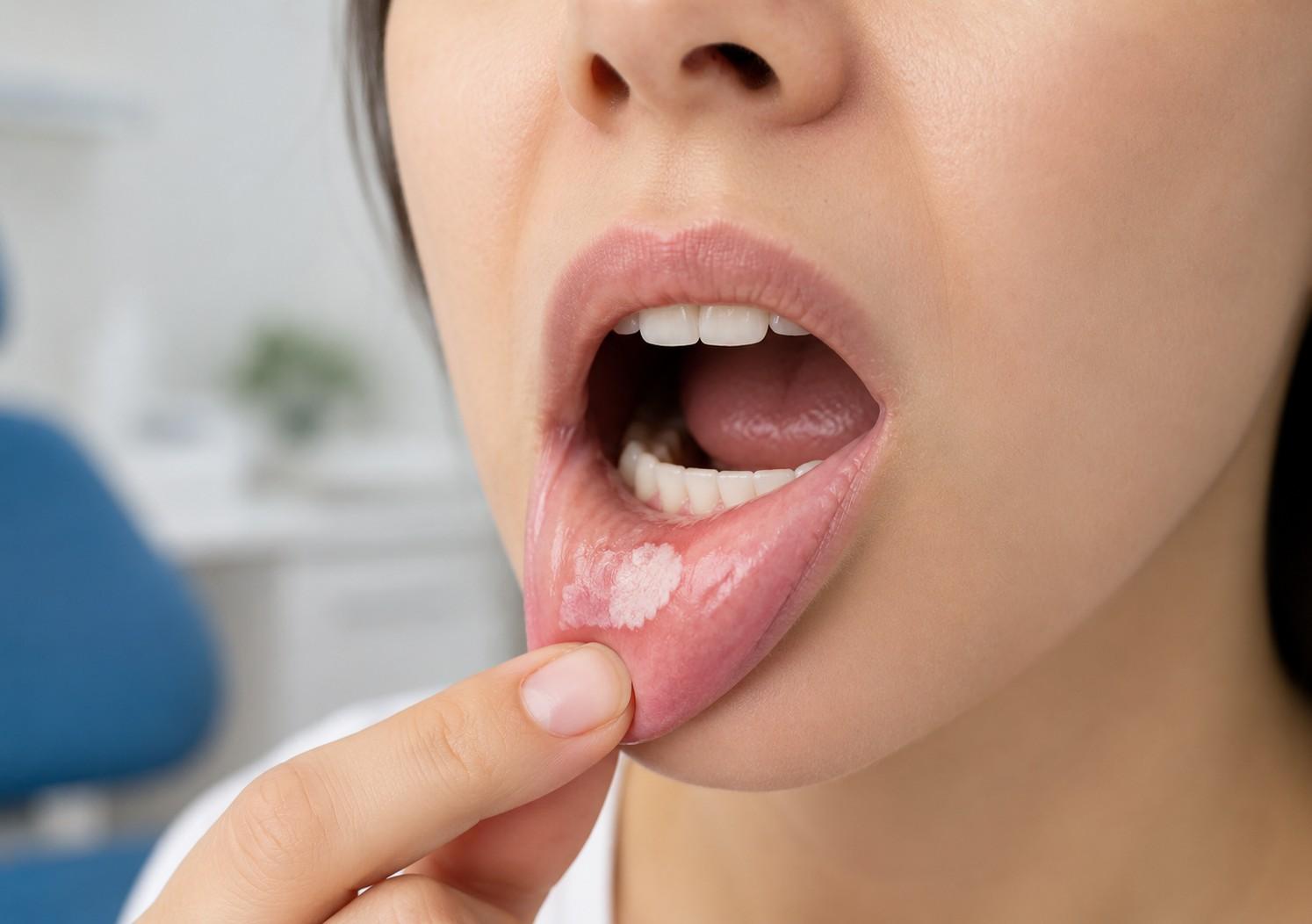
White Patch in the Mouth: What It Could Mean, and When to Worry
You're
brushing your teeth, or maybe just looking in the mirror, and you notice it — a
white patch inside your cheek, on your tongue, or along your gums. It doesn't
hurt. It's just... there. So is it something to worry about, or will it go away
on its own? Here's what a specialist wants you to know before you decide.
What Is a White Patch in the Mouth?
A white patch
in the mouth is an area where the lining of the mouth appears thickened and
pale or white compared to the surrounding tissue. Doctors often refer to this
as leukoplakia when it can't be explained by any other obvious cause, such as
an infection or injury. Not all white patches are the same, and not all are
dangerous — but some carry a small risk of turning into cancer over time, which
is why persistent ones should always be examined.
Quick answer:
A white patch in the mouth is a thickened,
pale area of the mouth's lining. Most are harmless, but a patch that doesn't go
away within two to three weeks needs a specialist examination to rule out a
precancerous change.
Common Causes of White Patches
White patches
can come from several different sources, ranging from completely harmless to
ones that need monitoring:
- Frictional keratosis — from repeated cheek biting,
ill-fitting dentures, or a sharp tooth edge
- Oral thrush (candidiasis) — a fungal infection, often
wipeable, more common with certain medications or low immunity
- Lichen planus — a chronic inflammatory condition that
can create lace-like white patterns
- Leukoplakia — linked strongly to tobacco use (smoked or
chewed), alcohol, and areca nut/paan chewing
- Oral submucous fibrosis — a stiffening of mouth tissue
commonly linked to areca nut chewing, common in India
Harmless vs Concerning: How to Tell the Difference
You cannot
reliably tell a harmless patch from a concerning one just by looking at it —
this is exactly why self-diagnosis from photos or forums doesn't work. That
said, certain features raise concern and warrant a prompt specialist visit:
|
Feature |
More Likely Harmless |
Needs Prompt Evaluation |
|
Duration |
Resolves within 1–2 weeks |
Persists beyond 3 weeks |
|
Surface |
Can be wiped off (thrush) |
Cannot be wiped off, feels rough or thickened |
|
Pain |
Often mildly irritating or painless |
Any patch with a lump, ulcer, or bleeding nearby |
|
Colour |
Uniformly white |
Mixed red and white areas (erythroleukoplakia) |
|
Habit history |
No tobacco/areca nut use |
History of tobacco, alcohol, or areca nut use |
This table is
a general guide, not a diagnosis — only a clinical examination and, if needed,
a biopsy can confirm what a patch actually is.
Is a White Patch a Sign of Oral Cancer?
Not usually —
but it can be, which is why it shouldn't be ignored. Leukoplakia is classified
as a potentially malignant condition, meaning a small percentage of cases can
progress toward cancer over time if left unchecked, especially with continued
tobacco or areca nut use. This is different from saying every white patch is
cancer; most are not. The only way to know for certain is a clinical
evaluation, and a biopsy if the patch looks suspicious.
How Is a White Patch Diagnosed?
1.
Clinical examination — the doctor examines the
patch's location, texture, colour, and borders
2.
History taking — questions about tobacco,
alcohol, areca nut use, denture fit, and duration
3.
Biopsy (if indicated) — a small tissue sample
is taken to check for abnormal or precancerous cells
4.
Follow-up plan — based on biopsy results,
ranging from monitoring to treatment
Treatment Options
Treatment
depends entirely on what the patch turns out to be:
- Habit cessation — stopping tobacco, alcohol, or areca
nut use is often the single most effective first step
- Treating the underlying cause — antifungal treatment
for thrush, denture adjustment for friction-related patches
- Close monitoring — for low-risk leukoplakia, with
periodic review by a specialist
- Surgical removal — for patches showing concerning or
precancerous changes on biopsy
- Regular follow-up — even after treatment, periodic
checks help catch any recurrence early
Can You Prevent White Patches?
While not
every case is preventable, the biggest risk factors are within your control:
- Avoiding tobacco in all forms (smoking, chewing, gutka)
- Avoiding or limiting areca nut/paan chewing
- Moderating alcohol intake
- Getting sharp teeth or ill-fitting dentures corrected
promptly
- Maintaining good oral hygiene and regular dental
check-ups
When Should You See a Specialist?
Quick answer:
See a specialist if a white patch in your
mouth lasts more than two to three weeks, feels thickened or rough, has red
areas mixed in, or if you have a history of tobacco, alcohol, or areca nut use
— regardless of whether it hurts.
A painless
patch is not a reassuring sign by itself — in fact, many early precancerous and
cancerous changes in the mouth cause no pain at all, which is exactly why they
get missed until later.
Why Early Evaluation Matters
The earlier a
concerning white patch is identified and biopsied, the more treatment options
are usually available, and the better the long-term outlook tends to be.
Waiting to “see if it goes away” is understandable, but it's also the most
common reason precancerous changes are caught later than they could have been.
Frequently Asked Questions (AEO-Optimized Direct Answers)
What causes a
white patch in the mouth?
White patches
can result from friction (cheek biting, ill-fitting dentures), fungal infection
(thrush), lichen planus, or leukoplakia linked to tobacco, alcohol, or areca
nut use.
Is a white
patch in the mouth always cancer?
No. Most
white patches are harmless, caused by friction or infection. However, a
persistent patch should be examined since a small proportion can be
precancerous.
How long does
a normal white patch take to heal?
A harmless,
friction-related white patch usually improves within one to two weeks once the
irritation (like a sharp tooth or biting habit) is addressed.
When should I
worry about a white patch in my mouth?
Worry if it
persists beyond three weeks, feels thickened or rough, cannot be wiped off, has
red patches mixed in, or you have a history of tobacco or areca nut use.
Can oral
thrush cause white patches?
Yes, oral
thrush is a fungal infection that often causes white patches that can typically
be wiped off, unlike leukoplakia, which cannot.
What is
leukoplakia?
Leukoplakia
is a white patch or plaque in the mouth that cannot be explained by any other
cause and is classified as a potentially malignant condition requiring
evaluation.
Does
leukoplakia always turn into cancer?
No, most
leukoplakia does not turn into cancer, but a small percentage of cases can
progress over time, which is why monitoring or biopsy is recommended.
How is a
white patch diagnosed?
Diagnosis
involves a clinical examination, a review of habits like tobacco or areca nut
use, and a biopsy if the patch looks suspicious or persists.
Is a biopsy
painful?
A biopsy is
usually done under local anaesthesia and involves only mild, brief discomfort,
with results typically available within about a week.
Can stopping
tobacco make a white patch go away?
In many
cases, yes — stopping tobacco or areca nut use can lead to improvement or
resolution of certain white patches, though existing changes should still be
evaluated.
Are white
patches on the tongue different from those on the cheek?
The
underlying causes can overlap, but location, texture, and appearance all factor
into the diagnosis, so both need the same careful clinical evaluation.
Can
ill-fitting dentures cause white patches?
Yes, chronic
friction from dentures or sharp teeth is a common cause of white patches,
usually resolving once the irritation is corrected.
Does a
painless white patch mean it's safe?
No. Many
early precancerous and cancerous changes in the mouth are painless, so absence
of pain should not be used to rule out concern.
What happens
if a biopsy shows precancerous changes?
Depending on
severity, treatment may range from close monitoring and habit cessation to
surgical removal of the affected area, guided by a specialist.
Who should I
consult for a persistent white patch in Delhi NCR?
A head and
neck surgical oncologist or oral medicine specialist can examine the patch,
arrange a biopsy if needed, and guide the right next steps.
Conclusion
Most white
patches in the mouth are nothing to panic about — a bit of friction, a minor
infection, something your body clears up on its own. But because a small number
can be an early warning sign of something more serious, the safest approach is
simple: if it's still there after two to three weeks, get it looked at. That
one decision, more than anything else, is what protects your long-term outcome.
If you've noticed a white patch in your mouth that hasn't gone away, don't wait to find out what it means. Consult Dr. Karan Gupta, a Head & Neck Surgical Oncologist trained at Tata Memorial Hospital, practicing in Delhi NCR at Artemis Hospital, Gurugram. Call +91 9811122341, message on WhatsApp, or book online at oralcancerdoc.com/book-appointment for an examination and, if needed, a biopsy.
This blog is for general information only
and is not a substitute for professional medical advice, diagnosis, or
treatment. Always consult a qualified specialist for concerns about your
health.