Specialized surgical care for Oral, Tongue, Thyroid, Throat, Voice Box, Salivary Gland, and Head & Neck Cancers with advanced treatment and personalized care.
Please fill out the form below to book your consultation layer.
A thyroid cancer diagnosis covers a wide range of situations, from a small, very low-risk cancer that may only need a limited surgery to more extensive disease requiring removal of the whole thyroid gland and lymph nodes in the neck. Dr. Karan Gupta, a fellowship-trained Head & Neck Oncosurgeon, plans thyroid cancer surgery in Delhi NCR around your specific cancer type, tumour size, and risk features, including robotic-assisted thyroidectomy for suitable patients.
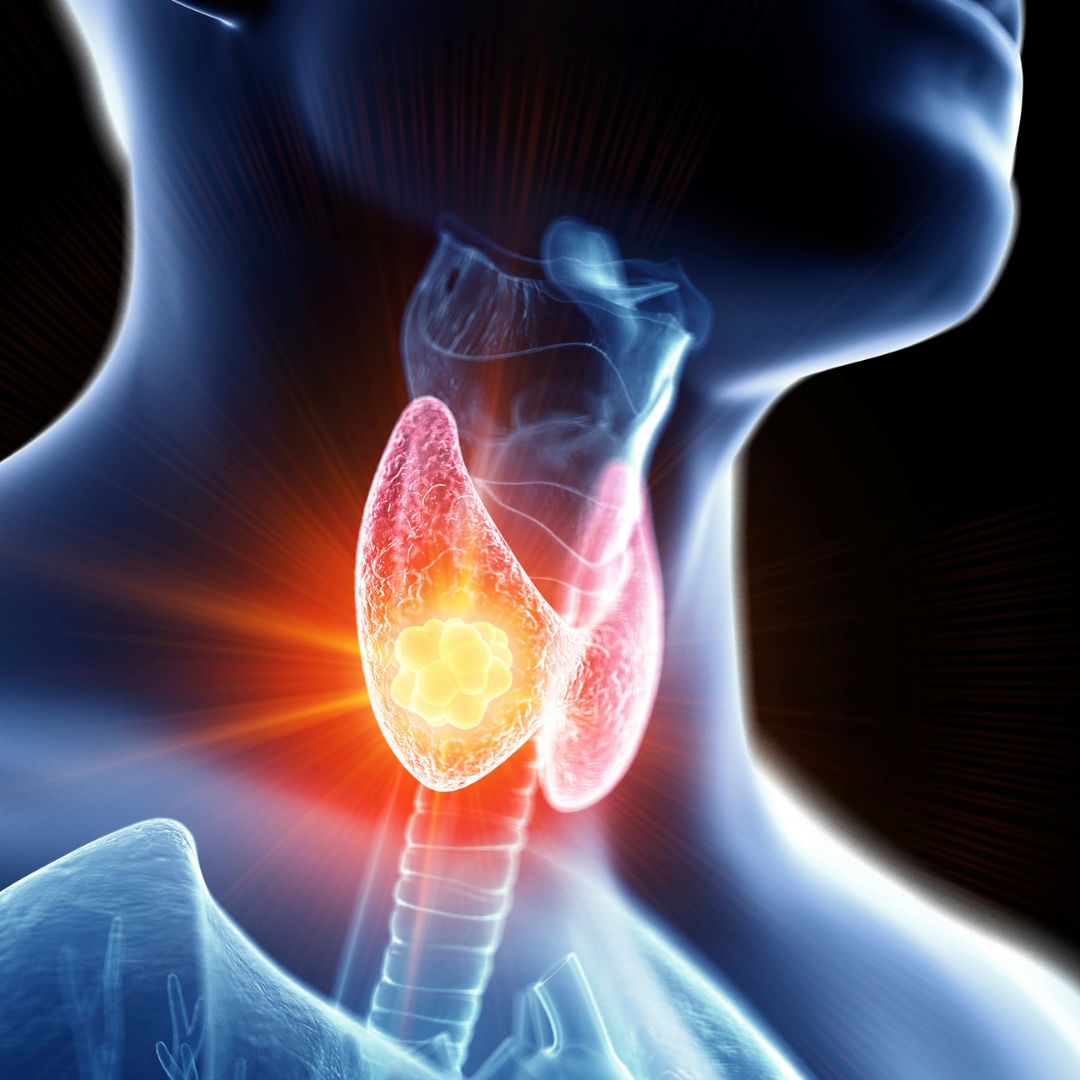
Thyroid cancer develops in the thyroid gland at the base of the neck and is broadly classified into four main types. Papillary thyroid cancer is the most common, followed by follicular thyroid cancer. Both arise from the hormone-producing cells of the thyroid and generally have an excellent prognosis when treated appropriately.
Medullary thyroid cancer develops from the parafollicular (C) cells of the thyroid and, in some cases, may be associated with inherited genetic syndromes. Anaplastic thyroid cancer is rare, grows rapidly, and usually requires urgent multidisciplinary treatment rather than surgery alone.
Thyroid cancer is one of the conditions treated under head and neck cancer surgery. The treatment plan depends on the type of cancer, tumour size, and whether it has spread to the lymph nodes in the neck.
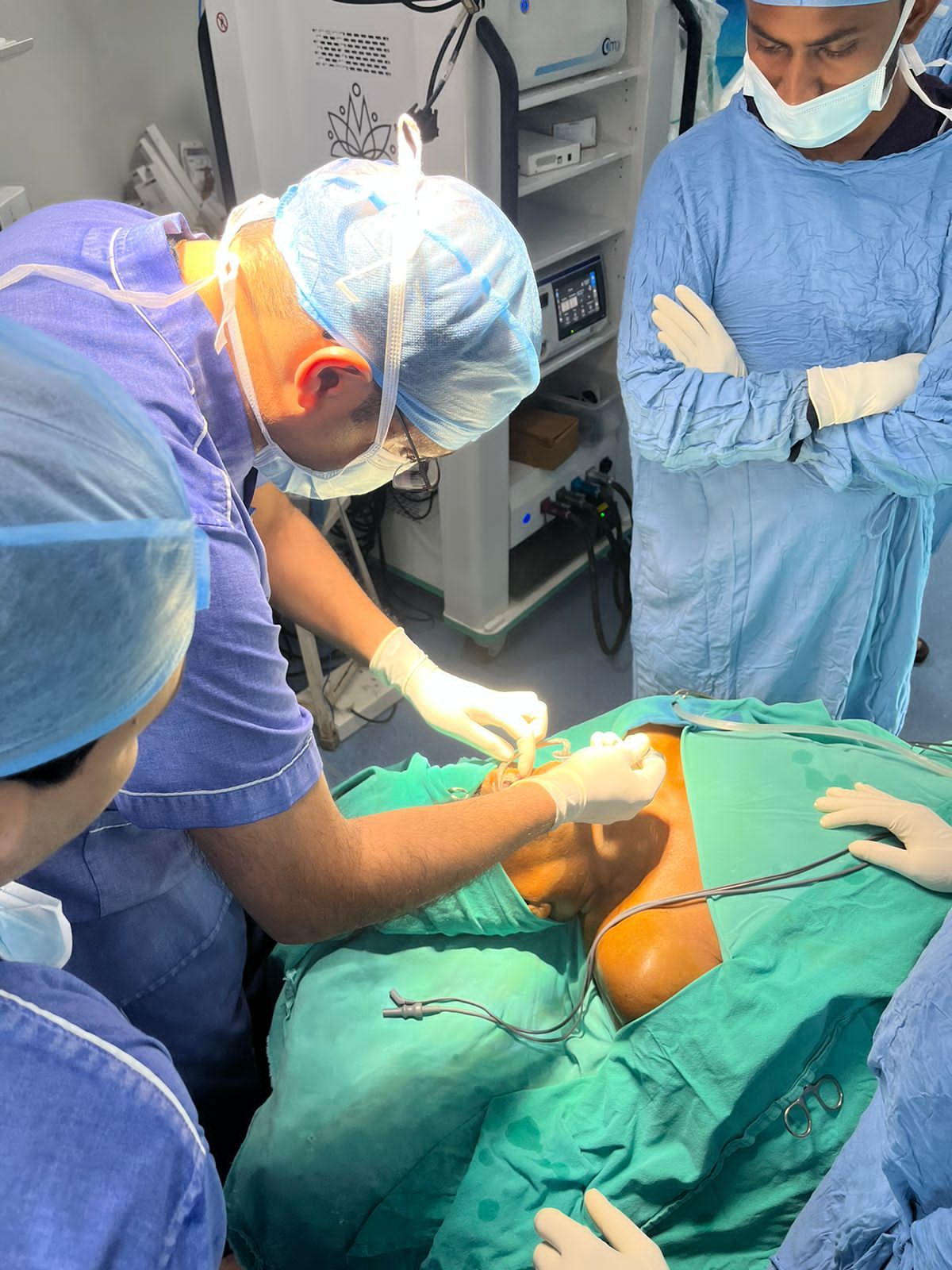
Every patient undergoes a thorough pre-operative assessment to ensure the safest surgical plan and the best possible outcome. Dr. Karan Gupta carefully reviews your diagnosis, explains the recommended procedure, and prepares you for every step of your thyroid cancer surgery.
Comprehensive consultation with clinical examination and detailed review of your neck ultrasound, FNAC biopsy findings, and blood test reports.
Additional imaging or staging investigations may be advised depending on the type of thyroid cancer and its individual risk features.
Your voice is assessed before surgery to evaluate vocal cord function and provide an important baseline for post-operative comparison.
A complete fitness evaluation, including blood tests and anaesthesia assessment, helps ensure you are medically prepared for surgery.
Dr. Karan Gupta discusses the recommended extent of surgery, whether robotic thyroidectomy is appropriate, and any additional treatment required after surgery.
Thyroid cancer surgery is carefully planned to remove the cancer while preserving important structures responsible for your voice and calcium regulation. Dr. Karan Gupta uses meticulous surgical techniques to ensure safe treatment and a smooth recovery with long-term follow-up.
Thyroid cancer surgery is performed under general anaesthesia, ensuring you remain completely comfortable and pain-free throughout the procedure.
During surgery, special attention is given to identifying and protecting the recurrent laryngeal nerve, which controls vocal cord movement and helps preserve your voice.
Whenever possible, the parathyroid glands are carefully preserved during surgery to maintain normal calcium levels after thyroid removal.
If cancer has spread to nearby lymph nodes, central or lateral neck dissection is performed during the same operation to remove affected lymph nodes and improve cancer control.
The length of surgery depends on the procedure performed. A straightforward thyroid lobectomy may take around one hour, while total thyroidectomy with neck dissection usually requires several hours.
Most patients recover well and are discharged within one to two days after thyroid cancer surgery, depending on the extent of the procedure and overall recovery.
Regular follow-up after thyroid cancer surgery helps monitor recovery, detect recurrence early, and ensure long-term thyroid health. Your treatment plan is personalised according to your pathology results and overall risk category.
Blood calcium levels are monitored carefully after total thyroidectomy because temporary low calcium levels may occur while the remaining parathyroid glands recover.
Your voice is evaluated after surgery to confirm healthy vocal cord movement and ensure the recurrent laryngeal nerve is functioning normally.
After total thyroidectomy, lifelong thyroid hormone replacement is prescribed and adjusted through regular blood tests to maintain normal hormone levels.
Depending on the final pathology report, radioactive iodine therapy may be recommended to destroy any remaining thyroid tissue or microscopic cancer cells.
Follow-up includes blood tests such as thyroglobulin levels and periodic neck ultrasound examinations, scheduled according to your individual risk category.
Accurate diagnosis is the first step in planning effective thyroid cancer treatment. Dr. Karan Gupta uses a combination of clinical assessment, imaging, biopsy, and laboratory investigations to determine the type, stage, and extent of thyroid cancer before recommending surgery.
The type of thyroid surgery depends on the cancer type, tumour size, and overall risk. Every patient receives a personalised treatment plan based on current international guidelines.
Neck dissection is performed only when there is evidence or a significant risk of thyroid cancer spreading to the lymph nodes.
For selected patients, robotic-assisted thyroidectomy offers an advanced surgical option while maintaining excellent cancer treatment outcomes.
Dr. Karan Gupta provides evidence-based, personalized thyroid cancer surgery with a focus on complete cancer removal, preservation of voice and parathyroid function whenever possible, and advanced robotic surgical techniques for suitable patients.
Fellowship-trained in Head & Neck Surgical Oncology at Tata Memorial Hospital, Mumbai, and HCG Cancer Centre, Ahmedabad, with extensive experience in managing thyroid and head & neck cancers.
Further trained in Robotic Head & Neck Surgery through the Vattikuti Foundation, Michigan, USA, offering advanced minimally invasive surgical options for selected thyroid cancer patients.
Intuitive Surgical USA Certified Robotic Head & Neck Surgeon with expertise in robotic thyroidectomy and robotic neck dissection for appropriate candidates.
Awarded Triple Gold Medals across MBBS, MS, and DNB, reflecting exceptional academic achievement and surgical excellence.
Every treatment plan is tailored to your individual diagnosis. The extent of surgery—from thyroid lobectomy to total thyroidectomy with central or lateral neck dissection—is determined by your thyroid cancer type, tumour size, lymph node involvement, and overall risk profile rather than following a one-size-fits-all approach.
Find answers to common questions about thyroid cancer, thyroidectomy, robotic thyroid surgery, recovery, neck dissection, and follow-up care by Dr. Karan Gupta.