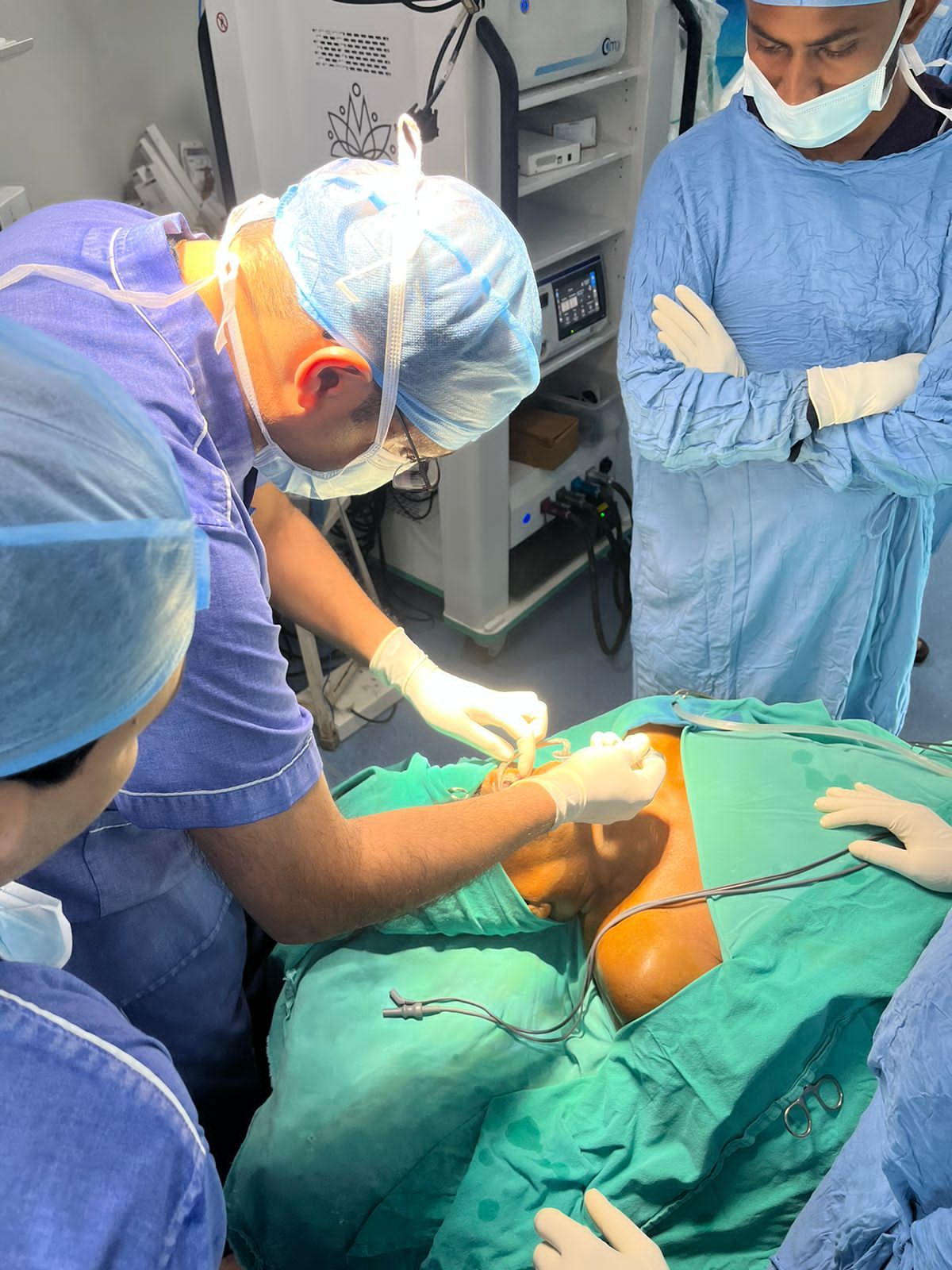
Comprehensive post-laryngectomy rehabilitation focused on helping patients adapt to life after total laryngectomy. Dr. Karan Gupta provides structured guidance for voice restoration, stoma care, pulmonary rehabilitation, swallowing recovery, and smell and taste rehabilitation in collaboration with speech-language pathology specialists. Rehabilitation planning begins before surgery and continues throughout recovery to help patients regain communication, confidence, and the best possible quality of life.
Please fill out the form below to book your consultation layer.
Life after a total laryngectomy involves real adjustments to breathing, voice, swallowing, and smell, and structured rehabilitation makes a significant difference to how well those adjustments go. Dr. Karan Gupta guides patients through post-laryngectomy rehabilitation in Delhi NCR, working alongside speech-language pathology support to plan voice restoration, stoma and pulmonary care, swallowing recovery, and smell and taste rehabilitation from the earliest stages of recovery.
After a total laryngectomy, breathing happens through a permanent opening in the neck (a stoma) instead of the nose and mouth, changing several everyday functions including speech, swallowing, breathing, smell, and taste.
Post-laryngectomy rehabilitation is the structured process of restoring these functions rather than waiting for them to improve naturally. It combines medical care, speech therapy, swallowing exercises, pulmonary rehabilitation, and practical training for everyday life.
Rehabilitation generally focuses on four key areas—voice restoration, swallowing rehabilitation, stoma and pulmonary care, and smell & taste rehabilitation—along with emotional support. Ideally, rehabilitation planning begins before surgery, ensuring a smoother recovery afterward.
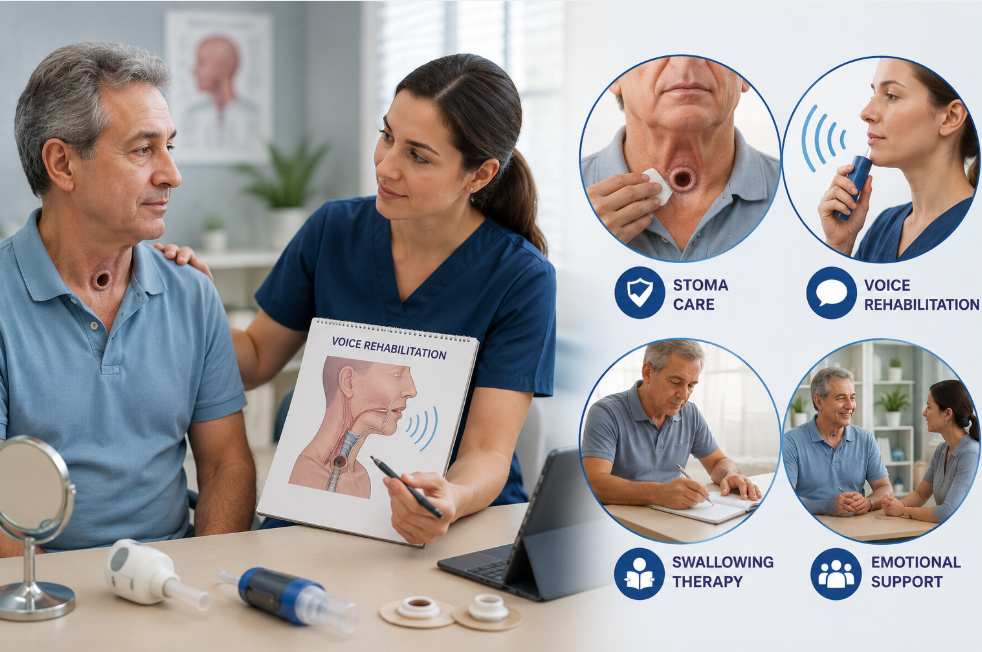
Regaining functional speech after losing the larynx is one of the central goals of rehabilitation. Dr. Karan Gupta works with speech-language pathology specialists to help patients choose the most appropriate voice restoration method based on their surgery, recovery, and lifestyle needs.
A small valve (voice prosthesis) is placed between the windpipe and food pipe, either during laryngectomy or later. Covering the stoma while breathing out allows air to produce speech, giving the most natural and fluent voice for most patients.
An electrolarynx is a handheld device placed against the neck or cheek to create sound, which is then shaped into words using normal mouth movements. It can be used as a primary communication method or while adapting to a TEP voice prosthesis.
This technique uses swallowed air to create sound without any device. Although effective for some patients, it requires dedicated practice and is less commonly used today because TEP generally provides more natural speech.
Voice prostheses naturally wear out over time and usually require replacement every few months. Regular follow-up ensures continued speech quality and proper prosthesis function.
Daily cleaning of the voice prosthesis and guidance from a speech-language pathologist help extend its lifespan, improve speech quality, and support long-term communication confidence.
After a total laryngectomy, breathing occurs through a permanent neck stoma rather than the nose. Early rehabilitation focuses on protecting the airway, maintaining healthy lungs, and helping patients confidently manage daily stoma care.
Since inhaled air no longer passes through the nose, it is not naturally warmed, humidified, or filtered. A Heat and Moisture Exchanger (HME) helps restore these functions and can reduce coughing, thick mucus, and chest infections when used consistently.
Regular cleaning of the stoma, humidification, and learning safe mucus clearance techniques are essential parts of rehabilitation to keep the airway healthy and comfortable.
Patients receive practical guidance on protecting the stoma while bathing, showering, swimming restrictions, and avoiding dust or other environmental irritants that may affect breathing.
Pulmonary rehabilitation includes breathing exercises, airway care, and ongoing education to help maintain lung health and improve long-term quality of life after laryngectomy.
Swallowing changes are common after total laryngectomy. A structured rehabilitation programme helps patients regain safe and comfortable swallowing while gradually returning to a normal diet.
Rehabilitation begins with exercises that strengthen and improve coordination of the muscles involved in swallowing, supporting a safer and more effective recovery.
Speech-language pathologists teach techniques that help food pass comfortably through the throat and food pipe while reducing swallowing difficulties during recovery.
Soft or modified food textures may be recommended temporarily while healing progresses, ensuring nutrition is maintained without placing unnecessary strain on the surgical site.
As healing improves, your speech-language pathologist will guide a gradual transition back to a regular diet at a pace that matches your individual recovery.
After a total laryngectomy, breathing no longer occurs through the nose, which significantly reduces the sense of smell and, consequently, affects taste. Rehabilitation techniques taught by speech-language pathologists can help many patients regain a meaningful degree of smell and improve everyday quality of life.
Since air no longer passes naturally through the nose during breathing, the smell receptors receive much less airflow. This reduction in smell also affects the ability to fully appreciate the taste of food.
A rehabilitation technique known as the Polite Yawning Manoeuvre, or Nasal Airflow-Inducing Manoeuvre (NAIM), helps draw air into the nasal cavity without breathing through the nose.
By lowering the jaw, floor of the mouth, and tongue while keeping the lips closed—as though beginning a yawn—negative pressure is created, allowing air to flow into the nose and stimulate the smell receptors.
This technique is usually taught during a rehabilitation session by a speech-language pathologist, who guides patients through the exercises and ensures they can perform them correctly.
With regular practice, many patients regain a meaningful degree of smell, leading to better enjoyment of food, improved awareness of environmental scents, and greater confidence in daily activities.
Recovering after a total laryngectomy involves more than physical healing. Adjusting to a new way of speaking, breathing through a permanent stoma, and adapting to everyday routines can be emotionally challenging. Comprehensive rehabilitation includes emotional, psychological, and social support to help patients and their families adapt with confidence.
Adapting to changes in voice, breathing, appearance, and daily routines can take time. Emotional support helps patients cope with these life-changing adjustments throughout recovery.
Family members play an important role in rehabilitation. They are encouraged to learn stoma care, communication techniques, and ways to support the patient's recovery at home.
Speech-language pathologists provide ongoing guidance to help patients regain confidence using voice prostheses, an electrolarynx, or other communication methods during everyday conversations.
Connecting with other laryngectomy patients through support groups provides practical advice, encouragement, and shared experiences that can make recovery and long-term adjustment easier.
Effective rehabilitation goes beyond restoring speech and swallowing. Emotional well-being, psychological counselling, family education, and long-term support are considered essential parts of the recovery plan, helping patients achieve the best possible quality of life after total laryngectomy.
Find answers to common questions about post-laryngectomy rehabilitation, voice restoration, stoma care, swallowing recovery, smell rehabilitation, and long-term recovery after total laryngectomy by Dr. Karan Gupta.