Advanced transoral laser microsurgery (TLM) for selected early-stage head and neck cancers, offering precise tumour removal, organ preservation, minimal scarring, and faster recovery without external incisions whenever appropriate.
Please fill out the form below to book your consultation layer.
For certain early-stage cancers of the larynx, hypopharynx, and surrounding structures, a precisely controlled laser can remove the tumour through the mouth without any external incision. Dr. Karan Gupta, a fellowship-trained Head & Neck Oncosurgeon, offers minimally invasive laser surgery in Delhi NCR for carefully selected cancers, providing excellent cancer control while preserving speech, swallowing, and normal function whenever possible.
Minimally invasive laser surgery, most commonly performed as Transoral Laser Microsurgery (TLM), uses a precisely controlled CO2 laser delivered through the mouth with the guidance of a microscope or endoscope to remove cancer without making an incision on the skin.
The laser cuts tissue while sealing small blood vessels at the same time, providing a clear surgical field and allowing the tumour to be removed layer by layer with exceptional precision. This approach helps preserve healthy surrounding tissues and important structures whenever oncologically appropriate.
TLM is an established, guideline-recognised treatment for selected early-stage cancers of the larynx and hypopharynx, offering excellent oncological outcomes while supporting organ preservation and faster recovery.
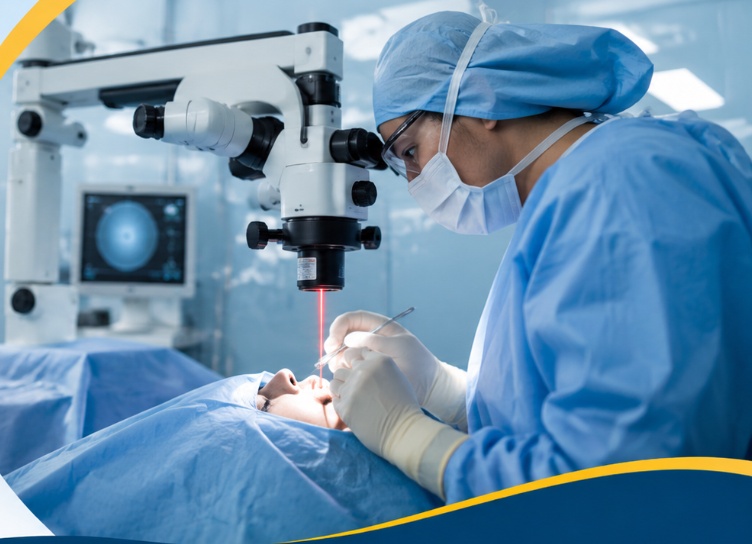
Transoral Laser Microsurgery (TLM) is best established for treating early-stage laryngeal cancers, particularly cancers confined to the vocal cords (glottis), where it is recognised as a standard organ-preserving treatment alongside radiotherapy.
Its use has expanded to selected supraglottic and hypopharyngeal cancers, as well as some intermediate-stage tumours in experienced hands. However, larger or more advanced cancers may still require open surgery, reconstruction, radiotherapy, or combined treatment.
Laser surgery is also commonly used for premalignant conditions, including leukoplakia and dysplasia of the larynx and upper airway, where it can serve both diagnostic and therapeutic purposes while preserving normal voice function.
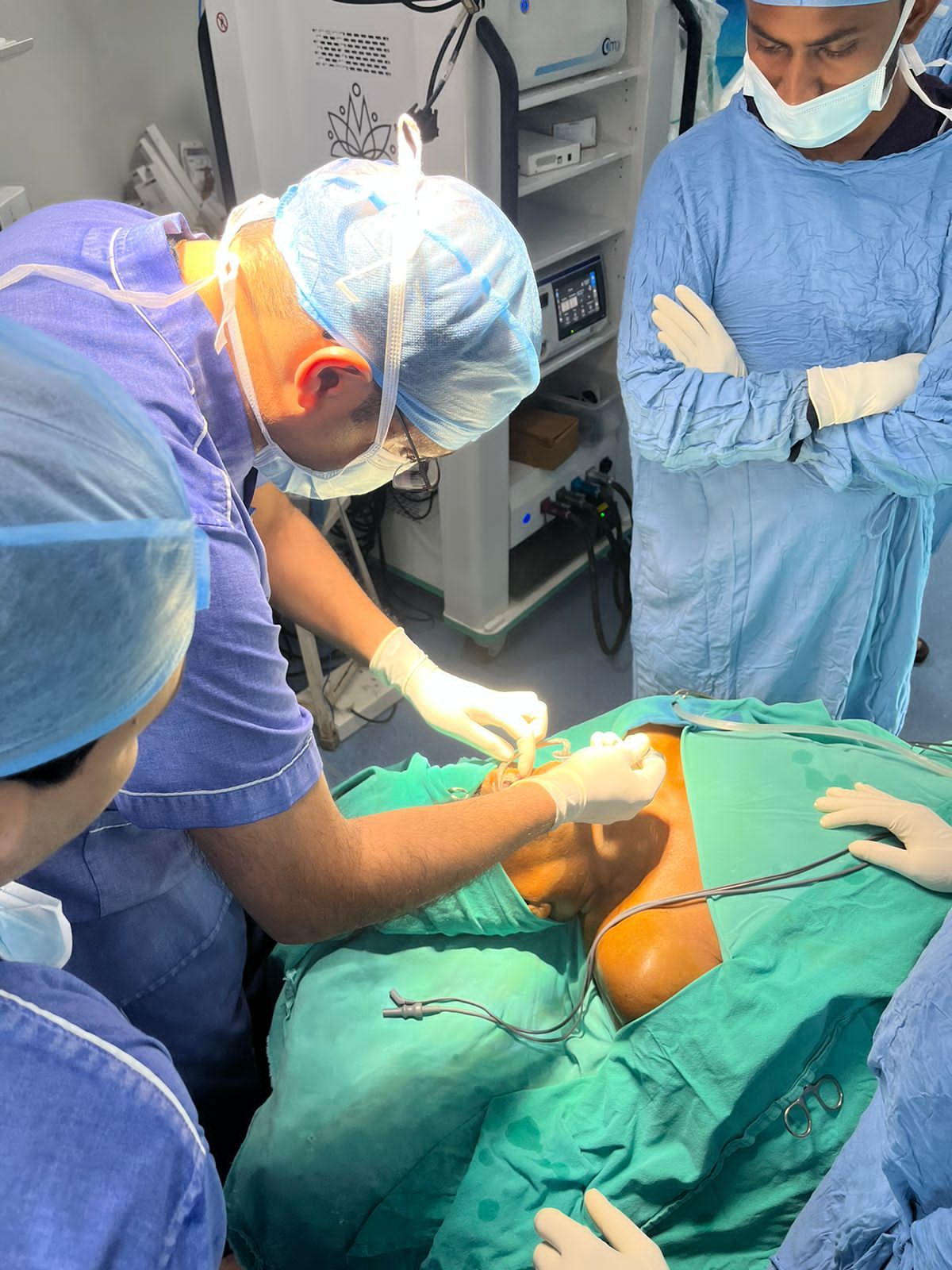
For carefully selected early-stage cancers, Transoral Laser Microsurgery (TLM) offers cancer control comparable to open surgery while preserving normal tissues and reducing the impact of treatment. The key to success is selecting the right tumour, in the right location, for the right patient.
Published studies show that, for appropriately selected early-stage cancers, TLM provides oncological outcomes comparable to open surgery and radiotherapy.
Because there is no external incision and less disruption to surrounding tissues, many patients experience a shorter hospital stay and a quicker overall recovery.
Patients are generally less likely to require a temporary tracheostomy or feeding tube and often return to normal swallowing and voice function sooner.
TLM is not suitable for every cancer. Successful outcomes depend on tumour size, location, stage, and whether adequate access through the mouth can be achieved safely.
Dr. Karan Gupta carefully evaluates every patient to determine whether Transoral Laser Microsurgery (TLM), open surgery, or another treatment approach will provide the safest treatment with the best long-term cancer control and functional outcome.
Although Transoral Laser Microsurgery (TLM) is an excellent treatment for selected early-stage cancers, it is not suitable for every patient. The decision depends on whether the tumour can be safely visualised, completely removed, and treated with clear surgical margins through the mouth.
Patients with restricted mouth opening or limited neck mobility may not provide sufficient exposure for safe transoral laser surgery, making alternative treatments more appropriate.
Tumours that are deeply invasive, extensive, or involve the cartilage framework of the larynx generally cannot be treated effectively with TLM and usually require another treatment approach.
If the tumour cannot be completely visualised or safely removed with clear surgical margins through the mouth, open surgery or another treatment provides better cancer control.
Reduced vocal cord movement or findings from laryngoscopy and imaging may indicate deeper tumour invasion than initially suspected. In these situations, open surgery, radiotherapy, or combined treatment may be recommended instead of TLM.
Careful evaluation before transoral laser microsurgery (TLM) is essential to determine whether the procedure is the safest and most effective treatment for your cancer. Each patient undergoes a detailed assessment to ensure the tumour can be completely removed while preserving normal function.
A comprehensive examination, including laryngoscopy and, when appropriate, video-stroboscopy, is performed to assess the exact location, size, depth, and movement of the lesion.
Imaging studies such as CT or MRI scans may be recommended to evaluate tumour extent and rule out deeper invasion that cannot be fully assessed through endoscopy alone.
Mouth opening, jaw function, and neck mobility are carefully assessed to confirm that the tumour can be safely reached and removed through the mouth using laser microsurgery.
Your overall fitness for surgery is evaluated with blood tests and a pre-anaesthesia assessment to ensure the procedure can be performed safely.
Dr. Karan Gupta explains whether transoral laser microsurgery, open surgery, radiotherapy, or another treatment approach offers the best balance of cancer control, organ preservation, and long-term function for your specific tumour.
Recovery following Transoral Laser Microsurgery (TLM) is generally faster than after conventional open surgery for the same tumour. Most patients experience less discomfort, no external incision, and an earlier return to normal daily activities while receiving close follow-up throughout recovery.
Most patients stay in hospital for a short period, and in selected cases, discharge may be possible the following day depending on the extent of the laser procedure.
Mild voice changes, throat discomfort, and temporary swallowing difficulty are common during the initial healing period and usually improve as the surgical area recovers.
Voice therapy may be recommended after laryngeal laser surgery to improve vocal quality, strengthen voice production, and support optimal long-term recovery.
Regular follow-up examinations with laryngoscopy are scheduled to assess healing, monitor vocal cord function, and detect any signs of recurrence at an early stage.
If the final pathology report shows close or involved surgical margins, a second-look laser procedure or radiation therapy may be recommended to achieve the best possible cancer control.
Like all cancer treatments, Transoral Laser Microsurgery (TLM) has potential risks and limitations. These are discussed in detail before surgery so you understand the expected benefits, possible complications, and whether laser surgery is the most appropriate treatment for your specific tumour.
Although the CO2 laser seals small blood vessels during surgery, bleeding can occasionally occur after the procedure and may require additional treatment in selected cases.
Temporary voice changes and swallowing difficulty are expected while healing occurs. In some patients, particularly after larger resections, changes in voice quality may persist.
A small number of patients may develop narrowing (stenosis) of the airway at the treated site, requiring further monitoring or additional treatment if necessary.
Final pathology may occasionally reveal more extensive disease than initially expected, requiring additional laser surgery, radiotherapy, or open surgery to achieve the best cancer control.
Laser surgery is recommended only when it offers a clear advantage for the individual tumour. If you would like an independent review of your reports, scans, or treatment plan, Dr. Karan Gupta offers comprehensive second opinion consultations to help you make an informed decision.
Find answers to common questions about Transoral Laser Microsurgery (TLM) and minimally invasive laser surgery for head and neck cancers by Dr. Karan Gupta.