• -----------
  • +91 9811122341
Chat on WhatsApp
Expert Cancer Care

Submandibular Gland Tumor Surgery in Delhi NCR

Expert submandibular gland tumor surgery in Delhi NCR with advanced, nerve-safe techniques for complete tumor removal and faster recovery.

Request an Appointment

Please fill out the form below to book your consultation layer.

Submandibular Gland Tumor Surgery

A lump or swelling below the jaw may be caused by a submandibular gland tumor. Dr. Karan Gupta, a fellowship-trained Head & Neck Oncosurgeon in Delhi NCR, provides expert evaluation and nerve-safe surgical treatment for both benign and cancerous submandibular gland tumors, focusing on complete tumor removal and faster recovery.

About Submandibular Gland Tumor Surgery

The submandibular glands are located beneath the jaw and play an important role in saliva production. Tumors in these glands may be benign, such as pleomorphic adenoma, or malignant, including mucoepidermoid carcinoma and adenoid cystic carcinoma.

Persistent swelling below the jaw should always be evaluated with imaging and, when required, FNAC. Because submandibular gland tumors have a higher chance of being cancerous than other salivary gland tumors, early diagnosis is essential.

Complete removal of the affected gland (submandibular sialadenectomy) is the standard treatment for most tumors, helping achieve accurate diagnosis, effective treatment, and excellent long-term outcomes while preserving nearby nerves whenever possible.
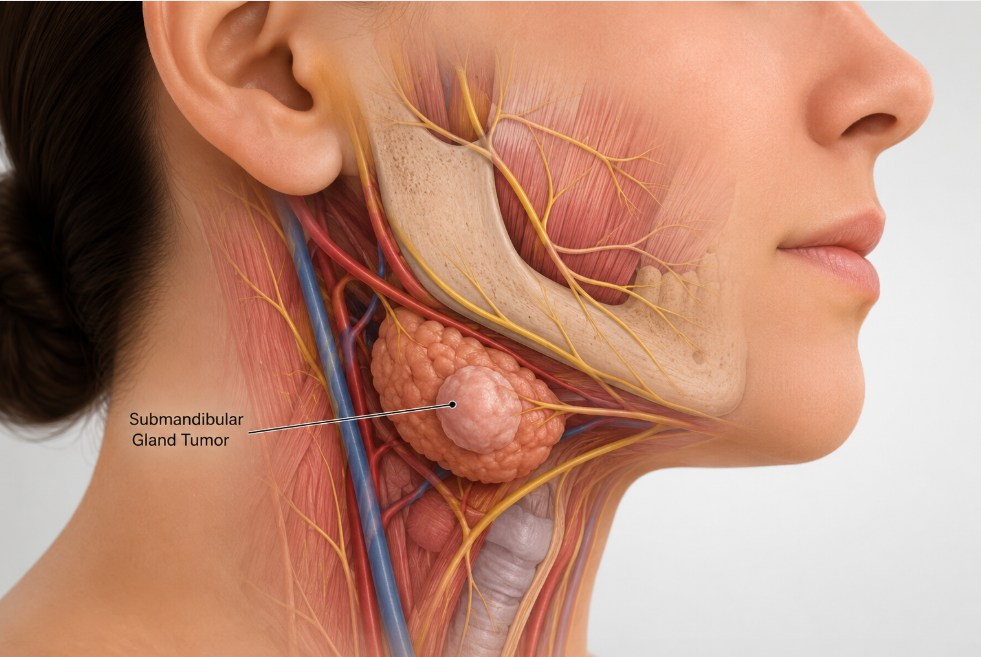
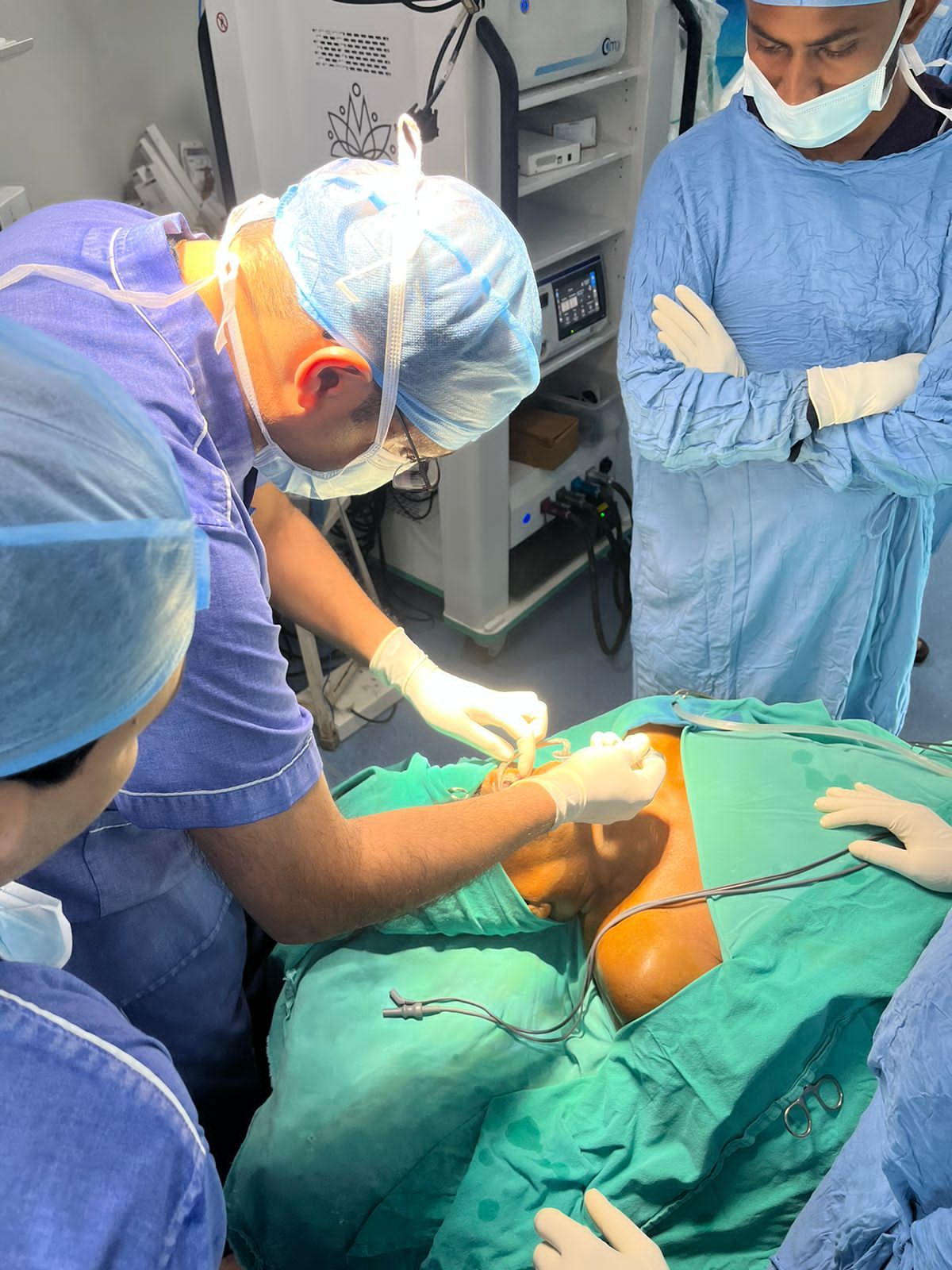
Submandibular Gland Tumor Surgery in Delhi NCR - Dr. Karan Gupta

Why Choose Dr. Karan Gupta for Submandibular Gland Tumor Surgery in Delhi NCR

Dr. Karan Gupta combines advanced head & neck oncology expertise with nerve-safe surgical techniques to deliver precise, personalized treatment for benign and malignant submandibular gland tumors.

Fellowship-Trained Head & Neck Oncosurgeon

Specialized training from Tata Memorial Hospital, Mumbai, and HCG Cancer Centre, Ahmedabad, in complex head and neck cancer surgery.

Triple Gold Medalist

Recognized with Gold Medals in MBBS, MS, and DNB, reflecting excellence in academics and surgical practice.

Advanced Robotic Surgery Training

Certified in Robotic Head & Neck Surgery through the Vattikuti Foundation and Intuitive Surgical USA.

Facial Nerve-Safe Surgery

Meticulous preservation of the marginal mandibular, lingual, and hypoglossal nerves to reduce complications.

Expertise in All Tumor Types

Experienced in treating both benign and malignant submandibular gland tumors, including cases requiring neck dissection.

Personalized Treatment Planning

Every treatment plan is tailored using imaging, biopsy results, and tumor characteristics for the best possible outcome.

Our Submandibular Gland Tumor Surgery Process

Every patient undergoes a structured evaluation and treatment pathway to ensure an accurate diagnosis, safe surgery, and the best possible recovery.

Consultation & Clinical Examination

Detailed assessment of the neck swelling with examination and review of previous scans, biopsy reports, or medical records.

Imaging & FNAC Evaluation

Ultrasound, CT, or MRI along with FNAC or core biopsy helps determine the nature and extent of the tumor before surgery.

Pre-Surgical Planning

Comprehensive fitness assessment and personalized surgical planning with a clear explanation of the procedure and recovery.

Submandibular Gland Surgery

Complete removal of the affected gland, with neck dissection performed during the same surgery if cancer spread is suspected or confirmed.

Final Pathology Review

The removed tissue is examined to confirm the diagnosis, tumor type, grade, surgical margins, and any additional risk factors.

Recovery & Follow-Up Care

Regular follow-up visits, wound care guidance, and further treatment recommendations are provided based on the final pathology report.

What's Included in Submandibular Gland Tumor Surgery Care

Dr. Karan Gupta provides comprehensive care from diagnosis through recovery, ensuring precise treatment, nerve preservation, and long-term follow-up for the best possible outcomes.

01

Comprehensive Clinical Evaluation

Detailed examination of the neck swelling along with review of previous scans, biopsy reports, and medical history.

02

FNAC or Core Needle Biopsy

Coordination of FNAC or core biopsy when required to help confirm the diagnosis before surgery.

03

Nerve-Safe Surgical Planning

Careful planning with focus on protecting the marginal mandibular, lingual, and hypoglossal nerves during surgery.

04

Submandibular Gland Excision

Complete removal of the affected gland, with neck dissection performed during the same surgery if cancer has spread to lymph nodes.

05

Pathology Review & Follow-Up

Final pathology review, cancer staging (if required), wound care guidance, and structured follow-up visits for recovery and ongoing monitoring.

Benefits of Choosing This Treatment Approach

Dr. Karan Gupta's comprehensive and nerve-safe approach ensures accurate diagnosis, effective treatment, and better long-term outcomes for patients with submandibular gland tumors.

Accurate Diagnosis Before Surgery

Thorough evaluation helps reduce the risk of incomplete treatment or the need for a second operation.

Nerve-Preserving Surgical Technique

Advanced techniques help protect the facial, lingual, and hypoglossal nerves, reducing the risk of weakness and functional problems.

Continuity of Care

From diagnosis to surgery and follow-up, the same specialist oversees your complete treatment journey.

Faster Diagnosis & Treatment

Streamlined evaluation and surgical planning help achieve a quicker definitive diagnosis and timely treatment.

Combined Surgery When Needed

Tumor removal and neck dissection can be performed during the same operation when cancer has spread to nearby lymph nodes.

Personalized Surgical Planning

Every treatment plan is tailored to the tumor's size, location, and pathology, with reconstructive options included whenever required.

Submandibular Gland Tumor Surgery in Delhi NCR: Local Care Access

Dr. Karan Gupta provides comprehensive submandibular gland tumor evaluation and surgery in Delhi NCR. Patients from Gurugram, Noida, Faridabad, Ghaziabad, and nearby regions benefit from expert consultation, imaging, biopsy, surgery, and follow-up care at one centre, making treatment convenient and well coordinated.

Easy Access Across Delhi NCR

Patients from Delhi, Gurugram, Noida, Faridabad, and Ghaziabad can access specialist head & neck oncology care without travelling outside the region.

Complete Care at One Centre

Consultation, imaging, FNAC, pre-anaesthesia assessment, surgery, and follow-up are coordinated seamlessly under one treatment plan.

Standard Surgical Treatment

Complete submandibular gland removal (sialadenectomy) is performed when indicated to achieve effective treatment and reduce the risk of recurrence.

Advanced Nerve Preservation

Meticulous identification and protection of nearby facial, lingual, and hypoglossal nerves help preserve smile, speech, and tongue movement.

Expert Head & Neck Oncology Care

Every case is carefully evaluated to provide a personalized surgical plan based on the tumor's size, location, imaging, and pathology, ensuring the safest and most effective treatment.

Frequently Asked Questions

Find answers to common questions about submandibular gland tumor surgery, diagnosis, recovery, and treatment by Dr. Karan Gupta.

Submandibular gland tumor surgery, also called sialadenectomy, involves removing the affected submandibular gland along with the tumor. It is the standard treatment for both benign and malignant tumors because imaging and biopsy alone cannot always confirm the exact diagnosis.

No. Many submandibular gland tumors are benign, especially pleomorphic adenomas. However, compared to parotid gland tumors, submandibular gland tumors have a higher chance of being cancerous, making early evaluation important.

The most common symptom is a painless lump or swelling below the jaw. Some patients may also notice discomfort while eating or a firm swelling that gradually increases in size.

Diagnosis usually includes a clinical examination, ultrasound, CT or MRI scan, and Fine Needle Aspiration Cytology (FNAC) to determine whether the tumor is likely to be benign or malignant before surgery.

Usually not. The remaining salivary glands continue to produce enough saliva, so most patients do not experience significant long-term problems with dry mouth or swallowing after one gland is removed.

Yes. During surgery, special care is taken to protect the marginal mandibular, lingual, and hypoglossal nerves, helping preserve facial movement, tongue function, and speech.

Most patients return home within 1–2 days after routine surgery. Recovery may take longer if a neck dissection is performed, depending on the extent of the procedure.

Choose a fellowship-trained Head & Neck Oncosurgeon experienced in salivary gland tumors and nerve-preserving surgery. Dr. Karan Gupta combines advanced oncology training, robotic surgery certification, and expertise in treating both benign and malignant submandibular gland tumors in Delhi NCR.
Submandibular Gland Tumor Surgery in Delhi NCR - Dr. Karan Gupta