Squint & Paediatric Eye Care in Dibrugarh
Squint, medically called strabismus, is when a child's eyes don't line up and point in the same direction — one eye may drift inward, outward, upward or downward while the other looks straight ahead. Squint and paediatric eye care at Drishti Netralaya is led by Dr. Suvarna Balankhe, trained at the Johns Hopkins Eye Institute in the USA, and covers squint, amblyopia (lazy eye) and a broader range of paediatric vision conditions through vision therapy, prism glasses and, where needed, strabismus surgery.
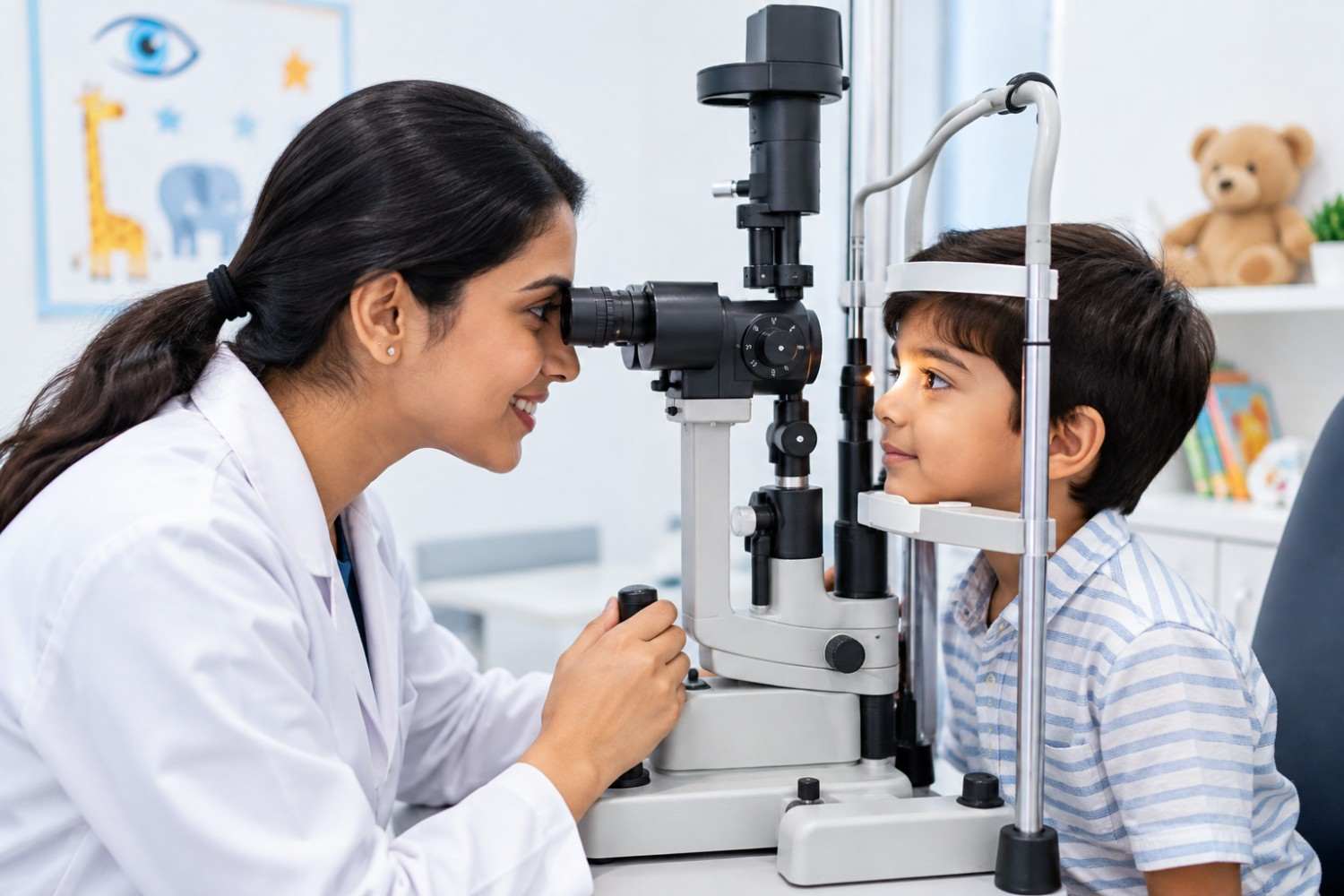
Early assessment of squint and other paediatric eye conditions is important because untreated vision problems can affect the way a child's visual system develops. At Drishti Netralaya, children receive age-appropriate eye evaluation and a personalised treatment plan, helping address eye alignment, lazy eye, and other childhood vision concerns at the right stage of development.
Types of Squint
Squint (Strabismus) can manifest in different directions. The type of squint is defined by which way the affected eye turns relative to the straight eye.
| Type of Squint | Which Way the Eye Turns |
|---|---|
| Esotropia | Inward Sometimes described as "crossed eyes". |
| Exotropia | Outward Sometimes described as "wall-eyed". |
| Hypertropia | Upward |
| Hypotropia | Downward |
What to Expect: The Cataract Surgery Process
- Consultation and eye examination, including a biometry scan to measure the eye and calculate the IOL power
- Pre-operative checks, including blood sugar levels if you're diabetic
- Day of surgery: Local anaesthesia (eye drops or a small injection), with the procedure itself usually taking about 10–20 minutes per eye and performed as day care
- A short rest period at the hospital before being discharged the same day, with eye drops and a protective shield
- Follow-up visits over the following weeks to check healing and, if needed, update your glasses prescription
Who Should Consider Cataract Surgery
Cataract surgery isn't only for people who can no longer see clearly at all — it's usually recommended once the cloudiness starts interfering with daily activities like reading, driving or recognising faces. Diabetic patients are a particular group to watch, since diabetes can accelerate cataract formation and often coexists with diabetic retinopathy, which is why a dilated retina check is usually done alongside cataract evaluation for anyone with diabetes.
Why Patients Across Upper Assam Choose Drishti Netralaya
Drishti Netralaya has built a strong reputation for cataract care across Upper Assam, combining extensive surgical experience, advanced techniques, trained specialists, and accredited standards of eye care.
Book Consultation
Quick & Easy Appointment Request